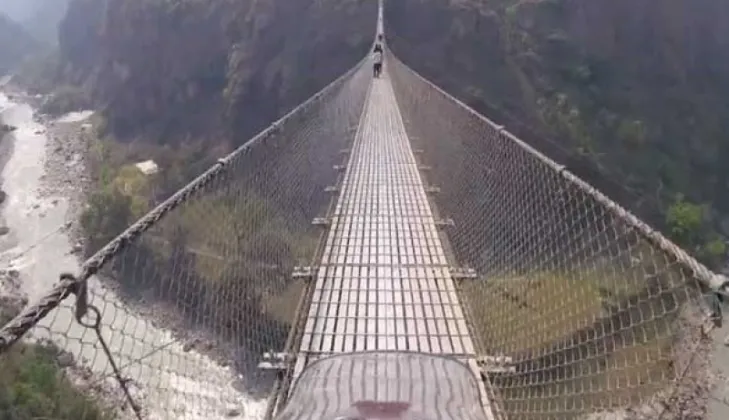
Four suspension bridges in Tanahun district that will be affected by the reservoir of the 140 MW Tanahun Hydropower Project are to be rehabilitated and reconstructed, with the project developer awarding the work through a contract valued at Rs 169 million, excluding tax. Tanahun Hydropower Limited, the company developing the project, signed the agreement with Thani Kali Joshi Joint Venture for the rehabilitation and reconstruction of the bridges, as reported by Khabarhub.
The signing marks a concrete step in addressing the infrastructure impacts associated with the project's reservoir, which will affect local crossing points within the project area. Suspension bridges are a vital link for communities across Nepal's hill districts, and rebuilding such structures is among the responsibilities that developers of large reservoir-based projects take on when their schemes alter the local landscape.
Contract Awarded to Thani Kali Joshi Joint Venture
Tanahun Hydropower Limited has formally handed over the rehabilitation and reconstruction work to Thani Kali Joshi Joint Venture, a joint venture firm that will now be responsible for carrying out the rebuilding of the four bridges affected by the reservoir. The contract is worth Rs 169 million, a figure that excludes taxes, meaning the total cost to the project will be higher once applicable taxes are added.
Project head Shyamji Bhandari was cited in the reports in connection with the announcement of the contract, confirming the developer's decision to move ahead with the bridge rehabilitation work. The agreement covers both rehabilitation and full reconstruction, indicating that the condition of each of the four bridges will determine the extent of intervention required.
The key details of the agreement are as follows:
- Project: 140 MW Tanahun Hydropower Project
- Developer: Tanahun Hydropower Limited
- Contractor: Thani Kali Joshi Joint Venture
- Scope of work: Rehabilitation and reconstruction of four suspension bridges
- Contract value: Rs 169 million, excluding tax
- Reason for works: Bridges affected by the project's reservoir
Why the Bridges Must Be Rebuilt
Reservoir-type hydropower projects store large volumes of water behind a dam, and the resulting impoundment changes water levels and land use across the area influenced by the reservoir. Roads, trails and crossing structures that communities have relied on for years can be submerged, partially affected or rendered unusable as the water body takes shape. In the case of the Tanahun Hydropower Project, four suspension bridges in the district fall within this zone of impact, prompting the developer to arrange for their rehabilitation and reconstruction.
Across Nepal, suspension bridges serve as essential infrastructure in hill and rural areas, connecting villages to roadheads, schools, health posts and market centres. When a hydropower reservoir affects such crossings, timely replacement or upgrading is critical to ensure that residents do not lose access to basic services and mobility. The reconstruction of the four bridges under the newly signed contract is intended to preserve exactly this connectivity for communities in Tanahun district as the project's reservoir comes into play.
What the Agreement Means for the Project and Local Communities
The award of the contract signals that the Tanahun Hydropower Project is moving forward with measures tied to the social and infrastructural effects of its reservoir. By contracting a joint venture firm specifically for the bridge works, the developer has created a dedicated channel through which the rehabilitation and reconstruction can be planned, resourced and executed, rather than leaving the affected crossings unaddressed.
For residents of Tanahun district, the rebuilding of the four suspension bridges carries direct practical significance. These structures typically carry daily foot traffic between settlements and connect people to farmland, bazaars, schools and health facilities. Maintaining dependable crossings as the reservoir affects the existing ones helps ensure that daily life and local commerce continue with minimal disruption. The Rs 169 million investment, excluding tax, reflects the scale of the works needed to restore or replace the affected structures.
The reports available so far have not detailed the completion timeline for the bridge works or the specific schedule for each of the four crossings. Those particulars are expected to become clearer as the joint venture mobilises for construction and the developer outlines the sequencing of the rehabilitation and reconstruction activities. With the contract now signed, attention will turn to execution, and the timely delivery of the four bridges will be closely watched by the communities whose daily routes depend on them, as well as by observers of how one of the country's notable reservoir-based hydropower projects manages its local impacts.
Additional details on the project and the contract are available in the original report by Khabarhub.