Nepali news outlets have published fresh explainers this week on the religious meaning of Dashain, presenting Vijaya Dashami not only as a major Hindu festival but as the special day on which devotees receive the prasad and blessings of the goddess worshipped throughout the nine nights of Navaratri. The coverage, carried by Nepal Press, Pradeskhabar and Global Aawaj, also notes that religious belief ties Vijaya Dashami to another cornerstone of Hindu tradition: the victory of Lord Shri Ram over Ravan. Together, these two strands give the tenth day of Dashain both its name and its weight. It is, in the tradition described by the explainers, a day of victory and a day of blessing at the same time.
The culmination of Navaratri
The explainers begin with the structure of the festival itself. Navaratri, the nine nights that precede Vijaya Dashami, is a period devoted to the worship of the goddess. Devotees offer their prayers and worship across those nine nights, and it is that accumulated devotion which, according to the religious tradition outlined in the coverage, reaches its fulfilment on the tenth day.
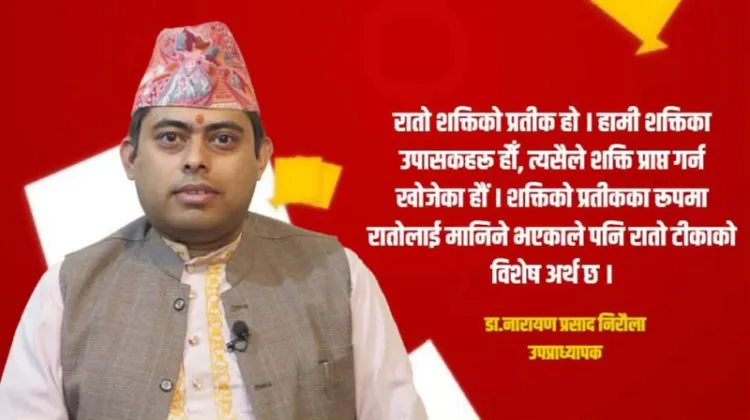
Associate Professor Dr. Narayan Prasad Niraula, cited in the explainers, said Vijaya Dashami is the special day for receiving the prasad and blessings of the goddess worshipped throughout Navaratri. That framing matters, because it positions Dashami not as a standalone occasion but as the point at which the worship of the preceding days is understood to bear fruit. The prasad received on this day is regarded in that light as the goddess's own gift to her devotees, made available at the close of the Navaratri observance.
What the prasad represents
Prasad, in Hindu religious practice, refers to offerings that have been presented to the deity and are then received back by devotees as blessed items. The explainers place the day's blessings squarely within this understanding. Because Vijaya Dashami is the day of the goddess's prasad, the blessings received on this day are treated as more than ordinary goodwill. They are presented as an extension of the grace received from the goddess herself.
This is why, the coverage suggests, the blessings exchanged during Dashain carry an importance that ordinary greetings do not. They are rooted in the worship of the nine nights and are received on the one day the tradition marks out for that purpose.
Why the blessings matter
Much of the coverage is devoted to a question that surfaces in households across Nepal every year: what is the importance and meaning of the blessings offered during Dashain? The answer given by the explainers follows directly from Dr. Niraula's point. The day is auspicious because it is the day of prasad, and the blessings offered within it draw their meaning from that fact.
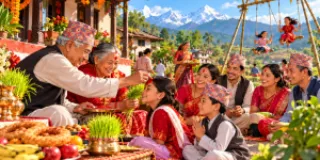
Blessings offered during Dashain are traditionally given by elders, and the explainers present this exchange as the social expression of the day's religious core. The younger receive the blessing, the elder gives it, and both participate in a custom that the religious tradition traces back to the goddess worshipped during Navaratri.
The key points highlighted across the coverage can be summarised as follows:
- Vijaya Dashami is observed as a major Hindu festival and the tenth day of Dashain.
- It is the special day for receiving the prasad and blessings of the goddess worshipped throughout Navaratri.
- Religious belief also links the day to Lord Shri Ram's victory over Ravan.
- The blessings exchanged on the day derive their meaning from the nine nights of worship that precede them.
Victory of good over evil
The second strand of the explainers addresses the name of the day itself. According to religious belief, Vijaya Dashami is also linked to Lord Shri Ram's victory over Ravan. That victory is remembered in the Hindu tradition as the definitive triumph of good over evil, and the association is embedded in the name of the day: Vijaya carries the meaning of victory, while Dashami refers to the tenth day.
By connecting the day to this episode, the religious tradition gives Vijaya Dashami a significance that reaches beyond the household and into the moral heart of the faith. The day stands as a reminder that righteousness prevails, a message that sits alongside the more intimate practice of receiving blessings at home. In the explainers' account, the two are not separate observances but parts of a single day, one celebrated through worship and the other through memory of the epic victory.
Two narratives, one day
Taken together, the coverage published by Nepal Press, Pradeskhabar and Global Aawaj presents Vijaya Dashami as a day on which two narratives meet. On one side is the devotional narrative of Navaratri, in which nine nights of worship culminate in the receipt of the goddess's prasad and blessings. On the other is the epic narrative of Ram's victory over Ravan, which lends the day its name and its association with the triumph of good over evil.
For readers asking why the blessings of Dashain hold such importance, the explainers return to a consistent answer: the day is special precisely because it gathers both threads. The blessings received on Vijaya Dashami are understood as the goddess's blessing, received on the very day the tradition remembers as victory itself. The coverage, published as the festival was being observed, serves as a reminder that the familiar courtesies of Dashain are, in the religious understanding set out by Dr. Niraula and the explainers, the continuation of an act of worship that began nine nights earlier.