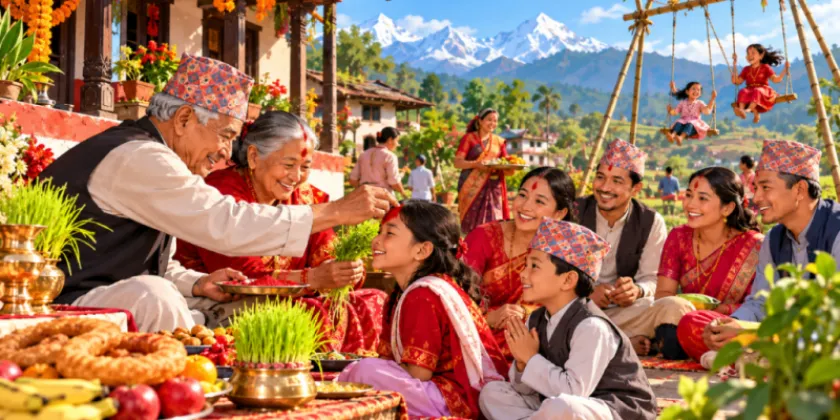
Nepalis began receiving Vijayadashami tika on Wednesday at the auspicious moment of 10:26 am, the time fixed by the Nepal Panchang Decision Development Committee for the most important day of the Dashain festival. According to the committee, Devi Visarjan, the ritual send-off of Goddess Durga, is scheduled for 8:49 am, after which family members may receive tika from their elders. The committee set the 10:26 am moment specifically for those seeking the most auspicious time to mark the occasion, according to a report by Nepal Press.
Most Auspicious Moment Falls in Mid-Morning
The Nepal Panchang Decision Development Committee, the body responsible for determining the dates and auspicious timings of major festivals in Nepal, prepared this year's Vijayadashami schedule on the basis of the traditional lunar almanac. Its calculation placed Devi Visarjan first, at 8:49 am, marking the formal conclusion of the worship of Goddess Durga observed through the nine nights of Navaratri. The committee's schedule makes clear that the tika ceremony follows the farewell to the goddess, and only then may devotees begin receiving tika.
For observers who follow the almanac strictly, the committee identified 10:26 am as the single most auspicious moment of the day. This mid-morning window is regarded in the traditional reckoning as abujh, or universally favourable, and elders and juniors who wish to exchange tika and blessings within the best possible moment are expected to assemble around that time. In practice, however, the tika can be received at any point after Devi Visarjan, and families often continue the ritual well into the day as relatives gather.
The day's sequence
- 8:49 am: Devi Visarjan, the ritual farewell to Goddess Durga, is scheduled to take place.
- After 8:49 am: Family members may begin receiving tika from their seniors.
- 10:26 am: The most auspicious moment of the day, fixed for those who wish to observe the timing closely.
Tika, Jamara and the Blessings of Elders
Vijayadashami, also known as Bijaya Dashami, is the day when juniors receive tika from their elders in order of seniority, beginning with the most senior members of the household. The tika is a mixture of uncooked rice grains, red vermilion and yogurt, applied to the forehead along with jamara, the yellow barley shoots sown on the first day of Dashain and grown in darkness over the following days. As elders apply the tika and tuck jamara behind the ears of the recipient, they offer blessings for long life, good health and prosperity.
The exchange traditionally extends beyond blessings alone. Juniors touch the feet of their elders as a mark of respect, and younger relatives often receive dakshina, a gift of money, along with the tika. With the auspicious moment set for the mid-morning, households typically arrange family gatherings so the ceremony can be held together, particularly when members have travelled to their ancestral homes for the festival.
The Tenth Day: Victory of Good over Evil
Vijayadashami marks the tenth and most significant day of Dashain, Nepal's largest and longest festival, observed over fifteen days according to the lunar calendar. The day commemorates the victory of Goddess Durga over the demon Mahishasura, a triumph that symbolises the victory of good over evil. The preceding nine nights are dedicated to the worship of the goddess in her different forms, with devotees offering prayers and ritual worship at temples and in homes across the country.
The rituals of the day are rooted in observances that begin at the very start of the festival. Ghatasthapana, the first day of Dashain, sees families install a sacred vessel and sow barley seeds that are kept away from direct sunlight so they sprout into the golden jamara presented on Vijayadashami. The days in between are among the busiest of the Nepali calendar, as people travel to their hometowns and villages, markets fill with festival shopping, and homes are cleaned and prepared for family reunions.
The tika season does not end with Vijayadashami itself. Tradition allows juniors to receive tika and blessings from their elders through the remaining days of the festival until Kojagrat Purnima, the full-moon day that concludes Dashain, offering relatives who could not assemble on the main day further opportunities to complete the ritual. For this year, the committee's schedule has given families a clear order to the day: the goddess is bid farewell at 8:49 am, and the most auspicious moment for the tika that follows arrives at 10:26 am.