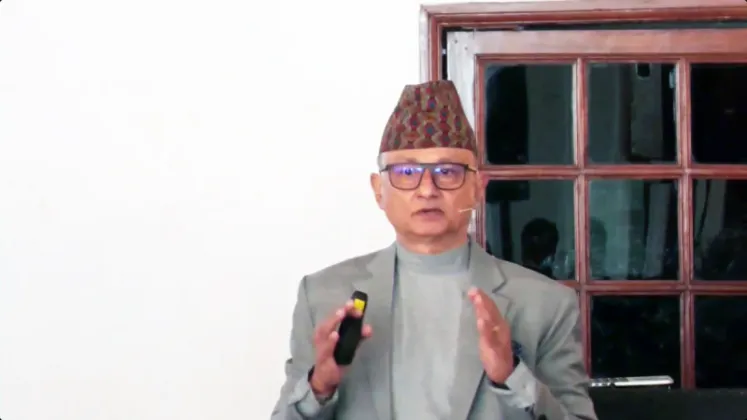
Election Commissioner Dr. Rajiv Subba has said that Nepal's traditional election system must be changed in order to make the process of voting easier for citizens. Speaking at a stakeholder discussion organised on the Election Commission's fourth five-year strategic plan in Lalitpur on Friday, Dr. Subba argued that the existing system and process no longer suit present-day conditions and that the current arrangement cannot continue as it is.
The commissioner's remarks came during a consultative meeting intended to gather feedback on the Election Commission's upcoming strategic plan, a document that will guide the constitutional body's priorities and institutional direction over the next five years. According to Dr. Subba, reforming the way elections are conducted is not a matter of choice but a necessity if the Commission is to fully protect the voting rights of Nepali citizens.
A System No Longer Suited to Present Conditions
Addressing the gathering in Lalitpur, Dr. Subba said the traditional election system that Nepal has relied on to date must be revised so that citizens find it easier to exercise their franchise. He stated plainly that the current system and process do not match the demands of the present time.
"The existing arrangement cannot continue as it is," Dr. Subba told participants at the discussion, underscoring that the Commission's strategic planning process should take seriously the need to redesign how elections are organised and delivered.
His comments signal that the Commission itself sees structural reform as central to its next five-year plan, rather than treating the strategic document as merely a routine exercise in institutional planning. By framing the issue around the facilitation of voting rights, Dr. Subba placed the emphasis on the voter's experience, suggesting that the measure of any election system should be how easily and conveniently citizens are able to cast their ballots.
Stakeholder Discussion on the Fourth Five-Year Strategic Plan
The event in Lalitpur was organised as part of the Election Commission's process of drafting its fourth five-year strategic plan. Such stakeholder discussions bring together participants with an interest in the electoral process to offer views and suggestions before the plan is finalised.
The strategic plan serves as the Election Commission's overarching framework for the coming five years, setting out the body's goals, priorities and institutional approach to conducting elections. The input gathered at meetings such as Friday's session in Lalitpur is expected to inform the final content of the plan.
Dr. Subba's intervention at the discussion indicated that he wants the reform agenda to be embedded in the strategic plan itself. In his view, if the plan is to be meaningful, it should respond to the reality that the current election system requires fundamental change, not incremental adjustment.
Facilitating Voting Rights
The core of Dr. Subba's argument was that changes to the election system should be driven by the goal of facilitating citizens' voting rights. He suggested that the way elections have traditionally been conducted in Nepal has not kept pace with present conditions, and that a system designed for an earlier era may place unnecessary burdens on voters today.
While the commissioner did not lay out a detailed blueprint for reform at the discussion, his message was clear: the Election Commission should use its strategic planning process to rethink the system and process of elections from the ground up. The existing arrangement, he said, cannot simply be carried forward unchanged.
His remarks are likely to fuel ongoing debate within Nepal about how elections can be made more accessible and efficient. As the constitutional body responsible for conducting elections in the country, the Election Commission holds significant influence over the design of the electoral process, and statements from its commissioners about the need for systemic change carry considerable weight.
Implications for the Commission's Direction
Friday's discussion in Lalitpur forms part of a broader consultative effort as the Election Commission shapes its fourth five-year strategic plan. Dr. Subba's call for an overhaul of the traditional voting system adds a prominent voice to that process, framing institutional reform around the practical needs of voters.
If the Commission acts on his suggestion, the next strategic plan could mark a turning point in how Nepal approaches the conduct of its elections, moving away from the traditional model toward arrangements that make casting a ballot easier for citizens. For now, the commissioner's message to stakeholders was unambiguous: the system must change to facilitate the voting rights of the people, and the time to begin that change is now.
Further details of the strategic plan, and the specific reforms it may contain, are expected to become clearer as the Commission completes its consultative process and finalises the document.