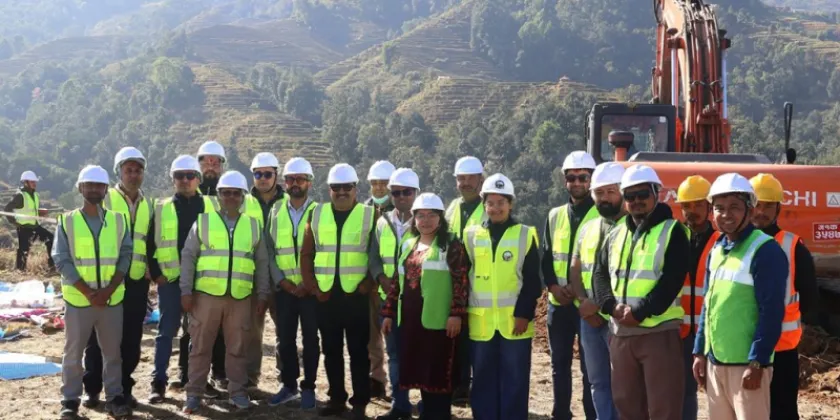
MCA-Nepal has formally begun construction of the Lapsiphedi–Ratamate–New Hetauda 400 kV double-circuit transmission line, a flagship energy infrastructure project funded under the Millennium Challenge Corporation (MCC) Nepal Compact. The physical construction work was inaugurated on Wednesday, starting from Sindhupalchok district, marking a significant step forward in one of the largest electricity transmission projects currently underway in the country.
The new transmission line is expected to strengthen Nepal's national grid and improve the capacity to evacuate and distribute power across the country, supporting the growing volume of electricity generated by Nepal's expanding hydropower sector.
Project scope and route
The transmission line being constructed is part of a larger 315-kilometre corridor, with the current phase covering a 117-kilometre section. This section will link three major substations: Lapsiphedi, Ratamate and New Hetauda. The line will be built as a double-circuit 400 kV system, which allows significantly greater power transfer capacity compared to conventional single-circuit lines.
To carry the line across its route, the project will install 303 transmission towers. The alignment passes through five districts: Kathmandu, Sindhupalchok, Nuwakot, Dhading and Makwanpur. Starting the works from Sindhupalchok, the line will connect the Kathmandu valley with the southern plains through the New Hetauda substation, creating an important new artery for power evacuation.
Connection to the MCC Nepal Compact
The project is being implemented under the MCC Nepal Compact, the multi-year development agreement signed between the Government of Nepal and the United States' Millennium Challenge Corporation. Energy infrastructure is one of the two main pillars of the compact, alongside road improvement works.
MCA-Nepal, the government entity entrusted with executing the compact's programmes, has moved the transmission line project from planning and land acquisition stages into active construction with this start of works. The Lapsiphedi–Ratamate–New Hetauda line is among the most prominent components of the energy portfolio under the compact, alongside associated substation works at the three nodes it connects.
Significance for Nepal's power sector
The 400 kV backbone is a critical addition for Nepal's hydropower-driven energy sector. Nepal has experienced rapid growth in electricity generation in recent years, particularly through run-of-river hydropower projects, and has increasingly targeted domestic consumption, cross-border trade and seasonal export as outlets for its surplus power. Transmission bottlenecks have been repeatedly identified as a constraint on fully utilising this generation capacity.
By connecting the Lapsiphedi substation on the edge of Kathmandu to Ratamate and onward to New Hetauda, the line will create a major high-capacity corridor linking the load centre of the capital with power-producing regions and the southern grid interface near Makwanpur. This is expected to enhance grid stability, reduce transmission losses and allow more electricity to be delivered reliably to consumers.
What lies ahead
With construction launched from Sindhupalchok on Wednesday, the project now enters its main implementation phase, involving the erection of 303 towers and stringing of the 400 kV conductors across a route spanning five districts. MCA-Nepal is expected to coordinate with local authorities and communities along the alignment as the works progress through Kathmandu, Sindhupalchok, Nuwakot, Dhading and Makwanpur.
Completion of the 117-kilometre section will bring the broader 315-kilometre 400 kV transmission corridor closer to reality, providing Nepal with one of the most robust elements of its national grid and supporting the country's ambitions to expand access to reliable electricity and grow its energy trade.
Further details on the construction schedule and completion timeline are expected as the works advance on the ground.