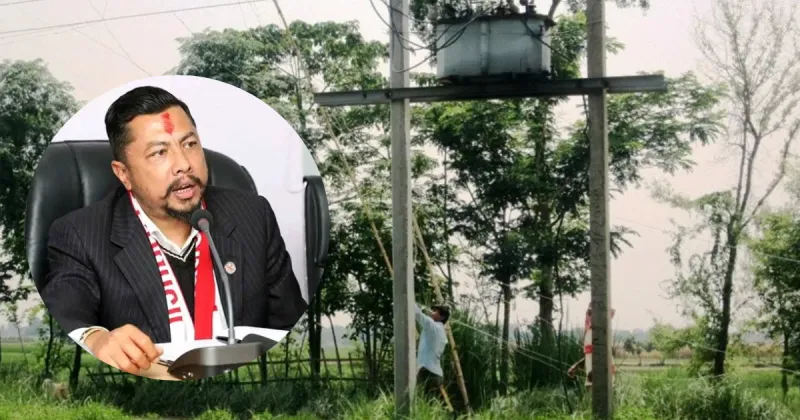
Kathmandu, November 25, 2026 — The government has achieved better-than-target progress in controlling electricity leakage, with losses falling to 12.16 percent in the current fiscal year 2082/83, according to the Ministry of Energy, Water Resources and Irrigation. The figure comes in below the government's set target of 12.20 percent for the year, marking a continued improvement in the performance of the country's power distribution system.
The data, released by the Nepal Electricity Authority (NEA) and cited in reports from the Office of the Prime Minister and Council of Ministers, shows that leakage stood at 12.26 percent in the previous fiscal year 2081/82. The reduction to 12.16 percent indicates steady gains in the authority's efforts to curb technical and commercial losses across its distribution network.
A marginal but meaningful improvement
While the decline of roughly 0.1 percentage points may appear modest, it is significant in the context of government performance targets. The Ministry of Energy, Water Resources and Irrigation has highlighted the outcome as evidence that the set goal for leakage control has been met and slightly exceeded, a marker of better-than-target progress for the current fiscal year.
Electricity leakage, which includes both technical losses in transmission and distribution lines as well as commercial losses from meter tampering and unbilled consumption, has long been a challenge for Nepal's power sector. Every percentage point of leakage represents electricity that is generated and delivered but never paid for, directly affecting the revenue and financial health of the national utility.
Progress tracked by the Nepal Electricity Authority
The Nepal Electricity Authority, the state-owned utility responsible for generation, transmission and distribution of electricity in Nepal, is the source of the leakage figures. Its data shows the trajectory from 12.26 percent in fiscal year 2081/82 to 12.16 percent in fiscal year 2082/83, a downward movement that keeps the utility ahead of the government's annual target of 12.20 percent.
The Office of the Prime Minister and Council of Ministers was cited in the reports carrying the figures, indicating that leakage control remains on the government's monitoring agenda. Ministries and agencies under the federal government are regularly assessed against annual targets, and the energy sector's performance on leakage reduction is one of the closely watched indicators of the Ministry of Energy's work.
Why leakage control matters
Reducing electricity leakage has been a persistent priority for Nepal's energy sector. As the country has expanded its generation capacity and electrification coverage, losses in the distribution system have drawn increased attention from policymakers, who set annual reduction targets for the utility.
Lower leakage improves the financial position of the Nepal Electricity Authority by ensuring that a greater share of generated electricity is actually billed and collected. It also strengthens the overall efficiency of the power system at a time when Nepal has been working to make better use of its hydropower resources, both for domestic consumption and for electricity trade with neighbouring markets.
The latest figures suggest that the measures undertaken under the current fiscal year have kept the utility on a downward trajectory. Meeting the target of 12.20 percent and ending the year at 12.16 percent means the government can report its leakage control commitment as fulfilled, according to the Ministry of Energy, Water Resources and Irrigation.
Continued focus expected
With the current fiscal year still under way, the reported figure reflects progress to date as compiled by the Nepal Electricity Authority. The government and the utility are expected to continue their leakage reduction efforts through the remainder of 2082/83, with further updates on the final year-end performance to follow.
The achievement of the leakage target adds to the record of the energy sector under the current administration. As reported from Kathmandu on November 25, 2026, the Ministry of Energy's disclosure of the NEA data confirms that electricity leakage has been limited to 12.16 percent, better than both the previous year's level and the government's stated goal for the year.