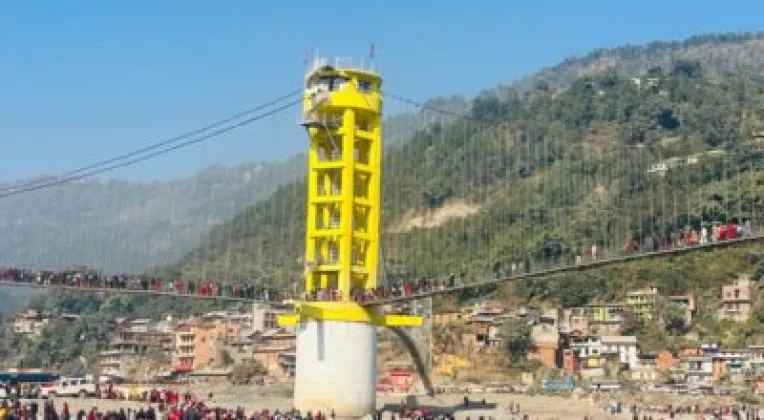
The traditional five-day Maghi fair held annually at Ridi in Rurukshetra Rural Municipality is set to undergo its biggest transformation in years, with local authorities announcing that the festival will now be celebrated as a month-long event called 'Ruru Mahasnan' spanning the entire month of Magh. The announcement was made by Rurukshetra Rural Municipality, which lies at the confluence of three districts - Gulmi, Palpa and Syangja - and has long been regarded as one of western Nepal's most revered religious sites.
From Five Days to a Full Month
For generations, the Maghi fair at Ridi has been a five-day affair, drawing pilgrims and traders to the banks of the Kaligandaki River during the winter month of Magh. The decision to extend the celebration across the entire month marks a significant departure from that tradition. Rurukshetra Rural Municipality said that preparations for the expanded event are being intensified, with the rural municipality itself advancing the concept of Ruru Mahasnan.
The name of the festival reflects both the place and its central ritual. 'Ruru' refers to the Rurukshetra area, while 'Mahasnan' points to the great ceremonial bathing that devotees undertake in the Kaligandaki, the river that defines the geography and spirituality of the region. By stretching the bathing period across the whole of Magh, the municipality hopes to allow a far larger number of pilgrims to participate at times convenient to them.
Goals Behind the Expanded Festival
According to the rural municipality, the month-long Ruru Mahasnan has two central objectives. The first is to promote the religious significance of the Kaligandaki River, which holds a special place in Hindu tradition and is famed for the sacred shaligram stones found along its banks. The second is to strengthen the historical identity of Rurukshetra as a major religious tourism destination.
Local officials believe that formalising and expanding the festival under a single banner will help present Ridi not merely as a fair site but as a destination with deep religious and cultural roots. The confluence location of Rurukshetra, where the boundaries of Gulmi, Palpa and Syangja meet, has historically made it a natural gathering point for communities from all three districts and beyond.
Preparations Underway
Rurukshetra Rural Municipality has stated that preparations for the first edition of the expanded festival are being intensified. While detailed programmes for the month-long event have not yet been fully outlined in public, the rural municipality's leadership has positioned Ruru Mahasnan as a flagship initiative to rebrand the area.
The introduction of the concept has been reported by multiple national media outlets, including Gorkhapatra and Nagarik News, indicating growing interest in the initiative well ahead of the festival itself. The coverage highlights that the idea originated within the rural municipality, which has taken ownership of planning and coordination.
Significance for Religious Tourism
The expansion of the Maghi fair comes at a time when local governments across Nepal are increasingly looking to cultural and religious festivals as engines of local economic development. Ridi's existing fair already attracts substantial footfall during its five-day run, and the month-long format is expected to extend that economic activity across a far longer period, benefiting hoteliers, traders, transport operators and vendors in the area.
Rurukshetra's religious pedigree is well established. The area is associated with ancient legends connected to the Kaligandaki and has long been a stop for pilgrims travelling through the western hills. The river itself is considered one of the holiest in Nepal, and bathing in it during auspicious periods of Magh is a long-standing practice among devotees.
By institutionalising the month of Magh as Ruru Mahasnan, the rural municipality aims to give this tradition a formal identity that can be marketed nationally. If successful, the festival could place Rurukshetra more prominently on Nepal's religious tourism map, alongside better-known destinations in the region.
Looking Ahead to Magh
Attention now turns to how the month-long festival will be organised in practice, from managing the flow of pilgrims along the riverbanks to coordinating events that sustain visitor interest across four weeks. The rural municipality has not announced a detailed calendar, but officials have made clear that the Ruru Mahasnan concept is now the framework under which the historic Maghi fair will be celebrated going forward.
For the communities of Gulmi, Palpa and Syangja who have gathered at Ridi each Magh for generations, the expansion represents both continuity and change - the same river, the same sacred bathing, but stretched across a full month under a new name designed to carry the story of Rurukshetra far beyond the confluence where it begins.