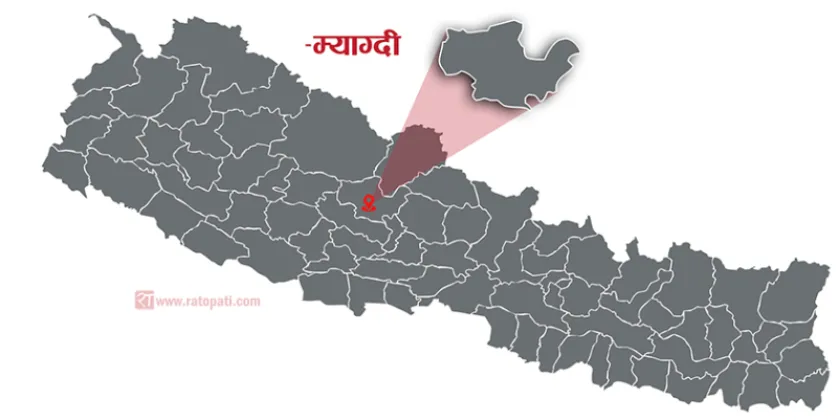
Residents of Chimkhola, Raghuganga Rural Municipality-7, in Myagdi district, have completed the construction of a five-kilometre trail connecting Sisarka to the tourist destination of Sowangdhuri, which sits at an altitude of 3,840 metres. The ambitious undertaking saw local labourers camp in the forest for weeks at a time to finish the work in the high-altitude terrain.
The trail was built with a budget of nine lakh rupees allocated by Raghuganga Rural Municipality. According to consumer committee chair Tara Garbuja Pun, 30 labourers stayed in the forest for five weeks to complete the construction, braving the remote and rugged conditions of the area to open up access to the scenic site.
A community-driven effort in difficult terrain
Building a trail at such a high altitude posed significant logistical challenges. With no settlements near the worksite, the labourers had no option but to set up camps in the forest and live there throughout the five-week construction period. This commitment reflects the determination of the Chimkhola community to improve connectivity to one of the area's most promising tourist attractions.
The use of a consumer committee to manage the project is a common practice in local infrastructure work in Nepal, where funds transferred from local governments are implemented directly by community-level committees. Tara Garbuja Pun, who chairs the committee overseeing this project, confirmed the details of the labour arrangement and funding for the trail.
Opening up Sowangdhuri to visitors
Sowangdhuri, perched at 3,840 metres above sea level, is recognised as a tourist site in the upper reaches of Myagdi district. The new trail from Sisarka provides a defined walking route to the destination, which is expected to make the site more accessible for hikers and visitors.
Myagdi district is known for its trekking and tourism potential, home to attractions such as the Annapurna region's southern gateway areas and other high-altitude destinations. Local initiatives like the Chimkhola trail are seen as important steps in developing rural tourism infrastructure that can bring economic benefits to remote villages.
Local government investment in rural infrastructure
The nine lakh rupees provided by Raghuganga Rural Municipality represents a direct investment by the local government in community-identified infrastructure. Rural municipalities across Nepal allocate budgets each fiscal year for trails, water supply, bridges and other small-scale projects that are often beyond the reach of individual villages but vital for local livelihoods and tourism promotion.
The completion of the Sisarka-Sowangdhuri trail demonstrates how relatively modest local budgets, combined with strong community participation, can deliver infrastructure in areas where larger construction projects are difficult to mount. The five weeks of labour by 30 local residents, carried out while living in the forest, underscores the scale of the community's contribution beyond the municipal funding.
With the trail now complete, Chimkhola residents hope that improved access will help position Sowangdhuri as a destination for tourists and trekkers, supporting the local economy of Raghuganga Rural Municipality-7 and showcasing the natural beauty of the high ridges of Myagdi district.
This article is based on reports published by Ratopati, Khabarhub and Gorkhapatra.