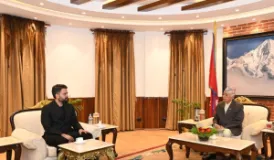
Australian Liberal Party senator Lia Blyth has quit the party and joined Pauline Hanson's One Nation Party, a dramatic defection that has sent shockwaves through Australia's opposition ranks. Blyth, a senator from South Australia who was elected on a Liberal ticket, announced her switch on Thursday, according to reports.
Her departure is particularly significant because she was not a backbencher but a member of the shadow ministry, meaning the Liberal Party has now lost both a parliamentary seat and a member of its senior opposition team. The move has stirred fresh turmoil in Australia's opposition politics, where the Liberal Party has already been struggling with internal pressures.
A Senator Switches Sides Mid-Term
Blyth's defection means that she will continue to represent South Australia in the Parliament, but no longer under the Liberal Party banner. Instead, she will sit as a senator for Pauline Hanson's One Nation Party, the right-wing party founded and led by Hanson. Because she was elected on a Liberal ticket, her switch changes the political composition of the Senate without any new election taking place, a scenario that is legally possible but always politically explosive.
Defections of sitting parliamentarians are rare and consequential in Australian politics. When a senator changes parties mid-term, the original party loses the representation it campaigned for, while the receiving party gains a seat it did not win at the ballot box. In this case, the shift hands One Nation an additional presence in the Parliament and strips the Liberal Party of a shadow ministry member at a time when it can ill afford losses.
Blow to the Liberal Party
The loss of Blyth is a double blow for the Liberal Party. First, it reduces the party's numbers in the Senate. Second, and perhaps more damaging symbolically, it removes a member of the shadow ministry, the team of senior opposition figures who hold the government to account and present the party's alternative policy agenda.
According to reports, the defection has stirred fresh turmoil within Australia's opposition politics. The Liberal Party, as the senior partner of the opposition bloc, has faced internal challenges in recent times, and losing a sitting senator and shadow minister to a rival right-leaning party underscores the depth of those difficulties. The party now faces questions about how it retains its senior members and how it will respond to a rival on its conservative flank.
What It Means for One Nation
For One Nation, the arrival of a sitting Liberal senator is a significant boost. The party, founded and led by Pauline Hanson, has historically been a smaller force in the Parliament, often relying on crossbench votes to exert influence. Gaining a senator who was elected as a Liberal gives the party added parliamentary weight and a higher profile heading into future contests.
Blyth announced her switch on Thursday, according to reports, and her move instantly becomes one of the most talked-about developments in Australian politics. Her presence in One Nation's parliamentary team could strengthen the party's capacity to negotiate on legislation and raise its standing among conservative voters who have grown disillusioned with the major parties.
The Wider Political Fallout
The defection comes at a sensitive moment for Australia's opposition politics. A sitting senator abandoning the Liberal Party for One Nation highlights the contest for conservative votes within the Australian political landscape. When a shadow ministry member concludes that her political future lies with a smaller rival rather than the traditional conservative party, it inevitably raises questions about the direction and cohesion of the opposition as a whole.
The political impact of such a move typically extends beyond the immediate numbers. Party switching can reshape debates inside both the party that is left and the party that is joined, prompting leadership to review strategy, messaging and internal management. In this instance, the Liberal Party will need to recalibrate its Senate team and its shadow ministry following Blyth's exit, while One Nation will seek to capitalize on the momentum generated by the high-profile arrival.
What Happens Next
As of the reports available, Blyth's announcement on Thursday marks the formal start of her new political chapter with One Nation. She will now represent South Australia as a One Nation senator, and the Senate's party composition reflects her new allegiance.
For the Liberal Party, the immediate tasks are to manage the fallout from losing a shadow ministry member, to reassure supporters and colleagues, and to fill the gap left in its opposition leadership structure. For Pauline Hanson's One Nation, the priority will be to integrate its newest senator and make the most of the increased parliamentary presence her defection provides.
The coming period is likely to reveal more about the reasons behind Blyth's decision and the broader implications for Australia's opposition politics. For now, the fact remains clear and consequential: a Liberal senator and shadow minister from South Australia has crossed the floor of party politics to join Pauline Hanson's One Nation Party, and Australia's opposition has been left to absorb yet another jolt.
Source: Prades Khabar