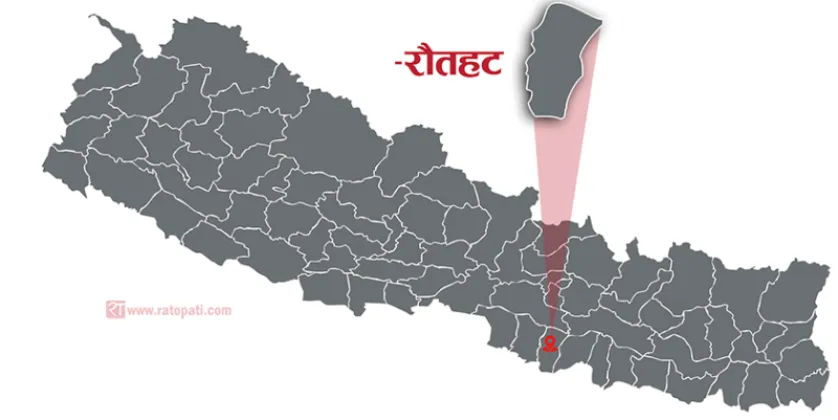
The Auraiya maternity centre in Ishanath Municipality of Rautahat district has been recognised as a successful model for climate-resilient maternal and newborn health services in Nepal. Developed with support from the United Nations Population Fund (UNFPA), the facility has demonstrated that frontline health institutions can continue delivering life-saving services even when climate-related disasters disrupt normal life. The centre's assessment was presented to stakeholders at a policy dialogue convened at the maternity centre itself, according to reports published in RatoPati and Khabarhub.
A frontline facility turned working model
At the heart of the recognition lies a simple but consequential finding: maternity services cannot be paused when disasters strike, and neither can the facilities that provide them. The Auraiya centre, which serves mothers and newborns in Ishanath Municipality in Nepal's southern plains, has shown that a relatively small frontline health institution can be organised and supported in a way that allows it to keep functioning through climate shocks rather than closing at the very moment it is needed most.
The centre's designation as a model is significant because maternal and newborn care is time-sensitive by nature. Antenatal check-ups, safe deliveries by skilled attendants, emergency obstetric response and postnatal monitoring all depend on a functioning facility with an intact supply of medicines, equipment and trained personnel. By proving that this chain of care can be sustained through climate-related disruption, the Auraiya maternity centre has offered a working template rather than a theoretical one.
Assessment presented at policy dialogue at the centre
The evaluation of the model was formally presented at a policy dialogue held at the Auraiya maternity centre. Choosing the facility itself as the venue placed the discussion in the exact setting the model is designed to protect, allowing participants to engage with the service environment directly instead of reviewing it from a distance.
Convening the dialogue at the community level also underscored the central message of the assessment: resilience in maternal and newborn health is not an abstract policy goal but something that can be built, measured and demonstrated in a real, operating facility serving real families. By presenting the findings at the site, the organisers positioned the centre as a learning destination for those interested in how health services can withstand climate pressures.
Why climate resilience matters for maternal and newborn care
Nepal is widely regarded as one of the countries most vulnerable to climate change, and Rautahat lies in the Terai plains, a belt where recurrent monsoon flooding and waterlogging regularly damage homes, roads and public infrastructure. In such conditions, a health facility that loses access, supplies or staff can quickly become unreachable for the very population it serves.
The consequences of that gap fall disproportionately on pregnant women and newborns, who are among the most vulnerable groups in any emergency. Disasters typically threaten maternal and newborn care in several ways:
- Interrupted antenatal services, when women cannot reach facilities for routine check-ups that detect complications early.
- Unsafe deliveries, when skilled birth attendance becomes unavailable and women are forced to deliver at home without support.
- Delayed emergency response, when flooded roads and damaged communication cut off referral pathways for obstetric complications.
- Heightened newborn risks, including exposure, hypothermia and infection, when care in the critical first days of life is disrupted.
Against this backdrop, the Auraiya model demonstrates that frontline facilities can be planned and supported so that these predictable breakdowns do not translate into preventable maternal and newborn deaths. The centre's experience suggests that continuity of care during disasters is achievable even at the primary level of Nepal's health system, and not only in large, well-equipped hospitals.
UNFPA support and the path toward replication
UNFPA's support for the model reflects the agency's long-standing focus on sexual and reproductive health and rights, including the safeguarding of maternal and newborn services during humanitarian situations and climate emergencies. The Rautahat initiative shows how that mandate can be translated into practice at the municipal level, through a facility embedded in the community it serves.
The broader significance of the recognition is that the Auraiya centre now stands as evidence for policymakers: climate resilience in health care does not require waiting for large-scale infrastructure projects. A frontline maternity centre, properly supported, can remain a lifeline through floods and other shocks. The findings presented at the policy dialogue offer a basis for studying how similar approaches could be adapted to other disaster-prone districts, where health facilities face the same combination of rising climate pressure and critical dependence on uninterrupted services.
For the mothers and newborns of Ishanath Municipality, the model's value is already concrete: care that continues when it is needed most. For Nepal's wider health system, the Auraiya experience provides a tested reference point as the country works to align its health services with the realities of a changing climate, ensuring that progress in maternal and newborn survival is not undone each time floodwaters rise.