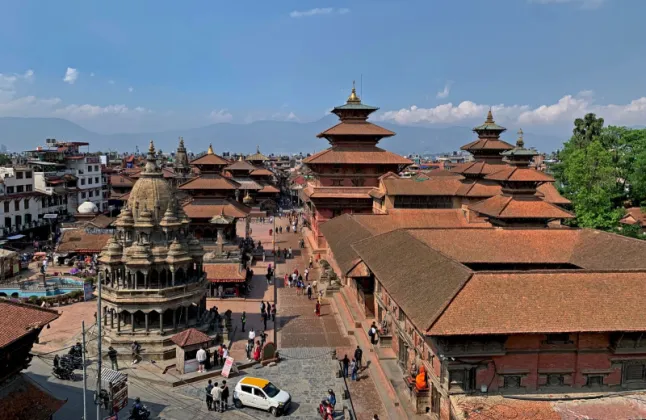
The living goddess Yal Kumari offered tika and jamara to the general public from the main courtyard of the historic Patan Durbar in Lalitpur on Saturday, the fourth day of Bada Dashain, on the occasion of Trayodashi. As members of the public received the auspicious markings from the child goddess, the observance of Dashain tika in the Newar community of Patan was formally concluded. The ceremony at one of the Kathmandu Valley's most celebrated heritage squares underlined the enduring place of the Kumari tradition in the festival life of the Newars, who revere the living goddess as a symbol of Taleju Bhawani.
Bringing Dashain to a formal close
For the Newar community of Patan, the festival of Bada Dashain does not end with the main day of celebration. It reaches its formal conclusion only when the living goddess herself has bestowed tika and jamara upon the people. That moment came on Saturday, when Yal Kumari offered the auspicious markings to the general public from the main courtyard of the historic durbar, and with it the Dashain tika of the community was officially completed.
The ritual follows an established sequence. Yal Kumari traditionally offers tika and jamara on Vijaya Dashami, the principal day of the festival, and her blessing on the fourth day of Bada Dashain, observed this year on the occasion of Trayodashi, extended the observance to its ceremonial end. For devotees, receiving tika directly from the living goddess is regarded as a special blessing, and the event serves as the final chapter of the festival in the historic city.
Key facts at a glance
- What happened: Living goddess Yal Kumari offered tika and jamara to the general public.
- Where: The main courtyard of the historic Patan Durbar in Lalitpur.
- When: Saturday, the fourth day of Bada Dashain, on the occasion of Trayodashi.
- Significance: The public blessing formally concluded the Dashain tika of the Newar community of Patan.
- Wider tradition: The Kumari also traditionally offers tika and jamara on Vijaya Dashami, the main day of the festival.
A goddess revered as Taleju Bhawani
In the Newar community, Yal Kumari is revered as a symbol of Taleju Bhawani, the goddess whose worship is woven into the royal and religious history of Patan. The identification of the living goddess with Taleju lies at the heart of the Kumari tradition of the Kathmandu Valley, in which a young girl is installed and worshipped as the living embodiment of the deity. Her very name points to the city she blesses, deriving from Yala, the Newar name for Patan.
The link between the Kumari and Taleju Bhawani also explains why the tika ceremony is staged within the durbar itself. The palace complex was for centuries the seat of the former rulers of Patan, who venerated Taleju as their tutelary goddess, and the courtyard remains a sacred stage for rituals that connect the city's living traditions with its past.
The annual public blessing is among the most significant ritual occasions in the Newar festival calendar of the valley. It allows the community as a whole, not only the priests and the households closest to the shrine, to receive the goddess's benediction in person.
Tika, jamara and the meaning of the blessing
Tika and jamara are the defining emblems of Bada Dashain, Nepal's greatest festival. The tika, a paste of rice, red vermilion and yogurt, is applied to the forehead with blessings for prosperity and well-being, while the jamara consists of the tender yellow shoots of barley sown on Ghatasthapana, the first day of the festival, and nurtured until they are ready for the celebrations. The festival commemorates the victory of the goddess Durga over the demon Mahishasura, and the exchange of tika and jamara is one of its most cherished customs.
In Patan, that custom acquires a distinctive dimension through the Kumari. When Yal Kumari offers tika and jamara, the blessing flows not from an elder within a family but from the living goddess herself, and it reaches the community as a whole. The fourth-day ceremony thus serves both as a continuation of the Vijaya Dashami observance and as its formal seal.
Ceremony in the heart of historic Patan
The setting of Saturday's ritual was as significant as the rite itself. The main courtyard of Patan Durbar, in the heart of Lalitpur, is among the most historic spaces in the Kathmandu Valley, part of the palace square that stands as a monument to the artistry and devotional life of Newar civilisation. Holding the public tika ceremony there keeps the festival anchored to the site where the city's royal and religious histories converge.
With the offering of tika and jamara completed, Bada Dashain has formally drawn to a close for the Newar community of Patan, as reported by Nagarik News. The blessing of the living goddess, bestowed upon the people in the courtyard of the old palace, once again closed the festival in the manner it has long been accustomed to.