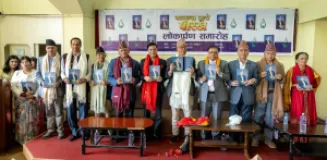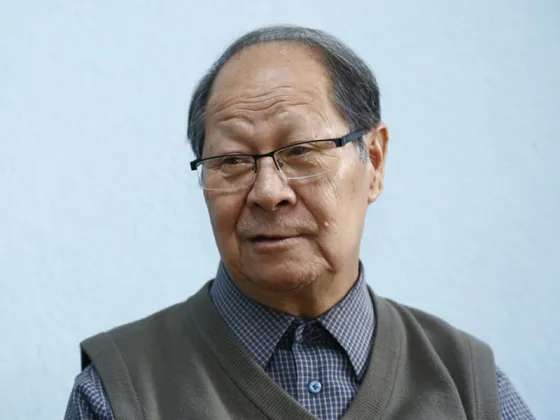
Nepal Workers Peasants Party Chairman Narayanman Bijukchhe on Saturday said that research holds great importance in politics, arguing that anyone serious about political work must first commit to study and investigation. Addressing the closing ceremony of the two-day 46th Nepal Bhasa Sahitya Tamunja in Bhaktapur, Bijukchhe said politically active people must examine social problems carefully, identify the realities behind them and work toward practical solutions. His remarks placed scholarly discipline at the heart of effective political practice, framing research not as an academic luxury but as a necessary tool for those who seek to bring about change in society.
Research as the Foundation of Political Work
Speaking at the closing ceremony, Bijukchhe laid out a clear argument for why research matters to those engaged in politics. In his view, political activism without study risks misunderstanding the very problems it aims to solve. He emphasized that politically active people must study and research themselves in order to do three essential things:
- Understand social problems as they actually exist, rather than as they are assumed to be
- Identify realities on the ground through direct investigation and analysis
- Seek solutions that respond to those verified realities
According to the party chairman, this process of observation, study and reflection is what allows political workers to move beyond slogans and engage meaningfully with the conditions of ordinary people. By insisting that politicians research problems for themselves, Bijukchhe suggested that genuine political insight cannot be borrowed or inherited; it must be built through sustained intellectual effort.
Knowledge Through Effort and Experience
Bijukchhe did not stop at the call for research. He also outlined what he believes success in politics actually requires, pointing to two complementary sources of knowledge. The first is the experience of others. In his assessment, political actors gain greatly by learning from what others have already tried, achieved or failed at, allowing them to avoid repeating mistakes and to build on lessons already learned.
The second source, he said, is one's own effort and hard work. Knowledge gained through personal striving, in his telling, is indispensable and cannot be replaced by secondhand information alone. Together, the two form a complete approach: political workers should absorb the experience of others while also testing and deepening that knowledge through their own labor and commitment. Presented at a literary gathering, the message resonated as a reminder that politics, like literature and scholarship, rewards patience, study and disciplined practice.
The Setting: 46th Nepal Bhasa Sahitya Tamunja
The remarks came at the closing ceremony of the 46th Nepal Bhasa Sahitya Tamunja, a literary event centered on Nepal Bhasa, the Newar language, held in Bhaktapur. The fact that the gathering has reached its 46th edition underscores its long-standing place in the cultural and literary calendar, and the two-day program brought together participants around the celebration of Nepal Bhasa literature.
That Bijukchhe chose this forum to speak about research and study was fitting. Literary and linguistic events of this kind depend on the same virtues he described: careful reading, attention to lived experience and the patient work of documenting social reality. His address connected the world of letters with the world of politics, suggesting that the disciplines of scholarship and the responsibilities of political leadership are deeply intertwined.
Why the Message Matters
Bijukchhe's comments arrive at a moment when questions about the quality of political leadership in Nepal are widely discussed. While the chairman did not direct his remarks at any specific debate, his framing carries clear implications for how political workers at every level should prepare themselves:
- Politics should be grounded in verified understanding of social conditions, not assumptions
- Politically active citizens should cultivate independent study habits rather than relying solely on others' conclusions
- Practical solutions emerge only after problems and realities have been properly identified
- Both borrowed experience and personal hard work are necessary for political success
For the audience gathered in Bhaktapur for a festival devoted to language and literature, the speech served as a bridge between cultural preservation and civic responsibility. It positioned the study of society, whether through literature or through political research, as a shared enterprise in service of the community.
A Call to Study Before Seeking to Lead
In sum, Bijukchhe's address at the 46th Nepal Bhasa Sahitya Tamunja was a call for intellectual seriousness in political life. He told those present that politically engaged people must study and research social problems, identify the realities beneath them and pursue solutions informed by that work. He added that success in politics comes from two streams of learning: drawing lessons from the experience of others and acquiring knowledge through one's own effort and hard work.
The message, delivered at a gathering celebrating Nepal Bhasa literature, linked the habits of the scholar with the duties of the politician. For a literary conference in Bhaktapur that has now run to 46 editions, the closing ceremony offered a reminder that the health of a society's politics and the vitality of its language and letters are connected pursuits, both demanding curiosity, rigor and sustained commitment. Further details of the event and the chairman's address are available in the original report by Thahakhabar.