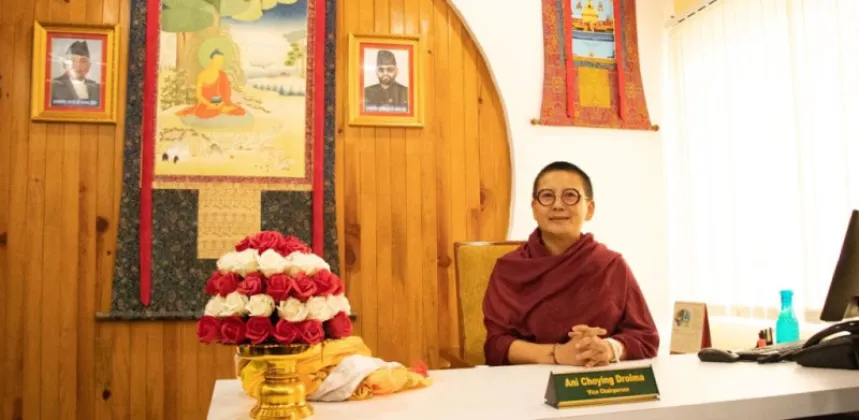
A writ petition has been filed at the Supreme Court challenging the appointment of renowned singer and Buddhist nun Ani Choying Drolma as vice-chairperson of the Lumbini Development Trust, with petitioners alleging that the appointment was unlawful and made in violation of established laws and procedures. The petition, reported on November 24 in Kathmandu, seeks the annulment of Drolma's appointment to one of the country's most prominent religious and cultural development bodies.
The writ was filed by Sunil Singh, Birjan Bishwakarma and Sukhata Bogati, three campaigners associated with the National Gen-Z Citizens' Campaign. Their petition argues that Drolma's appointment to the vice-chairperson post did not follow the legal requirements and due process that govern appointments to the Trust, a body tasked with the development and management of Lumbini, the birthplace of Lord Buddha.
The petitioners' case
According to the petition, the appointment of Ani Choying Drolma as vice-chairperson of the Lumbini Development Trust was made without adhering to the established legal framework and procedural requirements. The petitioners contend that such an appointment, made outside the ambit of the applicable laws, cannot stand and should be annulled by the court.
The writ petition, registered at the Supreme Court, seeks an order from the bench to quash the appointment on the grounds of its illegality. The petitioners, affiliated with the National Gen-Z Citizens' Campaign, have positioned their legal challenge as part of a broader push for accountability and adherence to the rule of law in public appointments.
Background on the appointment
Ani Choying Drolma, a Nepali-born Buddhist nun who gained international fame as a vocalist and performer, holds one of the most high-profile positions connected to the sacred site of Lumbini. The Lumbini Development Trust was established to develop, manage and promote Lumbini as the birthplace of Gautam Buddha and a global pilgrimage destination.
The vice-chairperson role at the Trust is a significant administrative position, overseeing the operations of the institution responsible for one of Nepal's four UNESCO World Heritage Sites. Given the Trust's religious, cultural and international significance, appointments to its leadership are expected to strictly follow the legal provisions laid out in the governing legislation.
Gen-Z campaigners' legal activism
The filing of the writ comes amid heightened civic and political engagement by the Gen-Z movement in Nepal. The three petitioners - Sunil Singh, Birjan Bishwakarma and Sukhata Bogati - identify as campaigners of the National Gen-Z Citizens' Campaign, a platform associated with the youth-led activism that has grown increasingly visible in the country's public affairs.
By taking their grievance to the Supreme Court rather than relying on administrative channels, the petitioners have chosen the judicial route to contest what they describe as an unlawful appointment. The move signals a pattern of youth-led groups turning to litigation to challenge government decisions they view as procedural violations.
What lies ahead
With the writ petition now registered, the Supreme Court will decide whether to hear the case and issue any interim orders concerning Drolma's status at the Trust. The court's willingness to entertain the petition, and its eventual ruling on the legality of the appointment process, will determine whether Drolma continues in the vice-chairperson role.
The case is likely to draw considerable public attention given Drolma's celebrity status in Nepal and abroad, as well as the religious and cultural importance of the Lumbini Development Trust itself. A ruling could also set a precedent on how appointments to the Trust and similar institutions are conducted in the future, clarifying the procedural standards that must be met when appointing its leadership.
As of the reporting on November 24, the Trust and Drolma had not issued public responses to the filing, and the Supreme Court has yet to announce whether the matter will be placed before a bench for a hearing.
Additional reporting sources: