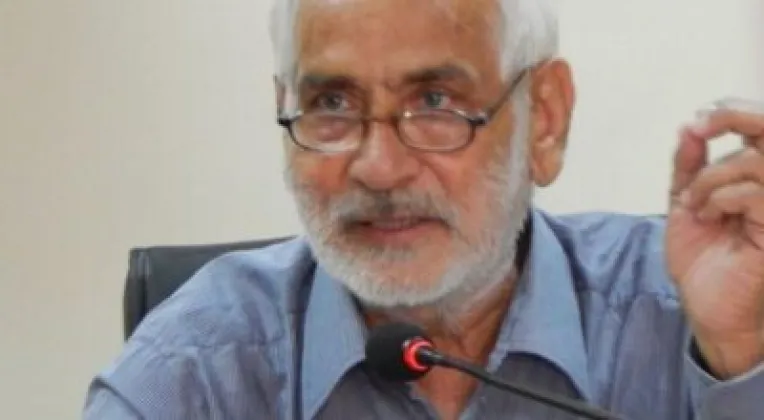
Indian professor and Nepal affairs expert SD Muni has described Prime Minister Balendra (Balen) Shah's recent two-day official visit to India as an average engagement that produced no major breakthrough. Writing in a series of posts on X on Tuesday, shortly after the visit concluded, Muni said the trip was impressive in terms of optics and the promises made, but fell short when it came to concrete results.
According to Muni, one of the clearest examples of this gap between rhetoric and outcome was the air route issue, which Nepal had raised as a key concern ahead of and during the visit. Despite the matter being highlighted by the Nepali side, the visit did not deliver a resolution on the issue, he said.
Optics Over Outcomes
Muni's assessment places the emphasis on the difference between what was said during the visit and what was actually achieved. He characterized the visit as strong on appearance and forward-looking statements, but lacking in tangible deliverables that would mark it as a success.
The veteran scholar, who has long been regarded as one of India's most closely followed analysts of Nepal-India relations, used his X posts to frame the visit as an underwhelming exercise. His comments came after Prime Minister Shah's official visit to India, which lasted two days, came to an end.
For a visit that had drawn considerable public attention in both countries, Muni's verdict that it was "average" and without a "major breakthrough" stands as a pointed evaluation from an expert whose views on bilateral ties carry weight in Delhi's policy circles as well as in Kathmandu.
The Air Route Concern
Central to Muni's criticism is the air route issue, which Nepal had flagged as a principal concern of the visit. Nepal has long sought improved air routes for its international flights, a matter that affects the country's connectivity and its aviation sector.
While the summary and reports indicate that Nepal raised the issue as a key concern during the visit, Muni noted that the engagement failed to produce concrete results on this front. In his view, the absence of movement on this priority item was among the reasons the visit could not be counted as a breakthrough moment in bilateral relations.
The professor's comments thus underline a familiar pattern in Nepal-India engagements, where high-level visits generate warm optics and a long list of assurances, but sensitive and long-pending issues often remain unresolved by the time the delegation returns home.
Reaction After the Visit
Muni's remarks were published on X on Tuesday, following the conclusion of Prime Minister Shah's official two-day visit to India. The posts were picked up and reported by Nepali media outlets, including Khabarhub, Ratopati and Rajdhani Daily, each highlighting the scholar's characterization of the visit as lacking concrete achievements.
Ratopati's report of the development was carried under a headline stating that there were "no concrete achievements" in Balen's visit to India according to SD Muni, reflecting the central thrust of his assessment. The coverage across outlets consistently emphasized the two themes Muni stressed: the visit's strength in optics and promises, and its weakness in delivering results on priority concerns such as the air route issue.
The timing of the comments, coming immediately after the visit wrapped up, suggests Muni sought to offer an early and candid appraisal of the engagement rather than wait for outcomes to unfold over time. His intervention has effectively set the tone for the post-visit debate in Nepal about what the trip actually accomplished.
A Measured but Critical Verdict
It is worth noting that Muni did not dismiss the visit outright. His framing of the trip as "average" implies that it was neither a failure nor a success, but an engagement that met the lower end of expectations. The recognition that the visit was strong in optics acknowledges that the atmospherics and presentation of the trip were handled well.
At the same time, his insistence that promises did not translate into breakthroughs points to the core test that such visits are ultimately judged by: whether longstanding bilateral issues see movement. On that measure, and particularly on the air route concern that Nepal prioritized, Muni's verdict was that the visit came up short.
As Prime Minister Shah's first high-profile official engagement with India draws public scrutiny, Muni's assessment is likely to feed the ongoing discussion in Nepal about how the country's concerns are received in New Delhi, and whether future engagements can move beyond optics to deliver on the issues that matter most to Kathmandu.