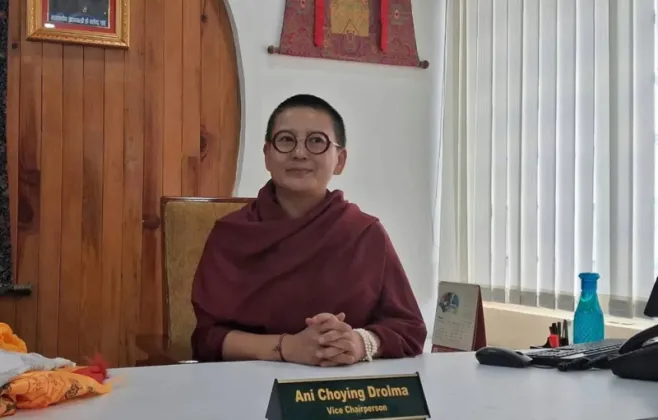
A petition has been filed in the Supreme Court challenging the appointment of renowned singer and nun Ani Choying Drolma, according to a report published by Nepal Lead. The writ petition, which questions the legitimacy of her appointment, has been registered at the country's highest court and is scheduled to be heard on Wednesday.
The available information does not specify the exact position to which Ani Choying Drolma was appointed, nor does it name the individual or party behind the petition. However, the mere registration of the case signals that the appointment has drawn legal and possibly political controversy, prompting the petitioner to seek judicial review from the Supreme Court.
A Case Headed for a Court Hearing
According to the report, the writ petition is now officially listed for hearing on Wednesday, when the Supreme Court will consider the arguments and evidence presented by both sides. In Nepal's legal system, writ jurisdiction is one of the key powers exercised by the Supreme Court, allowing citizens and other parties to challenge decisions of state bodies or appointments that they believe to be unlawful, improper, or made in violation of due process.
Writ petitions against high-profile appointments are not unusual in Nepal. Over the years, the Supreme Court has been petitioned repeatedly over appointments made to constitutional bodies, public institutions, and other official positions. Such petitions typically argue that the appointment process bypassed established procedures, was marred by conflicts of interest, or failed to meet the qualifications and criteria prescribed by law.
What Remains Unclear
Despite the petition having already been registered and scheduled for hearing, several fundamental details about the case have not been disclosed in the initial reports:
- The appointed position: The articles do not specify which office, institution, or role Ani Choying Drolma was appointed to, leaving the scope of the dispute open to interpretation until further information becomes available.
- The petitioner: The identity of the individual or organization that filed the writ has not been revealed, nor has the legal basis of their challenge been publicly detailed.
- The grounds for objection: It is not yet known whether the petition challenges the appointment on procedural grounds, questions the appointee's eligibility, or alleges political or legal impropriety in the selection process.
Until the hearing takes place or the court itself releases further information, these questions are likely to remain unanswered in the public domain. The scheduling of the hearing so soon after the filing suggests the court has accorded the matter some urgency, which is common in appointment-related writ cases where the state of the contested position hangs in the balance.
Who Is Ani Choying Drolma?
Ani Choying Drolma is one of Nepal's most widely recognized public figures, known internationally as a singer and spiritually as a Buddhist nun. Born and raised in Kathmandu, she rose to prominence for her devotional and traditional Nepali music, which brought her a global audience and made her a cultural ambassador of sorts for the country. Her distinctive voice and the unique combination of her monastic identity with an international music career have long made her a subject of both admiration and public interest.
Beyond music, she has been involved in charitable and humanitarian work, and her profile has extended into public life, making her a familiar name well beyond artistic circles. Her involvement in public and institutional matters has occasionally drawn attention and discussion in the media, and the latest development suggests that her appointment to an unspecified position has now become a matter of formal legal contestation.
What Happens Next
The Supreme Court will take up the writ petition on Wednesday. Depending on how the hearing unfolds, the court may issue an interim order, ask the concerned authorities to submit clarifications, or schedule further deliberations before reaching a decision. In appointment-related writ cases, courts have sometimes issued stay orders suspending the contested appointment until the case is fully adjudicated, while in other instances they have dismissed the petitions, allowing the appointments to stand.
For now, the hearing on Wednesday will be the first procedural step in what could become a significant legal battle over the appointment. If the court finds merit in the petition, it could result in the appointment being reviewed, suspended, or annulled. Conversely, if the petition is rejected, Ani Choying Drolma's appointment would be affirmed and the dispute would effectively be resolved.
Observers of Nepal's judicial and political affairs will be watching the outcome closely, as appointment challenges frequently have implications not only for the individuals involved but also for the institutions concerned and the broader questions of transparency and due process in public appointments. Further details about the position in question and the grounds of the petition are expected to emerge as the case proceeds through the court.
Source: Nepal Lead