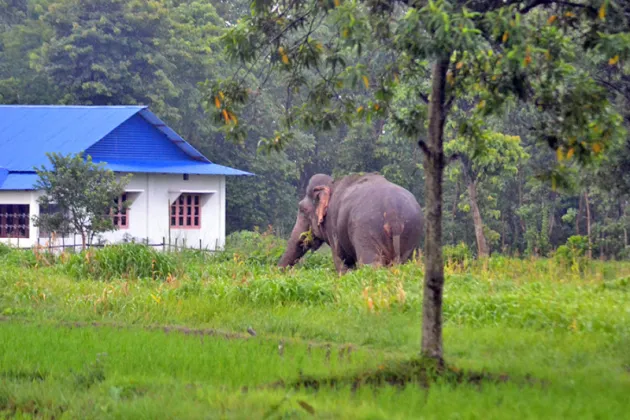
Residents of Bahundangi in Mechinagar Municipality-4, Jhapa district, are living under constant fear as large herds of wild elephants continue to enter Nepal from the Indian side, breaching the solar-powered electric fence built along the Nepal-India border. According to reports from Jhapa dated November 24, the elephants typically cross into the area after dusk, overcoming both the electric barrier and the security personnel deployed to stop them.
The nightly incursions have turned what was once regarded as a protective barrier into what locals describe as an ineffective line of defence. Despite the presence of the fence and round-the-clock vigilance by security staff, the herds have shown no sign of being deterred, and the situation has left the community on edge, with families uncertain about what each night may bring.
A fence that fails to hold
The solar-powered electric fence along the Nepal-India border was intended to prevent wild elephants from straying into human settlements. However, residents of Bahundangi say the barrier has repeatedly failed to hold back the herds. The elephants, entering after darkness falls, have managed to breach the fence on a daily basis.
The failure of the fence is compounded by the limits of manual intervention. Security personnel are deployed along the border area specifically to stop the elephants from crossing, yet the animals continue to push through. The combination of the electric barrier and human patrols has so far not been enough to keep the herds out, according to the report from Jhapa.
For the residents of Mechinagar Municipality-4, the pattern has become grimly familiar. The elephants' entry after dusk means that the hours of darkness, normally a time of rest, have instead become a period of anxiety, with locals keeping watch over their homes and farmland.
Life in fear at the border
The situation has left the people of Bahundangi living in fear, the report notes. The presence of large herds of wild elephants in and around the settlement poses a constant threat, and the fact that the animals enter every night means the sense of danger is not an occasional occurrence but a daily reality.
Bahundangi, located along the Nepal-India border in Jhapa, has long been at the frontline of human-elephant encounters, as wild herds moving through the border belt pass through the area. The current spate of breaches, however, has heightened tensions among locals, who say the combination of the fence and security deployment was supposed to offer them protection.
The deployment of security personnel alongside the electric fence underscores the seriousness with which the authorities have treated the issue. Yet as the events of recent days show, the measures in place have not been sufficient to stop the crossings, and residents continue to bear the brunt of the elephant incursions.
Demands for durable solutions
While the latest report from November 24 focuses on the fear gripping the community, it also highlights a growing question for local authorities and wildlife officials: how to make the border defences effective against the nightly crossings. The solar-powered fence, once considered a modern safeguard, has not prevented the herds from entering, and the manpower deployed alongside it has similarly fallen short.
The repeated breaches raise concerns about the durability of the existing measures and the need for approaches that can genuinely protect the settlements of Mechinagar Municipality-4. For now, the residents of Bahundangi remain on edge, waiting each dusk for the moment when the herds once again test the border fence.
As reported by Onlinekhabar, the situation in Jhapa remains tense, with locals calling for effective intervention as the elephants continue to enter Nepal nightly. Until a workable solution is found, the people of Bahundangi say they have little choice but to live with the fear that accompanies every nightfall.
- The herds breach the solar-powered electric fence along the Nepal-India border daily
- Crossings occur after dusk, defeating both the barrier and deployed security personnel
- The affected settlement is Bahundangi in Mechinagar Municipality-4, Jhapa
- The situation was reported from Jhapa on November 24
The incidents serve as a stark reminder of the challenges faced by communities living along elephant movement routes in eastern Nepal, where the conflict between conservation and human safety remains unresolved.