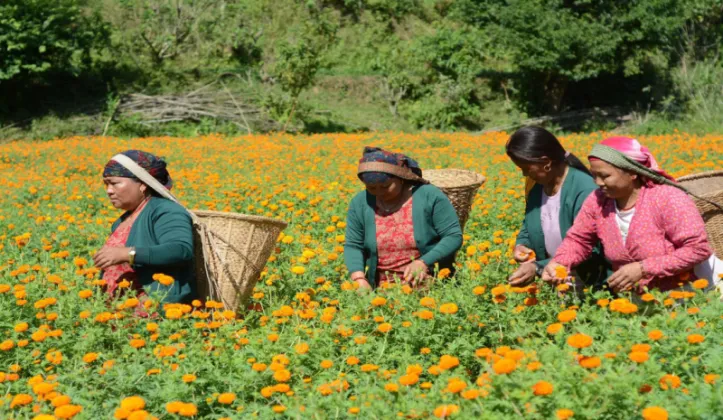
Farmers of Chhimlishwara in Magde Rural Municipality-4 of Tanahun district have found a ready market for their marigold flowers this year without having to leave their farms. Unlike in previous years, when growers had to search for buyers to purchase their produce, traders and customers came directly to the fields this season, leaving farmers with no worry about selling the flowers they had cultivated.
The convenient market access has brought visible enthusiasm among local growers, particularly members of a women's group in the area that has been engaged in marigold farming. Selling flowers straight from the farm has not only saved the farmers time and effort but has also added substantial income, encouraging them to continue and possibly expand the enterprise.
A Market at the Farmgate
For farmers who depend on seasonal flower sales, finding buyers is often the most difficult part of the business. Flowers such as marigolds are highly perishable, and delays in finding a market can mean significant losses. This year, however, the situation in Chhimlishwara was different, as buyers arrived at the farms themselves to purchase the marigold harvest.
This farmgate selling model has proven to be a win-win for the growers. It eliminates the cost and hassle of transporting flowers to distant markets, and it gives buyers access to fresh flowers directly from the field. For the women's group involved in marigold cultivation, the direct purchases have translated into substantial earnings and renewed motivation to invest in farming.
Boosting Women's Income and Confidence
The women's group in Magde Rural Municipality has emerged as a key player in local marigold farming. With flowers now being sold directly from their farms, the group is earning considerable income from the venture, according to reports. The added income has lifted the group's enthusiasm, demonstrating that commercial flower farming can be a viable livelihood even in rural areas far from major urban markets.
The success also highlights the growing role of women in Nepal's agricultural economy. By organizing into groups, women farmers are able to pool their labor, share knowledge, and market their produce more effectively. The Chhimlishwara experience suggests that when a reliable market channel is available, such groups can turn traditional seasonal crops into a dependable source of cash income.
Marigolds and Nepal's Flower Economy
Marigolds hold a special place in Nepali culture and are in high demand during major festivals, particularly Tihar, when households across the country use the flowers to make garlands and decorate homes and businesses. This seasonal surge in demand creates an important sales window for flower farmers, and those who can time their harvest to meet festival demand often command good prices.
For farmers in districts like Tanahun, marigold cultivation has become an attractive option because the flowers are relatively easy to grow and have a guaranteed cultural demand. The challenge has traditionally been market access, as growers in rural areas lack direct links to buyers in towns and cities. The experience in Chhimlishwara, where buyers came directly to the farms, points to one way this challenge can be overcome.
A Model Worth Replicating
The story of the Tanahun marigold farmers carries lessons for agricultural development across Nepal. Farmers often produce good harvests but struggle to sell them, leading to wasted produce and discouragement. When buyers are connected directly to farms, farmers gain certainty, better incomes, and the confidence to invest more in their fields.
The enthusiasm seen among the farmers of Magde Rural Municipality-4 reflects the broader potential of commercial flower farming in the hills of Nepal. If the current arrangement continues, local growers are likely to expand production in the coming seasons, and the women's group at the center of the effort could serve as an example for other communities looking to turn flowers into a sustainable source of income.
As reported by Gorkhapatra Online, Ratopati, and Nagarik News, the marigold farmers of Chhimlishwara have shown that with the right market connections, rural agriculture can flourish and bring prosperity directly to those who cultivate the land.