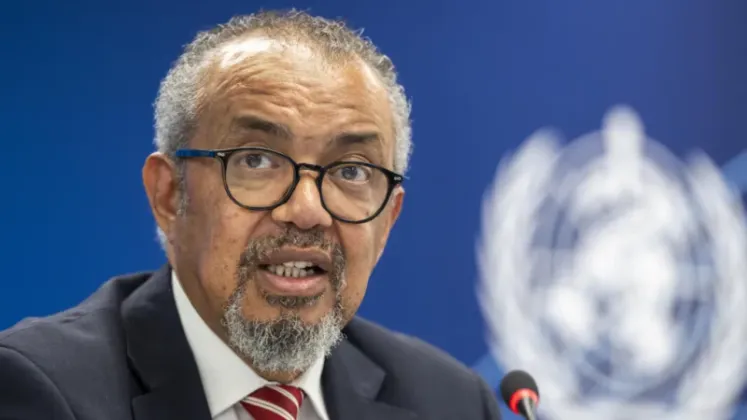
World Health Organization (WHO) Director-General Tedros Adhanom Ghebreyesus met Venezuela's interim President Delcy Rodríguez in Caracas on Friday, using the first official visit by the agency's chief to the South American country to pledge health support. According to the WHO, that support will include helping to ensure that medicines are available within Venezuela itself. The meeting, held in the Venezuelan capital, brought together the head of the United Nations' leading health body and the country's interim leader, and it signals an intention to deepen cooperation between the global health agency and Venezuela's health sector, as reported by Rato Pati and Gorkhapatra Online.
A first official visit to Caracas
What makes Friday's meeting stand out is not simply who sat across the table, but the fact that it happened at all. This was the first time Tedros has travelled to Venezuela in an official capacity as Director-General, a milestone that gives the encounter significance beyond its immediate outcomes. Tedros has led the WHO since 2017 and is the first African to head the agency, and visits of this kind by international health chiefs are typically used to review a country's health priorities firsthand and to signal a willingness to work closely with national authorities.
Official first visits also carry symbolic weight. When the head of a major multilateral agency makes a maiden trip to a country, it is generally read as an affirmation of that country's place within the international system and an indication that cooperation is expected to continue or grow. His host, Delcy Rodríguez, received the WHO chief as Venezuela's interim president, a title that underlines the transitional moment at which the visit took place.
Initial reports of the meeting did not lay out a full agenda, but the central subject was clear: health, and the shape that WHO support for Venezuela should take.
A pledge built on medicine availability
The most concrete element to emerge from the talks is the WHO's stated commitment to help ensure that medicines are available within Venezuela itself. That phrasing matters. Whether people can obtain medicines inside their own country, without gaps in supply or the need to look abroad, is one of the most basic measures of a health system's strength, and it is a field in which the WHO has long been active, from maintaining internationally recognised reference standards on essential medicines to advising countries on questions of supply and access.
By committing to work on medicine availability, the WHO has effectively placed pharmaceutical access at the centre of its engagement with Venezuela. The pledge was not accompanied by specific figures, programmes or timelines in the initial reports, but the direction it signals is unambiguous: the organisation says it intends to support Venezuela in making sure its people can obtain the medicines they need within the country's own borders.
The key points at a glance
For readers following the story, the main elements of Friday's developments are straightforward:
- WHO Director-General Tedros Adhanom Ghebreyesus met interim President Delcy Rodríguez in Caracas on Friday.
- The meeting marked the WHO chief's first official visit to Venezuela.
- Tedros pledged health support for the country during the talks.
- The WHO said it would help ensure that medicines are available within Venezuela itself.
What the WHO brings, and what comes next
The WHO is the United Nations' specialised agency for international health, and its cooperation with member countries typically spans strengthening health systems, expanding access to essential medicines, supporting immunisation and disease control efforts, and helping governments prepare for and respond to health emergencies. A pledge of health support delivered in person by the Director-General therefore carries weight: it points to the agency's technical expertise, its convening power and its standing role as a partner to national health authorities.
For Venezuela, the immediate significance of the meeting lies in that public commitment from the WHO's most senior official. Visits of this kind often serve as an opening step in a longer process, with technical teams typically following up on the priorities discussed at leadership level. Whether the pledge on medicine availability evolves into defined programmes will become clearer over time; the initial reports of the meeting did not detail the mechanisms or funding behind the commitment.
What Friday's encounter has already established, however, is a clear statement of intent from the global health body toward Caracas. Under Tedros, the WHO says it is ready to stand behind Venezuela's efforts to keep medicines available within its own borders. As the country moves through its current transition under an interim president, that assurance from the world's leading health agency stands as a tangible signal of support for Venezuela's health sector, and one that will ultimately be measured by whether medicines reach the people who need them.