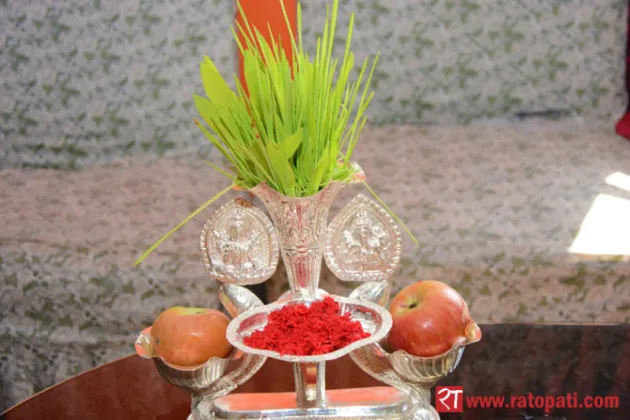
Homes across Nepal are celebrating Vijayadashami today, the main day of the Bada Dashain festival, with younger family members receiving red tika and yellow jamara from their elders as the prasad of Navadurga. This year's ceremony comes with a specific ritual instruction concerning the direction in which the tika should be applied. According to Prof. Purushottam Bhattarai, chairman of the Nepal Panchang Nirnayak Vikas Samiti, the moon is positioned in Aquarius on the day of Vijayadashami, and because of that celestial placement, those receiving the tika should sit facing west, while those applying it should sit facing east.
This Year, Face West to Receive the Tika
The guidance issued by the panchang committee links the direction of the ritual directly to the position of the moon on the day. Because the moon is in Aquarius on this Vijayadashami, Prof. Bhattarai has stated the following orientations for households performing the ceremony:
- Those receiving the tika should sit facing west.
- Those applying the tika, normally the elders of the family, should sit facing east.
The instruction means that elders and younger family members will face each other during the exchange, with the elders oriented to the east and the recipients to the west. According to the committee, following this alignment allows the ritual to be performed in the manner prescribed for the day. Since the direction is derived from the moon's position on Vijayadashami, the guidance applies specifically to this year's celebration.
The tika ceremony is among the most widely practised rituals of the festival, and the clarification is expected to help families arrange the seating of the ritual correctly before the blessings begin.
Auspicious Timing and the Role of the Panchang Committee
Alongside the question of direction, families observing the festival have also been looking to the auspicious timings announced for the day. Details of the auspicious dates and the religious rituals connected to Vijayadashami have been described in a report published by Rato Pati, which explains the procedures households are expected to follow during the tika ceremony.
The Nepal Panchang Nirnayak Vikas Samiti is the body responsible for determining the panchang, the religious calendar that fixes the dates and auspicious moments of Nepal's festivals. Its pronouncements guide when rituals such as the application of tika are to be carried out, and the chairman's explanation of this year's directions follows that same tradition of aligning festival practice with celestial positions.
For families preparing for the day, the committee's guidance serves a practical purpose. The tika ceremony is traditionally performed on the main day of Dashain, and households arrange their celebrations around the timings and procedures set out in the panchang. With the moon in Aquarius this Vijayadashami, the seating arrangement becomes as much a part of the ritual as the tika and jamara themselves.
How the Ceremony Is Performed
On Vijayadashami, the ritual follows a familiar pattern in Nepali households:
- Elders sit to apply the tika, facing east as per this year's guidance.
- Younger family members approach them and sit facing west to receive the tika.
- The red tika is placed on the forehead, the yellow jamara is offered, and the elders give their blessings.
The exchange of blessings between generations is the emotional core of the day. Elders bless the younger members of the family as they apply the tika, and the recipients accept the tika and jamara with respect as prasad of Navadurga.
Tika and Jamara as Prasad of Navadurga
The red tika and yellow jamara that families exchange on Vijayadashami are not merely festive ornaments. According to the religious understanding of the festival, they are the prasad of Navadurga, the goddesses worshipped during Bada Dashain. Receiving them from one's elders is therefore an act of devotion as well as a family tradition.
The jamara, yellow and fresh, is offered together with the tika and carried by the recipients as a mark of the blessing they have received. The red tika applied on the forehead likewise signifies the blessing bestowed by the elders. Together, the two form the central ritual offering of the day, and their exchange is the reason family members gather before their elders on Vijayadashami.
Because the tika and jamara are treated as prasad, the manner of receiving them carries religious weight. This is where the committee's direction guidance becomes significant: the orientation of the giver and the receiver is part of performing the ritual correctly, in keeping with the celestial positions of the day.
The Main Day of Bada Dashain
Vijayadashami holds a place of special importance in the Dashain festival. It is regarded as the main day of Bada Dashain, the occasion on which the tika ceremony takes place in households across the country. On this day, elders and younger generations come together for the exchange of tika, jamara and blessings, making it one of the most widely observed rituals in the Nepali calendar.
The day also brings families together in a way few other occasions do. Relatives gather at the homes of their elders, younger members receive the red tika and yellow jamara, and the blessings offered during the ceremony are understood to carry good wishes for the year ahead.
With this year's Vijayadashami falling while the moon is in Aquarius, families performing the ritual have been advised to follow the prescribed directions: receivers facing west, givers facing east. For the many households marking the festival, the combination of auspicious timing, correct ritual procedure and the blessings of their elders defines the celebration of the main day of Bada Dashain.