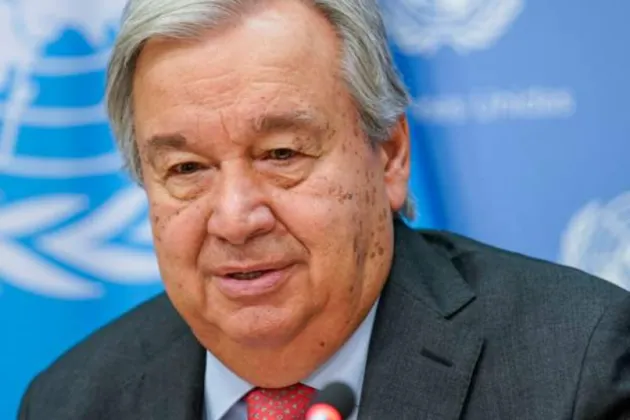
United Nations Secretary-General Antonio Guterres has called for restraint and a political solution amid an escalating conflict in Yemen and continuing Houthi rebel attacks on neighbouring Saudi Arabia. In a post on X, the UN chief said the attacks targeting Saudi citizens are unacceptable, warning that such activities cause suffering to ordinary people and heighten regional tension. His intervention, reported by RatoPati and Prades Khabar, came as the European Union separately proposed listing the Houthis as a terrorist organisation, according to reports, adding diplomatic weight to the growing international response.
"Unacceptable" Attacks, Says UN Chief
Guterres used his statement on X to condemn the attacks in clear terms while pressing all sides to step back from further escalation. Taken together, his comments carried three central messages:
- The attacks targeting Saudi citizens are unacceptable.
- Such activities cause suffering to ordinary people, who continue to bear the cost of the violence.
- The attacks heighten regional tension at a time when the conflict in Yemen is already escalating.
Alongside the condemnation, the Secretary-General issued a twin appeal: restraint on the ground and a political settlement to the conflict as a whole. The framing is consistent with the United Nations' long-standing position that the war in Yemen cannot be resolved through force, and that every escalation deepens the hardship of civilians caught up in the fighting. By speaking out as the Houthi attacks on Saudi Arabia continued, Guterres signalled that the world body is watching the deterioration closely and wants the parties to avoid a wider confrontation.
EU Proposes Terrorist Listing for Houthis
Even as the UN delivered its warning, the European Union has moved to designate the Houthis as a terrorist organisation, according to reports carried by Prades Khabar. Such a listing is among the most serious steps a government or bloc can take against a non-state armed group, and it would mark a significant hardening of the EU's posture toward the Houthis, whose attacks on Saudi Arabia have drawn mounting international criticism.
The practical effect of a designation would depend on the legal framework adopted, but listings of this kind are generally designed to:
- Restrict financial dealings with the designated group.
- Signal political isolation, marking the group as operating outside acceptable conduct.
- Complement diplomatic pressure by giving other governments a basis for comparable measures.
Taken together with Guterres's remarks, the move illustrates how concern over the attacks is translating into concrete diplomatic and legal steps, even as the United Nations continues to insist that the ultimate answer lies in negotiation rather than escalation. The combination of condemnation from the world's foremost multilateral body and punitive intent from Europe's main political bloc points to an increasingly unforgiving international climate around the group.
Escalating Conflict, Heightened Regional Tension
The backdrop to both developments is an escalating conflict in Yemen and a pattern of Houthi attacks that has carried the violence into Saudi territory. The Secretary-General's warning that the attacks "heighten regional tension" pointed to the risk that the confrontation could widen beyond the two countries at a moment when the situation is already volatile.
Equally central to his message was the human cost. In noting that the attacks "cause suffering to ordinary people", Guterres placed civilians at the centre of the debate, underscoring that the consequences of escalation fall on households and communities rather than on the armed actors themselves. That emphasis framed his call for restraint as a humanitarian imperative as much as a diplomatic one, and it reflected the urgency with which the UN views the current trajectory of the fighting.
Restraint Now, Politics for a Lasting Settlement
The practical thrust of Guterres's statement lies in its two-part prescription. In the immediate term, he is calling for restraint: an end to attacks that inflame the region and an avoidance of any spiral that could broaden the war. Beyond that, he is pressing for a political solution to the conflict in Yemen itself, which he made clear can be settled only through negotiation rather than continued bloodshed.
The convergence of the UN's appeal with the EU's proposed designation captures the international community's dual approach: pressure on the Houthis to halt their attacks, paired with a continuing insistence that Yemen's war be ended through politics. For now, the Secretary-General's message is unambiguous: the attacks on Saudi citizens are unacceptable, the suffering they inflict on ordinary people deepens the crisis, and the way forward lies in de-escalation and dialogue rather than deeper conflict. Further details on his statement and the EU proposal are available via RatoPati and Prades Khabar.