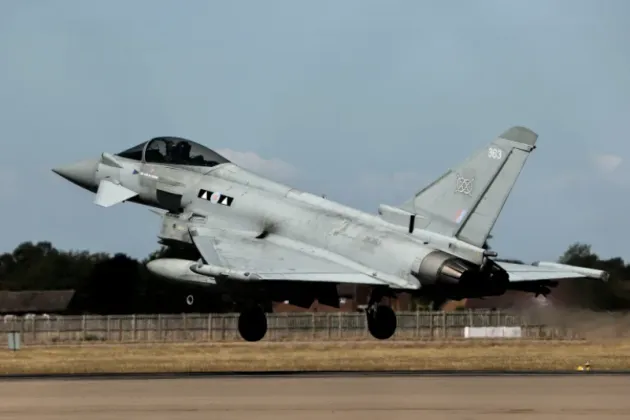
The United Kingdom is preparing to send Typhoon fighter jets to help protect Saudi Arabia from attacks by the Houthi movement, according to reports published on October 20 and 21, 2026. The deployment is described as a direct response to the threat posed by Houthi strikes against Saudi territory, and it signals a deepening of British security involvement in the Gulf at a time of continuing regional tension. Key operational details remain unclear, as the reports did not specify the number of aircraft involved or the timing of the move.
A Defensive Mission Framed Around Houthi Threats
The reports characterize the move as a protective measure, with the Typhoons assigned to help safeguard Saudi Arabia from Houthi attacks rather than to join offensive operations. That framing matters: air defense deployments of this kind are typically aimed at intercepting incoming missiles and drones before they can reach populated areas or critical infrastructure such as airports and energy facilities.
For London, the announcement represents a fresh demonstration of commitment to the security of one of its key Gulf partners. For Riyadh, the arrival of advanced British fighter jets would reinforce an air defense umbrella at a moment when the threat described in the reports remains a live concern for Saudi territory. The decision also underscores how seriously Western governments continue to treat the reach of the Houthi movement beyond Yemen's borders.
Key Questions That Remain Unanswered
While the core of the story is clear, much about the deployment is not. According to the available reports:
- The number of Typhoon jets to be deployed has not been disclosed.
- The timing of the deployment, including when the aircraft would arrive or how long they would remain in place, has not been confirmed.
- Basing arrangements, including whether the jets would operate from Saudi soil or from elsewhere in the region, have not been detailed.
- It is not yet clear whether the deployment is open-ended or tied to a specific review period.
The absence of these specifics suggests the plan may be at an early stage, or that officials are withholding operational details, which are frequently kept confidential for security reasons. Further announcements from the British government, or from Saudi authorities, could clarify the scope of the mission in the days ahead.
Background: The Houthi Threat to Saudi Arabia
The Houthi movement, formally known as Ansar Allah, is based in Yemen and has been locked in years of conflict with the government and a Saudi-led coalition that intervened in the war in 2015. Over that period, the group has periodically fired ballistic missiles and armed drones across the border, targeting Saudi cities and infrastructure, and Saudi Arabia has long regarded such cross-border fire as a top security priority.
Those strikes, and the persistent threat of further ones, form the backdrop against which the UK's reported deployment should be read. The reports describe the decision explicitly as a response to Houthi attacks on Saudi territory, indicating that Riyadh continues to treat the movement's ability to strike beyond Yemen as a serious and ongoing risk.
A Region Familiar With Houthi Reach
The Houthis have also drawn international attention in recent years for attacks well beyond the Saudi border, including actions against international shipping in the Red Sea and Gulf of Aden. That wider campaign has repeatedly pulled outside powers into the region's security calculations, and a British decision to place fighters in a protective posture over Saudi Arabia fits that broader pattern of engagement.
British forces are no strangers to the region's airspace. The Royal Air Force has maintained a presence in the Gulf for years, and Typhoons in particular have flown air defense and strike missions across the Middle East, including the interception of drones and missiles during past regional escalations. That operational experience is precisely what makes the type a natural choice for a mission centered on protecting Saudi Arabia from air attacks.
Why the Typhoon Fits the Task
The Eurofighter Typhoon is the Royal Air Force's principal multirole combat aircraft, designed first for air superiority but increasingly used for ground attack and reconnaissance. Its long-range radar, high speed and modern weapons give it the tools needed to detect, track and shoot down incoming threats such as drones and cruise missiles, which are the hallmarks of Houthi cross-border attacks.
A defensive deployment of Typhoons would therefore add a combat-proven interception capability alongside Saudi Arabia's existing defenses. For the aircraft's crews, it would mean standing alert for potential intrusions and being ready to scramble at short notice, a task Typhoon squadrons routinely train for.
What Comes Next
With neither the size of the detachment nor its timeline confirmed, attention will now turn to formal announcements from London and Riyadh. Open questions remain about how long the deployment will last, what supporting ground crews and basing infrastructure would accompany it, and whether further British assets might be committed alongside the jets.
For now, the outlines are clear enough: the UK intends to place Typhoon fighters in a defensive posture to protect Saudi Arabia from Houthi attacks. If carried out as reported, the mission would place British airpower at the front line of one of the region's most persistent security challenges, and would mark the latest chapter in a long security relationship between Britain and the Gulf. As of publication, no additional operational details have been made public.