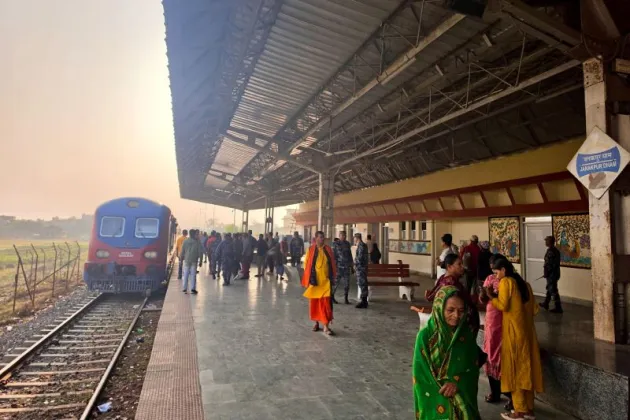
A train carrying around 1,000 passengers arrived in Janakpur from Ayodhya on 24 November 2026, in another journey along the cross-border rail link connecting the two historic cities. The train had departed from Ayodhya earlier the same day before crossing into Nepal, where it was received at Janakpur.
The arrival was reported by multiple Nepali news outlets, including Thaha Khabar and Nepal Lead, which noted the significant passenger load on the service. The roughly 1,000 travellers on board highlights the steady demand for the rail route, which links two sites of deep cultural and religious importance in the region.
A Link Between Two Sacred Cities
The Janakpur-Ayodhya rail connection holds particular significance for pilgrims and tourists. Janakpur, in Nepal's Madhesh Province, is revered as the birthplace of Sita, while Ayodhya in India's Uttar Pradesh state is celebrated as the birthplace of Lord Ram. The rail service between the two cities forms part of broader cross-border rail connectivity between Nepal and India, a project that has been developed to strengthen transport links between the two neighbours.
The route allows passengers to travel directly between the two cities without the need for long road journeys across the border. For the passengers who arrived in Janakpur on Monday, the journey offered a direct rail link between the two pilgrimage centres, a route that historically has seen heavy foot traffic from devotees travelling in both directions.
Part of Broader Nepal-India Rail Connectivity
The service is one element of the wider cross-border rail network that Nepal and India have developed to improve connectivity between the two countries. Rail links through the southern border region are intended to facilitate the movement of passengers and support people-to-people ties alongside trade and tourism between the neighbours.
The Janakpur section of the railway has previously been used for cross-border services, and the arrival of a train carrying around 1,000 passengers from Ayodhya underscores the scale of interest in the route. Reported by Thaha Khabar and Nepal Lead, the Monday arrival adds to the record of journeys completed under the bilateral rail arrangement.
High Passenger Numbers Highlight Demand
The passenger count on this journey, approximately 1,000 people, points to the volume of travellers using the corridor. Pilgrimage traffic between Janakpur and Ayodhya has been a defining feature of the route, with devotees from Nepal visiting Ayodhya and Indian pilgrims travelling to Janakpur to visit temples associated with Sita, including the famous Janaki Mandir.
The train's departure from Ayodhya earlier on 24 November and its same-day arrival in Janakpur demonstrated the operational routine of the service. Nepali news outlets covering the arrival emphasised the size of the passenger group, a figure that reflects the rail link's role in moving large numbers of people across the border in a single trip.
Looking Ahead
As cross-border rail connectivity between Nepal and India continues to operate, services such as the Ayodhya-Janakpur route are expected to remain an important channel for pilgrims, tourists and general travellers. The arrival on 24 November 2026 stands as the latest instance of the train completing its journey between the two cities, carrying a full complement of passengers across the international border.
For Janakpur, the continued operation of the service reinforces the city's position as a major destination on the religious tourism circuit linking Nepal and India. Each arrival of the train from Ayodhya brings visitors directly to a city that sits at the heart of the Ramayana tradition shared by both countries.