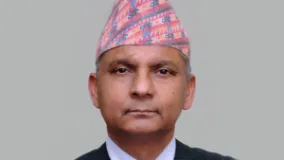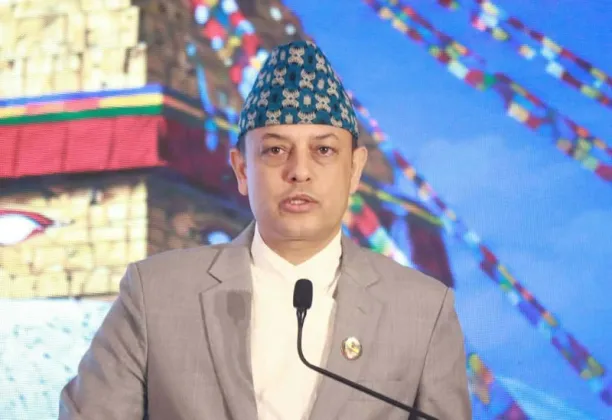
Speaker of the House of Representatives Dol Prasad (DP) Aryal has said that festivals like Dashain strengthen mutual reconciliation, brotherhood and social unity among Nepalis. In a greeting message issued on the occasion of Bada Dashain, the Speaker underlined that the country's most widely celebrated festival fosters harmony amid its rich social and cultural diversity. The message was released from Kathmandu ahead of the festival, with details carried by Nepali media outlets including Ratopati, Nagarik News and Nepal Press on 21 October 2026.
A message of unity ahead of Bada Dashain
In his greeting, the Speaker said that Bada Dashain carries a significance that goes well beyond ritual observance. He described festivals like Dashain as occasions that further deepen the bonds of mutual reconciliation, brotherhood and social unity that hold Nepali society together. By bringing families, neighbours and communities together, he noted, such celebrations nurture a sense of shared belonging even in a country as diverse as Nepal.
The core of the Speaker's message can be summarised in four interlinked ideas:
- Mutual reconciliation: Festivals provide moments when people set aside differences, allowing relationships to be renewed and grievances to heal.
- Brotherhood: Gatherings around tika, jamara and shared festive meals reinforce the spirit of fraternity among relatives, friends and neighbours.
- Social unity: Celebrations observed across the country give Nepalis of different backgrounds a common cultural reference point.
- Harmony amid diversity: In a multi-ethnic, multi-lingual and multi-religious society, festivals act as bridges that connect communities.
The greeting was issued from Kathmandu ahead of the festival, as households across the country completed preparations for the celebrations and people began travelling to their home towns and villages for family reunions.
Dashain: Nepal's most widely celebrated festival
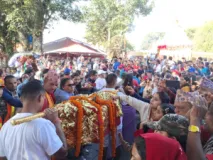
Bada Dashain, also known simply as Dashain or Vijaya Dashami, is the longest and most widely observed festival in the Nepali calendar. Celebrated by Hindus across Nepal and by the Nepali diaspora around the world, the festival spans roughly fifteen days and culminates in Vijaya Dashami, the day when elders apply tika, a mixture of rice, vermilion and yogurt, along with jamara, young barley shoots, on the foreheads of younger relatives while offering blessings for health, happiness and prosperity.
The festival is marked by several key observances:
- Ghatasthapana, the ritual sowing of jamara seeds at the start of the festival period
- Fulpati, Maha Astami and Maha Nawami, days of worship observed in the lead-up to the main day
- Vijaya Dashami, when families gather for tika, jamara and blessings from elders
- Kojagrat Purnima, which formally concludes the festival period
Beyond its religious dimension, Dashain is a season of homecoming and family reunion. It is common for people working in cities and abroad to return to their ancestral homes, with markets, transport routes and villages filling with festive activity in the days surrounding the main celebration.
Harmony amid diversity
Nepal is home to dozens of ethnic groups, languages and religious traditions, and the Speaker's message placed Dashain firmly in that context. By stressing that festivals foster harmony amid diversity, Aryal framed Bada Dashain not merely as a religious observance but as a social force that binds together a pluralistic nation.
Festivals in Nepal often cut across community lines, with people of different backgrounds joining in celebrations, exchanging greetings and sharing festive meals. The Speaker's emphasis on reconciliation, brotherhood and social unity reflects the view, widely shared in public life, that such occasions strengthen the social fabric at a time when the country continues to navigate questions of identity, inclusion and national cohesion.
The greeting from the Speaker is also in keeping with a familiar tradition in Nepal's festival calendar, in which senior figures, including the head of state, the head of government and the presiding officers of Parliament, issue messages of goodwill on major occasions such as Dashain, Tihar and other national festivals. Such messages are typically released from the capital in the days leading up to the celebrations, as was the case with Aryal's greeting.
A seasonal call for goodwill
As the festival season unfolds, the Speaker's message stands as a call for goodwill among citizens, one that places unity and harmony at the heart of Nepal's greatest festival. For millions of Nepalis celebrating at home and abroad, the greeting reinforces the idea that Dashain is more than a public holiday: it is an annual renewal of the ties that bind families, communities and the nation together.
The full text of the Speaker's greeting has been widely carried by Nepali media, underscoring the continued importance placed on festival messages from the country's constitutional leadership.