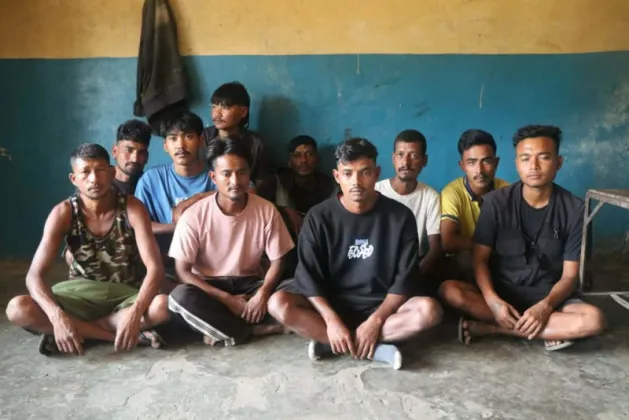
Twelve workers building a concrete bridge over the Thopalkhola in Dhading district have been left stranded in Dhadingbesi after the contractor failed to pay their wages, according to local media reports published on October 20 by Nepal Press and Global Aawaj. With the Dashain festival under way, the workers say they do not have the money even to cover transport to their home villages, and are instead spending the festival in the district headquarters on the support of local residents. The reports describe the labourers as destitute, waiting for wages that have not arrived while families across the country gather for the biggest celebration of the Nepali calendar.
Wages Stop Ahead of the Festival
The twelve workers were employed on the construction of a concrete bridge at Thopalkhola, a stream crossing in Dhading. According to the reports, the contractor responsible for the project has not released the workers' pay, leaving them without income at the moment they needed it most. For daily-wage construction workers, whose earnings usually go directly toward food and lodging, a stop in payment so close to Dashain can instantly cut off the annual journey home.
Dashain is the largest festival in Nepal and the time of year when workers across the country, from construction sites to factories and city households, travel back to their ancestral villages to receive blessings from elders and reunite with relatives. The workers at Thopalkhola say they are now unable to make that journey, because the unpaid wages have left them without even the bus fare they would need to reach their homes.
Key Facts at a Glance
- Twelve workers at the Thopalkhola concrete bridge site are stranded in Dhadingbesi.
- The bridge under construction connects Nilkanth Municipality wards 3 and 12.
- The workers say the contractor has not paid their wages.
- They lack money for travel home for Dashain.
- They are surviving on support from local residents.
A Bridge Meant to Connect Two Wards
The project at the centre of the dispute is a concrete bridge over the Thopalkhola intended to link ward 3 and ward 12 of Nilkanth Municipality, the local unit that includes Dhadingbesi, the headquarters of Dhading district. Bridges of this kind carry real weight in hill districts such as Dhading, where streams and rivulets can make road travel slow or difficult at certain times of year, and where a new crossing can shorten journeys for students, farmers and traders alike.
For the workers, however, the project has for now become a source of hardship rather than income. Labourers on construction projects of this kind typically live close to the site for the duration of the work and depend on the contractor for regular payment. When those payments stop, workers far from home are left with few options, a vulnerability that becomes especially sharp during the festival season, when expenses rise and the desire to return to family is at its strongest.
Locals Step In During the Festival
Stranded without pay, the twelve workers have remained in Dhadingbesi, where residents of the area have come to their assistance. Nepal Press described them as "left destitute as wages are stopped, spending Dashain with the support of locals." That assistance has allowed the group to get by during the festival days, but it does not replace the wages they are owed or the reunion with their families that Dashain represents.
The response of local residents reflects the spirit of solidarity that accompanies the festival, when sharing food and shelter carries particular meaning. For workers stranded away from their villages, that support has made the difference between an abandoned celebration and one they can at least observe in the company of others, even as their own households await them elsewhere.
Waiting for the Dues to Be Cleared
The reports did not indicate when the outstanding wages would be paid or whether the contractor has responded to the workers' complaints. Nepal's labour law requires employers to pay workers' wages on time, and disputes over unpaid dues on construction projects are typically taken up with the contractor, the relevant municipality and the labour authorities. The timing, coinciding with the country's most important festival, has added urgency to the workers' situation.
For now, the twelve workers remain in Dhadingbesi, dependent on the generosity of neighbours and waiting for wages that would finally allow them to make the journey home. Their case underscores a recurring grievance in Nepal's construction sector, where workers' dues around Dashain are a persistent complaint, and it remains to be seen how quickly the contractor settles what the workers at Thopalkhola are owed.