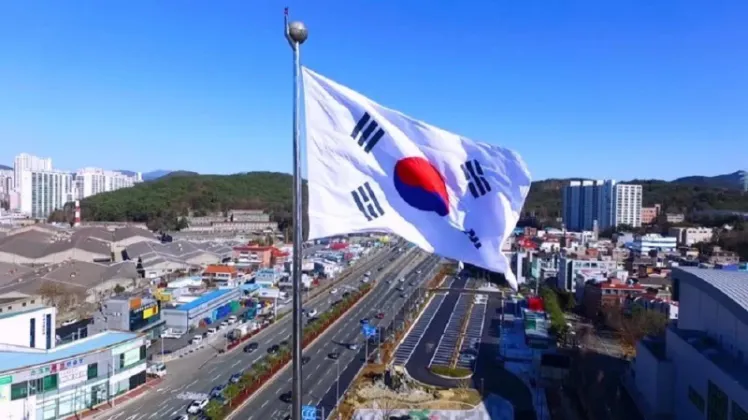
South Korea on Thursday publicly urged North Korea to immediately establish a communication mechanism aimed at preventing possible clashes along the inter-Korean border. In a statement issued by Seoul's Ministry of Unification, the two sides were called on to address matters related to the Military Demarcation Line (MDL), the de facto frontier dividing the Korean peninsula. The appeal was made public on Thursday, according to the ministry's release, as reported by Rato Pati and its English service.
A Direct Appeal from Seoul
The statement came from the Ministry of Unification, the South Korean government body responsible for matters concerning North Korea and inter-Korean relations. By releasing its appeal publicly on Thursday, the ministry chose to state Seoul's position openly rather than confine the request to quiet back-channel contact.
At the centre of the statement is an urgent request: Pyongyang should move immediately to establish a working communication channel with the South. According to the ministry's release, the proposed mechanism is meant to serve a specific and practical purpose, namely to prevent possible clashes along the border before they can take place.
What the Statement Calls For
Based on the ministry's release, the appeal contains three core elements:
- The immediate establishment of a communication mechanism between the two sides
- A call on both Koreas to address matters related to the Military Demarcation Line, the military boundary separating their forces
- A clearly stated objective, the prevention of possible clashes along the inter-Korean border
Taken together, the request frames a communication line not as a political gesture but as a safety measure. The call for immediate action underlines the urgency that Seoul attaches to the issue and to the management of the shared frontier.
The Military Demarcation Line at the Centre
The Military Demarcation Line is the de facto land boundary between the two Koreas. It runs across the width of the Korean peninsula and sits within the Demilitarized Zone, widely described as one of the most heavily fortified borders in the world. The line dates back to the armistice that halted open fighting in the Korean War, and because the two sides never went on to sign a peace treaty, it remains the dividing line between their armed forces.
It is precisely along this line that the ministry's appeal is focused. By calling on the two sides to address MDL-related matters, the statement points to the practical questions that arise whenever troops, fortifications and patrols operate in close proximity to one another. Without a direct way to communicate, officials on either side have limited means to clarify intentions, verify what is happening on the ground, or head off a misunderstanding before it hardens into a serious incident.
Why Communication Channels Matter
Communication mechanisms between opposing militaries are among the most basic tools for managing tension. Their purpose is straightforward: to give both sides a direct way to share information, ask questions and resolve confusion quickly, before an ordinary event, such as unusual movement near the border, is misread as something more deliberate.
For the Korean peninsula, such channels have long been regarded as a fundamental safeguard. The two Koreas have at various times operated hotlines linking military and government offices, and these lines have been severed and restored in line with the state of inter-Korean relations. When the channels are functioning, they offer a pressure valve for the two sides; when they are down, there is no quick way for either government to signal that a particular action was not intended as a provocation.
In practical terms, a functioning communication mechanism between the two militaries can:
- Allow officials to verify incidents quickly and exchange accurate information
- Help deconflict military activities taking place near the border
- Prevent misjudgements from escalating into armed clashes
- Keep a line of contact open even when political relations are strained
Seoul's Position on Record
With Thursday's statement, the South Korean government has placed its position on the public record: it wants a communication mechanism in place without delay, and it wants matters related to the Military Demarcation Line addressed through direct contact between the two sides. The statement ties the proposed channel explicitly to the goal of preventing border clashes, presenting it as a matter of practical risk management rather than broader political negotiation.
As of the statement's release on Thursday, the ministry's announcement did not include any indication of how North Korea would respond. Pyongyang's reaction to the appeal was not addressed in the release, leaving open the question of whether the North will agree to establish the proposed channel.
For now, the appeal stands as a clearly stated request from Seoul for one of the simplest safeguards available on the peninsula: a direct line of communication across the border. Whether Pyongyang responds, and whether the two sides can address the MDL-related matters raised in the statement, will shape whether the risk of clashes along the inter-Korean border is reduced in the period ahead.