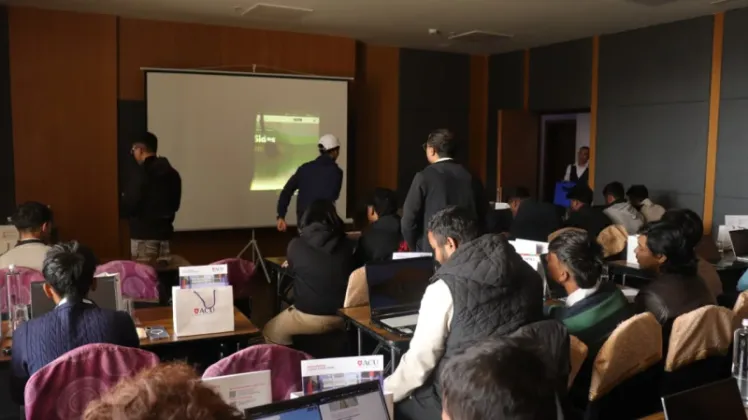
Students from Softwarica College of IT and E-Commerce achieved a clean sweep at a prominent cybersecurity competition in Kathmandu, claiming all three top positions at the Capture the Flag (CTF) contest organized under the Bides Kathmandu 2026 event. The competition was held on November 21 at Lemon Tree Premier in Budhanilkantha, Kathmandu, and tested participants on practical, hands-on cybersecurity skills.
The college fielded three teams at the event, and all three finished on the podium, securing first, second and third place respectively. The complete domination of the leaderboard by a single institution marked a notable achievement in a competition designed to challenge participants on real-world security competencies rather than theoretical knowledge.
What the Competition Involved
Capture the Flag competitions are among the most widely recognized formats for evaluating practical cybersecurity ability. In a CTF, teams compete to solve a series of security-oriented challenges, which may include identifying vulnerabilities, breaking weak encryption, analyzing forensic evidence, and exploiting or defending simulated systems. Each successful solution earns the team a "flag," and the team that accumulates the most points within the allotted time wins.
Because of this format, CTF contests are considered a reliable measure of applied skill. Participants cannot rely on memorized definitions or classroom theory alone; they must demonstrate the ability to think analytically under time pressure and apply technical tools to concrete problems. The Bides Kathmandu 2026 CTF followed this practical-testing philosophy, which makes the sweep by Softwarica's teams a reflection of hands-on capability across the college's competing squads rather than the strength of a single standout group.
A Clean Sweep for Softwarica
The results delivered an emphatic statement for Softwarica College of IT and E-Commerce. With three teams entered, the college managed not only to place a team at the top but to occupy the entire podium, leaving all other participating teams outside the top three positions.
Competitions of this kind typically draw participants from multiple institutions and from the wider technology community, making a clean sweep a relatively rare outcome. For a single college's teams to finish first, second and third suggests a consistent level of preparation and skill across its student body, as each team had to outperform every other competitor in the field, including their own batchmates from the same institution.
The event venue, Lemon Tree Premier in Budhanilkantha, hosted the contest as part of the broader Bides Kathmandu 2026 program. The November 21 date placed the competition within a period of growing public attention to cybersecurity in Nepal, as organizations across banking, telecommunications, e-commerce and government services increasingly confront digital threats.
Why the Result Matters
Nepal's technology sector has been expanding steadily, and with that growth comes a rising demand for cybersecurity professionals. Institutions that can demonstrate strength in practical security competitions send a signal to the industry about the readiness of their graduates. A podium sweep at a public CTF event offers exactly that kind of evidence, and for Softwarica College it reinforces the institution's positioning in IT and e-commerce education.
For the students themselves, performances in recognized competitions can carry weight beyond the prize. Employers in cybersecurity frequently look for demonstrated, practical competence, and competitive results provide a verifiable marker of skill. Participation in events like Bides Kathmandu 2026 also gives students exposure to the kinds of challenges they are likely to encounter in professional security work, from vulnerability analysis to incident-style problem solving.
Events that test cybersecurity skills in a competitive, public setting also serve a wider community function. They raise awareness about the importance of digital security, encourage institutions to invest in practical training, and create a visible pathway for young technologists interested in specializing in the field. The Bides Kathmandu 2026 CTF contributed to all three of these aims, and the outcome highlighted the pool of talent developing within Nepal's colleges.
Looking Ahead
While the November 21 competition has concluded, the result is likely to have a longer tail. Podium finishes at public contests tend to raise the profile of participating teams and can spur greater participation in future events, both by the winning institutions and by their rivals seeking to close the gap. For Softwarica College of IT and E-Commerce, holding all three positions sets a high benchmark that other institutions will now aim to challenge.
The college's achievement at the Bides Kathmandu 2026 Capture the Flag competition stands as a clear demonstration of practical cybersecurity skill among its students. With first, second and third place all claimed by Softwarica teams at Lemon Tree Premier in Budhanilkantha, the event underlined both the college's strength in this specialized field and the growing vibrancy of Nepal's cybersecurity community.