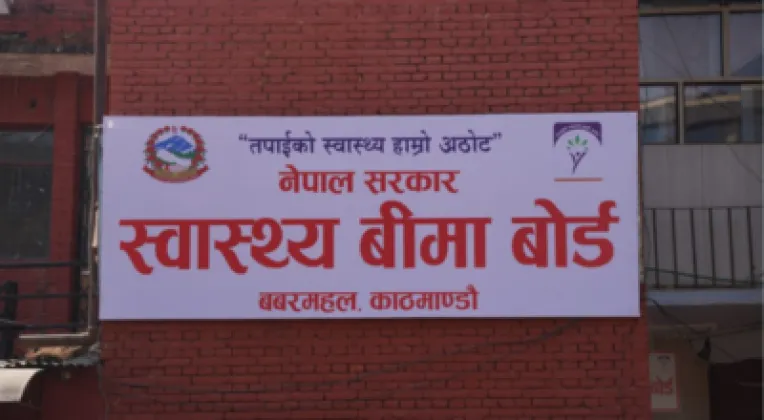
KATHMANDU, Nepal - Insured patients in Nepal no longer need to carry their physical health insurance card to receive treatment. The Health Insurance Board on Wednesday issued a circular directing all service-providing health institutions across the country to offer services if patients present a digital card, the physical insurance card, or a clear photocopy of the card.
The decision, announced by the Board, means patients who forget or lose their physical insurance card can still access treatment under the health insurance scheme without being turned away. Board spokesperson and senior medical superintendent Dr. Pawan Kumar Sah confirmed that the circular was issued on Wednesday.
Relief for Patients Who Forget Their Cards
Under the previous practice, insured patients were generally required to present their physical insurance card at hospitals and health facilities to verify their enrolment and receive services covered by the scheme. This often created difficulties for patients who arrived at health institutions without their cards, potentially delaying or denying treatment despite having valid insurance coverage.
With the new directive, health institutions must now accept any of the three forms of verification: the digital card, the physical insurance card, or a clear photocopy of the card. This gives insured patients multiple options for proving their eligibility at the point of care.
The move is expected to particularly benefit patients in remote areas who may have to travel long distances to reach health facilities and might not have the opportunity to return home to retrieve a forgotten card.
Circular Issued to All Service-Providing Institutions
The Health Insurance Board issued the directive to all health institutions that provide services under the health insurance programme. These institutions are now required to treat patients based on the alternative forms of identification outlined in the circular.
Dr. Pawan Kumar Sah, in his capacity as both spokesperson of the Board and senior medical superintendent, conveyed the decision, underscoring that the directive applies uniformly across service-providing health institutions.
The circular represents an administrative simplification aimed at making the health insurance scheme more accessible and patient-friendly, ensuring that the physical possession of a card does not become a barrier to receiving entitled medical services.
What the Decision Means for Insured Families
For the hundreds of thousands of families enrolled in Nepal's health insurance scheme, the practical effect of the decision is straightforward: treatment cannot be refused merely because a patient does not have the physical card in hand at the time of a hospital visit.
- Patients can show a digital version of their insurance card on a mobile device.
- Patients can present the original physical insurance card as before.
- Patients can submit a clear photocopy of the insurance card for verification.
The Board's decision aligns with broader efforts to digitise health services and reduce administrative hurdles for patients. As digital tools become more common in everyday life, allowing a digital card to serve as valid proof of insurance is a step toward modernising how the scheme operates on the ground.
Health institutions receiving the circular are expected to comply with the new verification options immediately, and insured patients visiting hospitals, health centres, and other service-providing facilities can now seek treatment using any of the accepted forms of identification.
The Health Insurance Board's circular issued on Wednesday marks a practical change in how insured patients access care, and patients are advised to keep either a digital copy or a photocopy of their insurance card available as an alternative to the physical card.