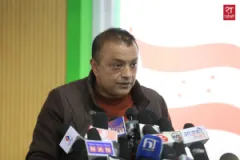
Rastriya Prajatantra Party (RPP) Chairperson Rajendra Lingden said on Thursday that the party can become an indispensable force in Nepali politics if it carries out internal reforms and moves ahead united. Speaking at a programme in Rupandehi district, Lingden acknowledged that the party's own shortcomings have held it back, and called on leaders and cadres to correct course.
Call to end internal irregularities
Lingden was candid about the problems within the party's organisation. He urged leaders and cadres to put an end to irregularities, non-cooperation and inactive tendencies that, he said, have weakened the party from within. According to him, these internal flaws have prevented the RPP from fully capitalising on its political potential.
He stressed that reform must begin with the party's own conduct. Rather than looking outward for the reasons behind the party's limited political clout, Lingden argued that members should first examine and correct their own behaviour and work culture.
Good governance and a clear political vision
The RPP chairperson said the way forward lies in committing to good governance, integrity and a clear political vision. He indicated that the party's credibility depends on how seriously its leadership and rank and file internalise these values.
Lingden's message to the cadres in Rupandehi was that unity within the party is a precondition for political relevance. If the RPP improves and unites, he said, it can emerge as a viable political force capable of playing a decisive role in the country's politics.
Party's broader context
The RPP, which champions the restoration of the Hindu state and constitutional monarchy, has been working to consolidate its organisational base across the country. Lingden's remarks come as the party continues efforts to energise its cadres and strengthen its presence in districts such as Rupandehi.
His comments were carried by multiple Nepali news outlets, including Nepal Views, Nepal Samaya and Pradesh Khabar.
A message of self-correction
Lingden's address reflects a theme he has repeatedly emphasised: that the party's future rests on its ability to put its own house in order. By framing the RPP's potential as conditional on reform and unity, he has set out a clear challenge to the party's leaders and workers alike.
For the cadres gathered in Rupandehi, the message was unambiguous. The party can rise to become an indispensable political force, but only if it abandons internal irregularities and inactivity and moves forward with discipline, integrity and a shared political direction.