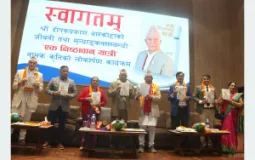
Rastriya Swatantra Party (RSP) chair Rabi Lamichhane instructed party leaders and cadres to remain disciplined at a training programme that began on Saturday in Karnali Province, saying discipline is essential to political life and to making the party’s work orderly and effective. He also told participants to switch off their mobile phones and said the party would keep records of those who violate discipline.
Discipline at the centre of the training
Lamichhane presented discipline as a key expectation for those involved in the party, linking it both to political conduct and to the way the organisation carries out its work. His message placed orderly and effective performance alongside personal discipline, framing the two as connected responsibilities for party members.
The instruction was delivered to leaders and cadres attending the training programme in Karnali Province. The programme began on Saturday, although the available reports do not provide further details about its duration, its full agenda or the number of participants. The remarks focused on standards of conduct during the gathering and on the importance of maintaining discipline within the party.
According to Nepal Press, Lamichhane told attendees to turn off their mobile phones. He also said the party would keep records of anyone who breached discipline. The report does not specify what conduct would be recorded beyond violations of discipline, or what consequences could follow.
A call for orderly and effective party work
Lamichhane’s remarks tied the conduct expected at the training to a wider principle of political life. He described discipline as the most important element in that life and as a requirement for ensuring that the party’s work remains orderly and effective. The message therefore addressed both participants’ behaviour during the programme and the way party work should be carried out.
The instruction to switch off mobile phones was a specific request to those attending. Alongside it, the warning that the party would maintain records signalled that breaches would be noted, rather than treated only as informal lapses. The reports do not say whether the record-keeping measure applies only to the training or more broadly across party activities.
The account of the remarks was also reported by Ratopati. Neither report, as reflected in the available information, provides further comment from participants or details of any response to Lamichhane’s instructions.
For the leaders and cadres at the Karnali gathering, the central message was clear: discipline was presented as a basic condition for effective political work, and participants were asked to observe the rules during the training. Lamichhane’s warning about keeping records added an explicit accountability element to that appeal, while the programme itself provided the setting for communicating the expectations to party members.