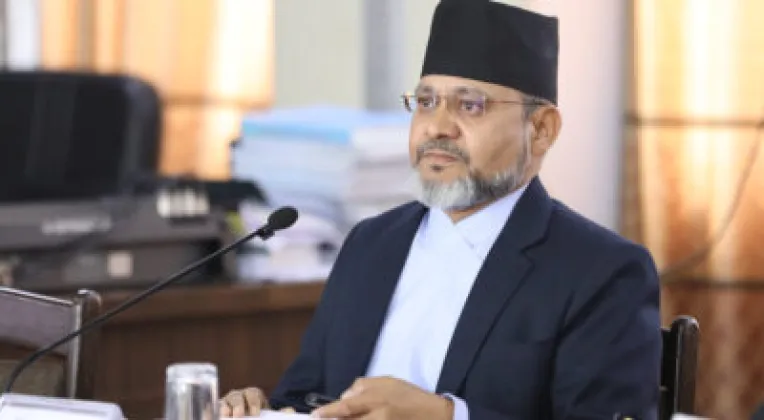
Dr. Ratnabahadur Bagchan, proposed for appointment as a justice of the Supreme Court, faced questions from federal lawmakers at his parliamentary hearing in Kathmandu on Thursday, where members scrutinised his views on judicial reform, the independence of the judiciary and the effectiveness of justice delivery. Pressed on whether he could be relied upon to meet the standards of the country's highest court, Bagchan responded with a direct personal pledge: he said he would step down himself if his work or commitment fell short, adding that he would not carry any stain in this life.
Twenty-Seven Questions on the Record
The volume of questioning at the session was extensive. Rastriya Swatantra Party (RSP) lawmaker Madhukumar Chaulagain alone posed 23 written questions to the nominee, making him by far the most active questioner of the day. Written questions of this kind are a routine instrument of Nepal's parliamentary hearings, allowing members to obtain structured, on-the-record answers from a candidate rather than loose exchanges, and they help build a documented picture of a nominee's positions before an appointment is confirmed.
CPN-UML lawmaker Padma Aryal tabled a tighter but equally pointed set of four questions, concentrating on themes that have shaped public debate over the judiciary:
- Judicial reform, and the direction the courts are expected to take;
- Judicial independence, and the safeguards that keep the bench free from outside pressure;
- The effectiveness of justice delivery, and whether citizens actually receive timely justice.
Taken together, the 27 questions from the two lawmakers ensured the nominee faced a wide-ranging examination of his suitability for the apex court. According to a report by Khabarhub, Bagchan responded to the lawmakers during the hearing, which was held in the capital on Thursday.
"I Will Not Carry Any Stain": Bagchan's Pledge
Bagchan's response was as noteworthy as the questioning itself. Rather than offering only general assurances, the proposed justice told the hearing that he would resign on his own initiative if his work or commitment fell short once in office, instead of waiting for any external process to remove him. He then framed his candidacy in explicitly personal and moral terms, saying he would not carry any stain in this life.
Commitments made at parliamentary hearings carry weight precisely because they are made in public. They are reported, recorded and can be recalled by lawmakers and citizens alike if a nominee's later conduct diverges from them. By volunteering his own exit from office as the price of underperformance, Bagchan sought to present himself as a judge who regards accountability as a personal obligation rather than a formality imposed from outside.
Why Reform, Independence and Delivery Dominated the Hearing
The themes raised at Thursday's hearing did not emerge in a vacuum. Questions about judicial reform, the independence of the judiciary and the speed of justice delivery reflect ongoing public concern in Nepal about how the courts perform and how they are perceived. The Supreme Court sits at the apex of the country's judicial system, and its interpretations of the constitution bind all subordinate bodies, which is why appointments to the bench are treated as matters of national significance.
The stakes are reinforced by the length of service involved. Supreme Court justices serve until the retirement age of 65, meaning a single appointment can influence the character of the country's highest judiciary for years. That long horizon is a key reason lawmakers use the hearing stage to test a nominee's temperament, extract commitments and place on record the concerns of the legislature before an appointment is finalised.
Parliamentary hearings are also among the few moments when the public can directly observe the scrutiny applied to a nominee for one of the most powerful posts in the state. The written questions from Chaulagain and the thematic questioning from Aryal offered citizens a window into the issues their elected representatives chose to prioritise: whether the judiciary is reforming itself, whether it can withstand pressure, and whether justice is being delivered in a way ordinary people can feel.
What Comes Next for the Nominee
With the hearing concluded, Bagchan's answers now form part of the record on which the parliamentary hearing process will assess his candidacy for the Supreme Court. The immediate task of reassuring lawmakers through his responses has passed; the longer test will be to honour the pledge he made in the hearing room.
As he told the panel himself, if his work or commitment falls short, he will step down on his own, because he does not intend to carry any stain in this life. That statement, delivered under the eyes of the legislature and the public, now stands as the benchmark against which his tenure on the bench, should the appointment proceed, will be measured.