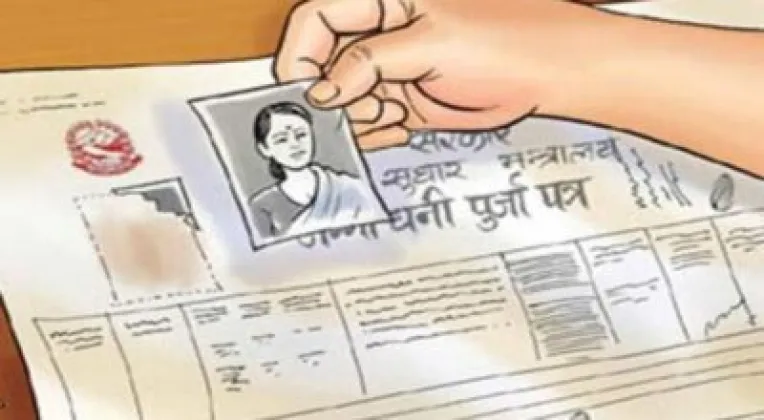
The District Land Problem Resolution Committee, Chitwan, has distributed land ownership certificates to 17 families in Ratnanagar Municipality-12, giving formal legal recognition of land rights to households that had long lived without documented claims to the plots they occupy. The distribution was announced by the secretariat of the Minister for Land Management, Cooperatives and Federal Affairs, and was reported by Nepali news outlets including Khabarhub and Ratopati.
Seventeen Households Move Out of Tenural Uncertainty
The 17 families who received ownership certificates represent three distinct categories of landless and insecurely settled households, reflecting the classification system used in Nepal's land reform programmes. Among the beneficiaries, one family belongs to the landless Dalit community, four are classified as landless squatters, and 12 are unorganised settlers.
These categories carry real weight in Nepal's land governance framework. Landless Dalit families are recognised as among the most marginalised groups in the country, facing both economic deprivation and social discrimination that have historically limited their access to productive land. Squatter households, often referred to in Nepali as sukumbasi, typically occupy public or unregistered land without formal title, while unorganised settlers, known as avasthapit abadis, are families who have settled on land in a manner that falls outside formal settlement planning.
By issuing ownership certificates across all three categories, the committee has extended legal tenure protection to a cross-section of vulnerable households in Ratnanagar Municipality-12, a local unit in the eastern part of Chitwan district.
What an Ownership Certificate Changes for a Family
A land ownership certificate, commonly known in Nepal as a lalpurja, is far more than a piece of paper. For a family that has lived for years or decades without formal title, the document transforms their relationship with the land they occupy in several concrete ways.
- Legal security: A certificate establishes the family as the recognised owner of the plot, protecting them from eviction and from disputes over possession.
- Access to credit: Banks and financial institutions generally require land ownership documents before extending loans, so a lalpurja can open the door to formal borrowing for agriculture, housing or small enterprise.
- Transfer and inheritance rights: With title in hand, families can legally sell, mortgage or pass on their land to the next generation.
- Access to services and compensation: Ownership documents are often required when local governments deliver housing programmes, disaster compensation or infrastructure-related payments.
For the 17 families in Ratnanagar, these practical benefits are the tangible outcome of a process that began with their identification as eligible beneficiaries and concluded with the formal handover of certificates.
The Committee's Role in Resolving Land Disputes and Landlessness
The District Land Problem Resolution Committee is the district-level body tasked with examining and resolving problems related to land ownership and settlement. Its mandate places it at the point where national land policy meets the realities of individual households: identifying families without secure tenure, verifying their circumstances, and facilitating the distribution of land or ownership documents in accordance with prevailing rules.
Chitwan, one of Nepal's most agriculturally productive districts, has historically been a destination for internal migration, with families from the hills and from marginalised communities settling in the Tarai over generations. That history has left a legacy of unregistered occupation and informal settlement, which bodies such as the District Land Problem Resolution Committee are designed to address.
The distribution in Ratnanagar Municipality-12 is one expression of that work at the local level. The fact that the announcement came from the secretariat of the Minister for Land Management, Cooperatives and Federal Affairs underlines that land distribution remains a policy priority at the federal level, with the ministry overseeing the resolution of land problems across the country's districts.
Land Rights Within Nepal's Broader Reform Agenda
Landlessness and insecure tenure have been persistent challenges in Nepal, particularly affecting Dalit communities, poor migrants and households settled on public land. Successive governments have treated the provision of land to the landless as both a social justice measure and a development priority, on the argument that secure tenure is a foundation for improved livelihoods, investment in housing and agriculture, and broader economic participation.
The distribution of certificates to the 17 families in Chitwan fits within this continuing agenda. Each certificate converts an informal or disputed occupation into recognised ownership, gradually reducing the stock of landless households that land reform programmes are intended to reach.
For the beneficiaries in Ratnanagar Municipality-12, the immediate significance is personal: the families, including a landless Dalit household, four squatter families and 12 unorganised settler families, now hold documents that anchor their claim to land. For the district, the handover is another step in the ongoing effort to bring informal settlements into the formal legal system, a process that the District Land Problem Resolution Committee, under the oversight of the Ministry of Land Management, Cooperatives and Federal Affairs, is expected to continue in the period ahead.
Further details about the distribution were carried by Khabarhub and Ratopati.