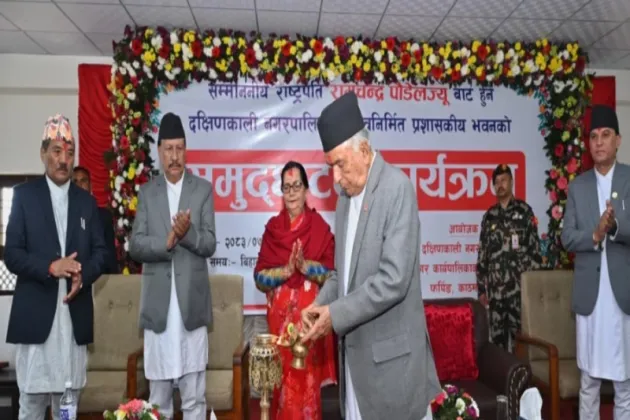
President Ram Chandra Paudel offered prayers at the renowned Dakshinkali Temple in Kathmandu on Wednesday morning, performing traditional worship at one of the most venerated shrines dedicated to Goddess Kali in the Kathmandu Valley. The President received tika and blessings from the temple priest after completing the rituals, while First Lady Sabita Paudel accompanied him throughout the visit. The presidential couple was warmly received at the temple premises by local representatives and officials of the temple management committee, according to reports published by My Republica and Ratopati.
A Morning of Worship at the Shrine
The President's visit took place in the morning hours, a time when the temple grounds are generally quiet enough for personal devotion before the day's larger flow of worshippers arrives. President Paudel performed worship at the shrine in line with established religious tradition, and the temple priest applied tika on his forehead and extended blessings, marking the customary conclusion of a devotional visit to the temple.
First Lady Sabita Paudel accompanied the President during the entire visit, making it a joint appearance by the presidential couple at one of the capital region's best-known places of worship. The key moments of the morning, as reported by the two news outlets, can be summarised as follows:
- President Ram Chandra Paudel offered prayers at the Dakshinkali Temple in Kathmandu on Wednesday morning.
- He performed traditional worship at the shrine.
- The temple priest applied tika and gave the President his blessings.
- First Lady Sabita Paudel accompanied the President throughout the visit.
- Local representatives and temple management committee officials welcomed the couple on the temple premises.
Both reports concentrated on the religious and ceremonial nature of the visit. Neither indicated that the morning included any official programme or public address beyond the worship itself, framing the President's appearance at Dakshinkali as a personal and devotional engagement rather than a governmental one.
A Warm Reception on the Temple Grounds
Attention in both reports also fell on the welcome extended to the President and the First Lady upon their arrival. Local representatives and officials of the temple management committee received the presidential couple at the temple premises, a gesture that reflects the respect traditionally shown to the head of state during visits to prominent religious sites.
The presence of the temple management committee in the reception underscores the role such local bodies play in the day-to-day affairs of Nepal's major shrines. Temples of national significance are often maintained and administered with the involvement of management committees working alongside local authorities, and visits by high-profile dignitaries typically involve coordination between the visitors' security arrangements and the committees that oversee the temple grounds.
For the local representatives, the presidential visit also served as a moment of engagement with the community that surrounds the temple, as the reception brought together the head of state, the First Lady, and the officials and elected representatives responsible for the area in a single gathering.
Dakshinkali: A Revered Shrine of Goddess Kali
Dakshinkali Temple holds a distinctive place among the religious sites of the Kathmandu Valley. Dedicated to Goddess Kali, worshipped in the Hindu tradition as a powerful form of the divine feminine, the temple is regarded as one of the most important Kali shrines in the valley and draws a steady stream of devotees from across Nepal and beyond.
The temple, which lies to the south of the capital, is traditionally associated with particular days of devotion, and it is known to see especially large gatherings of worshippers on Tuesdays and Saturdays, when devotees come to offer prayers to the goddess. The shrine also experiences heightened activity during major Hindu festivals, when its premises fill with pilgrims observing the festivities.
Against this backdrop, a presidential visit carries both personal and symbolic weight. For devotees, a visit by the head of state highlights the temple's continued standing as a spiritual landmark, while for the institution of the presidency it reflects the close ties between Nepal's highest public office and the country's living religious heritage.
The President's Long Journey in Public Life
President Paudel, who was elected as the third President of Nepal in March 2023, has spent more than five decades in public life. A senior leader of the Nepali Congress, he previously served as Speaker of the House of Representatives and as Deputy Prime Minister, and held several ministerial portfolios across successive governments before ascending to the largely ceremonial post of head of state.
As President, his public engagements have spanned national ceremonies, cultural occasions and religious visits, in keeping with the character of an office that carries significant symbolic responsibilities alongside its constitutional role. The Wednesday morning visit to Dakshinkali fits within that pattern of engagements that connect the presidency with the religious and cultural life of the country.
With First Lady Sabita Paudel at his side, the President joined the long line of devotees who make their way to the shrine each week. The reports did not indicate any announcements connected to the visit, which remained centred on prayer, worship and the blessings offered by the temple priest, closing a quiet Wednesday morning at one of Kathmandu's most cherished temples.