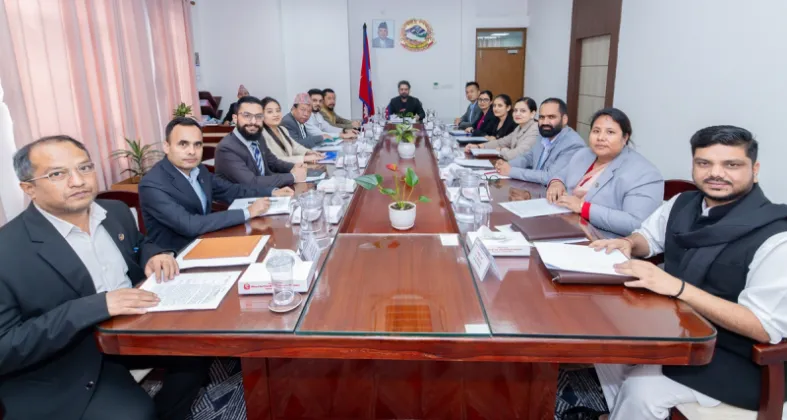
Prime Minister Shah has called a meeting of the Council of Ministers, according to reports published by Nepali news outlets Nepal Samaya and Baahrakhari on November 3, 2026. Both outlets confirm that the cabinet meeting was convened by the Prime Minister, though neither provided specifics about what ministers are expected to discuss. The announcement, brief as it is, concerns the country's highest executive body, and it immediately raises the question of which issues will come before the cabinet once the ministers gather.
Two Outlets Report the Same Development
The news was carried by both Nepal Samaya and Baahrakhari, with each outlet reporting the same core fact: that Prime Minister Shah has convened a meeting of the Council of Ministers. The Nepal Samaya report states the meeting was called by the Prime Minister, and Baahrakhari's coverage confirms the same.
The points on which the two reports agree can be summarized as follows:
- A meeting of the Council of Ministers has been convened.
- The convening authority is Prime Minister Shah.
- The reports were published on November 3, 2026.
The convergence of two independent outlets on the same basic development lends weight to the report, particularly in a situation where no official statement has yet followed. At the same time, both reports remain limited to the announcement itself, and neither goes further into the substance of the meeting.
No Agenda Details Released
The most significant gap in the available reporting concerns the purpose of the meeting. Neither Nepal Samaya nor Baahrakhari disclosed what will be taken up when the cabinet sits, leaving several basic questions unanswered:
- The agenda of the meeting has not been made public.
- The timing and venue of the meeting were not specified in the reports.
- It is not stated whether the meeting is a routine session of the Council of Ministers or has been called specially for particular decisions.
- No indication has been given as to which decisions or approvals might be expected from the gathering.
In Nepali political practice, the full agendas of cabinet meetings are often made public only after a session concludes, typically through official briefings or decisions issued afterward. Until such follow-up comes, the available reporting leaves the substance of Tuesday's development, as published on November 3, 2026, unstated.
The Council of Ministers in Nepal's Governance
For readers following the story, the body at the center of this report is worth recalling in general terms. The Council of Ministers is the apex executive institution in Nepal's system of governance, and the Prime Minister sits at its head, presiding over its meetings and guiding its deliberations. Meetings of the council are the principal forum through which the government takes decisions on matters of policy and administration.
The range of business that can come before such a meeting is broad. Council of Ministers sessions, in general terms, are the venue for:
- Policy decisions of the government and direction to the ministries.
- Appointments and recommendations requiring the cabinet's approval.
- Consideration of bills and proposals before they move through further processes.
- Review of administrative and organizational matters across government bodies.
Because the cabinet sits at the top of the executive structure, its meetings are closely watched, and even the simple confirmation that one has been called draws attention from observers of the government's day-to-day functioning. That is the context in which the November 3 reports of Prime Minister Shah's decision to convene the council should be read, even though the specific business of this meeting remains outside the public record for now.
No Official Statement Yet
Neither of the published reports quotes any statement from the Prime Minister's Office, from government spokespersons, or from individual ministers regarding the meeting. No explanation has been offered in the reports for why the agenda was not shared, and no follow-up details appear in either outlet as of the time of their publication on November 3, 2026.
As a result, the picture available to readers at this stage is deliberately narrow: the meeting has been convened, the Prime Minister has called it, and the rest remains to be seen. Further clarity on the meeting's agenda, its timing, and any decisions it produces would ordinarily emerge once the session has taken place and the outcomes are communicated through official channels.
This is a developing story. Further details will be added as more information becomes available, and readers are advised to treat the points confirmed so far, namely the convening of the Council of Ministers by Prime Minister Shah as reported on November 3, 2026, as the full extent of what has been established at this time.