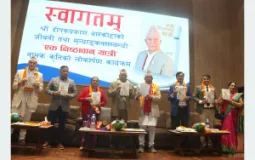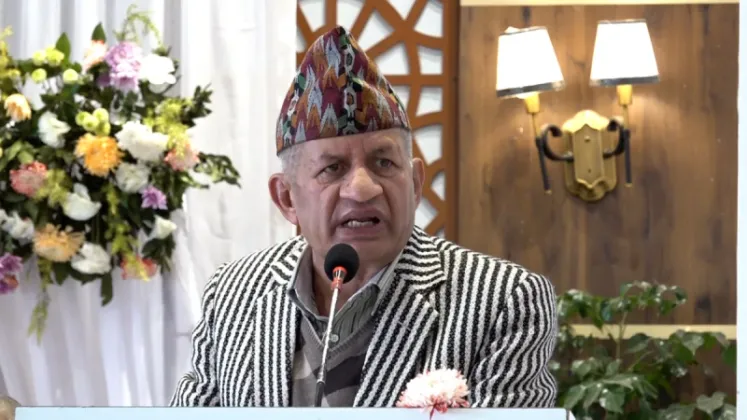
KATHMANDU - CPN (UML) leader and former minister Pradeep Gyawali has accused the incumbent government of attempting to convert all organs of the state into obedient bodies that serve its own vested interests. He levelled the allegation while addressing a programme held in Kathmandu on Saturday, according to reports by Ratopati and Thaha Khabar.
The former minister's remarks come at a time of heightened political friction between the ruling side and opposition parties, with the UML frequently voicing concerns about the direction of governance under the current administration. His statement, delivered at a public forum in the capital, frames the issue not as isolated incidents of overreach but as a systematic pattern affecting the independence of state institutions.
Allegations of Institutional Capture
Gyawali's central charge was that efforts are underway to make every organ of the state obedient to vested interests, rather than to the constitution and the public that the institutions are meant to serve. As reported by Ratopati, he argued that the government is working to subordinate state bodies to serve its own agenda.
Thaha Khabar also reported his remarks under the same accusation, indicating that the message was a deliberate and prominent part of his address rather than a passing comment. By speaking at a programme in Kathmandu, the senior UML leader ensured the allegation reached a broad audience of political figures, civil society members and media present in the capital.
Context of Opposition Criticism
As a former minister, Gyawali has held executive responsibility himself, and his critique carries the weight of direct experience with how state institutions operate. His accusation aligns with a broader line of criticism from the CPN (UML), which has positioned itself as a watchdog against what it views as the ruling coalition's consolidation of influence.
The accusation that state organs are being turned into obedient bodies touches on a recurring debate in Nepali politics about the autonomy of constitutional bodies, the civil service, and other state mechanisms. Opposition leaders have repeatedly argued that institutional independence is essential for checks and balances, while governments in power tend to resist oversight that constrains their authority.
A Targeted Political Message
Gyawali's Saturday address in Kathmandu reflects the UML's strategy of taking its critique directly to public forums rather than confining it to parliamentary channels. Speaking at organised programmes allows party leaders to articulate their position in detail and to rally supporters around concerns about governance.
The use of strong language, describing state organs as being made obedient to vested interests, signals that the opposition intends to keep institutional independence at the centre of its political agenda. Both Ratopati and Thaha Khabar highlighted the accusation in their coverage, underscoring its significance as a headline political statement from a senior leader of the main opposition party.
Whether the government responds to the allegation or the charge gains traction in parliamentary and public debate remains to be seen. For now, Gyawali's statement adds to the growing chorus of opposition voices questioning the current administration's relationship with the institutions of the state it governs.