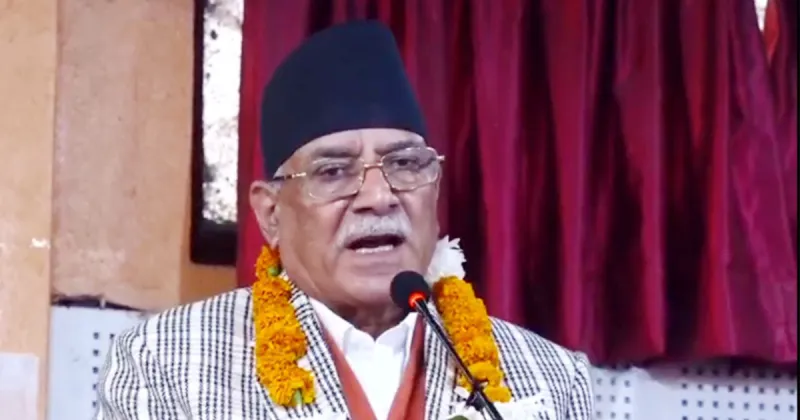
Pushpa Kamal Dahal 'Prachanda', the former prime minister and one of the most prominent figures in Nepal's communist movement, said on Saturday that efforts to unify the country's communist parties are continuing. The remark was reported on November 28, 2026, by Thaha Khabar and Baahrakhari, though neither report offered further details on the state or shape of the unity process.
What was said, and what was not
According to the reports, Prachanda stated simply that efforts toward communist unity were ongoing. No further elaboration was provided in either article, leaving several basic questions unanswered.
- Which parties are involved - the reports did not say whether the comments referred to a reunion of major left forces, a broader alliance, or talks with smaller communist groups.
- What form the unity would take - no mention was made of whether the process involves a full merger, an electoral front, or coordination on political issues.
- Where and when the remark was made - the reports did not describe the occasion or forum in which the former prime minister was speaking.
- What stage the process has reached - no timeline, roadmap, or next steps were disclosed.
Unity rhetoric has been a recurring feature of Prachanda's public messaging over the years, and Saturday's statement appears to reaffirm that position. Without additional detail, however, it is not possible from the reports to assess how advanced, or how realistic, the current push may be. Neither outlet quoted extended remarks from the leader, and no reaction from other communist parties was included.
A long history of unity and rupture
The question of communist unity has shaped Nepali politics for decades, and Prachanda has been at the centre of its most significant episodes. After leading a decade-long armed insurgency, he signed the peace process into motion in 2006 and entered electoral politics, serving as prime minister for the first time in 2008 following the Constituent Assembly elections. He went on to lead the government twice more, including a term that ended in 2024.
The high point of recent unity efforts came in 2018, when Prachanda's CPN (Maoist Centre) and the CPN (UML), then led by KP Sharma Oli, merged to form the Nepal Communist Party. The unified party commanded a commanding presence in the federal parliament and the provincial assemblies, and it was seen by many as the culmination of the long-standing aspiration for left consolidation in Nepal.
That unity, however, proved fragile. A bitter feud between Oli and the camp led by Prachanda and Madhav Kumar Nepal escalated through 2020 and 2021, culminating in the dissolution of the House of Representatives and a series of court battles. A Supreme Court ruling on the party's registered name in early 2021 effectively broke the unified party apart, and the Maoist Centre and the UML returned to functioning as separate forces. The episode left deep mistrust between the two leaderships, and subsequent talk of reunification has surfaced repeatedly without producing a formal merger.
The broader left has fragmented further since then. Madhav Kumar Nepal's departure from the UML in 2021 to form the CPN (Unified Socialist) added another actor to an already crowded communist field, and competition among left parties has continued to influence coalition politics at both federal and provincial levels.
Why the statement matters
Nepal's electorate has historically given strong support to communist parties, and the way left forces align has repeatedly determined the balance of power in Kathmandu. When the major communist parties united in 2018, they dominated the political landscape; when that unity collapsed, the ground shifted again, contributing to the fluid coalition arrangements that have characterised Nepali politics in recent years.
This history explains why even a brief statement from Prachanda on unity draws attention. Past rounds of unity talks have tended to stall on familiar obstacles, including the question of who would lead a combined party, how organisational positions would be distributed, and how the parties would position themselves in relation to the Congress-led and other political forces. Observers of previous episodes have often cautioned that public expressions of unity intent have not always translated into formal agreements.
What makes Saturday's remark notable is its timing rather than its content. With no accompanying details, it is unclear whether the statement signals an active new round of negotiations, a general restatement of long-held policy, or positioning ahead of future political developments. It is also not clear from the reports whether the unity effort being referenced involves the UML, smaller left parties, or some combination of forces.
Waiting for details
For now, the public record consists of a single line: the former prime minister's assertion that efforts for communist unity continue. Any substantive move, such as a formal agreement, a joint announcement, or the formation of a negotiating mechanism, would typically be communicated through official party channels and would likely draw participation and scrutiny from multiple leaderships, given the history of both the 2018 merger and the 2021 split.
Until such details emerge, the reports from Thaha Khabar and Baahrakhari stand as an indicator of intent rather than an announcement of outcome. Readers can expect further clarity only when the parties involved speak publicly about the process, its participants, and its proposed structure.