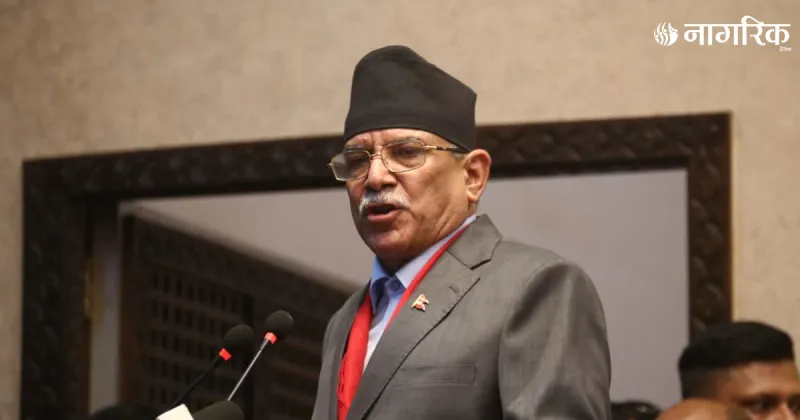
Pushpa Kamal Dahal "Prachanda", coordinator of the Communist Party of Nepal (Nepal Communist Party), has ruled out the possibility of immediate party unity with the CPN-UML, saying any move to bring the two parties together must first be preceded by a proper review of their history, background and outstanding differences. Prachanda made the remarks at a press conference organized to launch his party's National Awakening Campaign, where questions about the party's relationship with the UML quickly came to the fore. According to a report by Nagarik News, the statement amounts to a clear cooling of expectations about a swift coming together of the two parties.
Unity Requires a Review First
Prachanda's central message was that the sequence matters. Unity with the UML, he said, cannot happen without first reviewing the history, background and other issues between the two sides. In his framing, the gaps separating the parties are substantial enough that they cannot simply be set aside for the sake of a quick political arrangement.
He pointed to differences between the two parties in three areas in particular:
- Ideology - the two parties, in his assessment, stand apart on ideological questions that must be confronted honestly.
- History - their shared past has to be examined and understood before any unity can be considered.
- Political working style - the way the two sides conduct politics differs, and that divergence has to be acknowledged rather than papered over.
By laying out these conditions, Prachanda effectively set a threshold that any future unity process would have to meet. His position was not a rejection of unity in principle, but a rejection of unity in haste. Nagarik News framed his remarks as reflecting suspicion toward the UML, suggesting that his caution runs deeper than a procedural preference and is rooted in unresolved questions about what unity would actually mean in practice.
A Shift From Earlier Signals
The statement marks a clear shift in tone. Prachanda had earlier hinted that he could join hands with the UML, and those hints had invited speculation that the two parties might be moving toward a fresh alignment. By declaring that immediate unity is not possible, he has now drawn a distinction between openness to dialogue and a commitment to unity.
The position he articulated leaves the door ajar rather than closed. He did not rule out unity permanently, but he insisted that it cannot be rushed and cannot precede the review he described. For those following Nepal's communist politics, the practical message is that his earlier hints should not be read as a promise, and that any future conversation between the two parties will be governed by the conditions he has now put on record.
The timing of the remarks is also significant. Rather than making the statement in a standalone address, Prachanda chose a press conference devoted to launching his party's own campaign - a setting in which he presented his party's immediate agenda while simultaneously managing expectations about its relations with the UML.
National Awakening Campaign Sets the Stage
The press conference was organized to launch the National Awakening Campaign, the new program of the Communist Party of Nepal (Nepal Communist Party). Prachanda used the event to put the campaign forward as the party's priority going forward. But the remarks on party unity drew the most attention, overshadowing the campaign itself and turning the launch into a statement about the party's place in the broader communist landscape.
The Main Points From Prachanda's Remarks
- There is no possibility of immediate party unity with the CPN-UML.
- Unity cannot happen without first reviewing the history, background and other issues between the two parties.
- Differences exist between the two sides in ideology, history and political working style.
- The remarks follow earlier hints from Prachanda that he could join hands with the UML.
Taken together, these points sketch out both the boundary he has drawn and the reasoning behind it: the review comes first, and only then - if at all - can unity be discussed.
What the Remarks Mean Going Forward
For now, the message from Prachanda is one of patience and conditionality. Immediate unity with the UML is off the table, and any future conversation depends on the review he says must come first, a process that would have to confront the ideological, historical and working-style differences he identified.
Until that happens, the Communist Party of Nepal (Nepal Communist Party) will proceed with its National Awakening Campaign on its own terms, with its coordinator making clear that the party's program will not wait on a reunion that cannot yet be realized. Expectations of a quick alignment between the two parties, raised by Prachanda's earlier hints, have now been firmly tempered by his own words at the campaign launch.