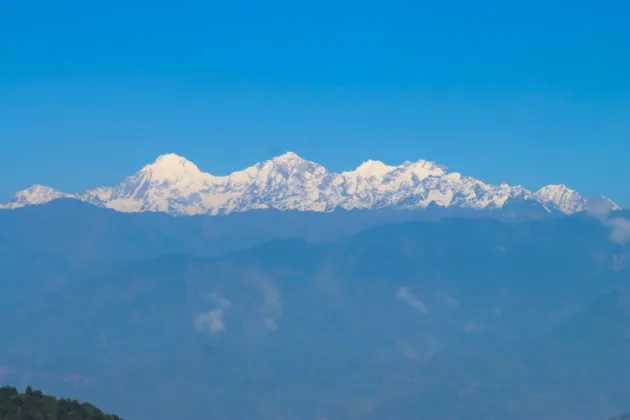
Clear weather has opened a natural viewing gallery over the mid-hills of Nuwakot, revealing sweeping panoramas of Himalayan ranges from Gurje in Shivapuri Rural Municipality-6. According to a report by Pradesh Khabar, the snow-capped mountains became visible from the village as skies cleared, and photographs of the captivating scenery were published on October 24, 2026. Nepali news portal Nepal Views carried images of the same spectacle the same day, describing a mesmerizing view of the snow-capped peaks from the Nuwakot hillside. The reports serve as a reminder that some of the most striking mountain scenery in the country lies only a short journey from the hills overlooking the Kathmandu region, and that it appears on cue whenever the atmosphere allows.
Clear Skies Over Gurje
For the people of Gurje, the sight is not a rare accident but a recurring reward. The Pradesh Khabar report notes that the mountain scenery can be observed from Gurje whenever the weather is clear, making the village a ready-made viewpoint for the high peaks that line the northern horizon. On the day the photographs were published, the clear conditions allowed a panoramic view of various Himalayan ranges stretching above the surrounding ridges, a scene that had been hidden behind cloud and haze in the days before.
The images captured from the village show why locations such as this attract attention each time conditions align. From the open slopes around Gurje, the eye travels from the wooded hills of the rural municipality to the distant wall of white summits, with the contrast between green mid-hills and snow-covered peaks providing the frame that mountain photographers seek.
At a Glance
- Location: Gurje, Shivapuri Rural Municipality-6, Nuwakot district
- What appeared: Panoramic views of various Himalayan ranges during clear weather
- Published: Photographs released by Pradesh Khabar and Nepal Views on October 24, 2026
- Key detail: The mountain scenery can be observed from Gurje whenever the weather is clear
Why Autumn Brings the Peaks Into Focus
In Nepal's hill country, the visibility of the high mountains depends almost entirely on the state of the atmosphere. For much of the year, moisture, dust and haze sit over the mid-hills, softening distances and pushing the great ranges out of sight. The monsoon months are the most challenging, as dense cloud repeatedly blankets the mountains for days at a time.
The period after the monsoon retreats is different. By October, the air has typically been washed clean by months of rain, and with the heavy moisture gone, visibility improves dramatically across the hill districts. This seasonal clarity is why so many of Nepal's most memorable mountain photographs are taken in autumn, and the clear weather reported from Gurje fits squarely within that pattern. With the sky stripped of haze, ridges that normally fade into the horizon become sharp, and peaks that are invisible for weeks at a time suddenly stand in full detail.
Locals in hill villages across the country know this rhythm well. Views often come and go within a single day, appearing after overnight rain or a shift in wind, then disappearing again as clouds rebuild. The report from Nuwakot reflects that familiar experience: the mountains of Gurje are always there, waiting for the right conditions to reveal themselves.
Nuwakot Beneath the Great Ranges
Nuwakot district lies in Bagmati Province, with its headquarters at Bidur and its hills climbing northward toward the high Himalaya. The district sits roughly 75 kilometres from Kathmandu, close enough that its viewpoints are within reach for travellers based in the capital. The peaks that rise along this stretch of Nepal's northern border belong to the great central Himalayan ranges, and on days of exceptional clarity they dominate the sky above the mid-hill villages.
The district already has a reputation among mountain watchers. Kakani, on the road between Kathmandu and Bidur, has long been known as a spot for panoramic views of the Himalaya, while the historic Nuwakot Durbar area offers its own vantage over the surrounding valleys and ridges. Gurje, in Shivapuri Rural Municipality, adds another point on that map, one that residents can enjoy from home rather than from a dedicated tourist viewpoint.
Images such as those published this week also underline the wider appeal of Nepal's mid-hill districts. Locations that combine accessibility with direct views of the snow-capped mountains hold clear potential for photography, day trips and village tourism, particularly when the scenery arrives with no greater effort than waiting for the weather to clear.
Photographs That Carried the View Farther
The sight from Gurje reached a national audience thanks to two photo reports published on October 24, 2026. Pradesh Khabar documented the panoramic Himalayan views visible from the village under clear conditions, while Nepal Views presented what it described as a mesmerizing view of the snow-capped mountains from Gurje in Nuwakot, accompanied by photographs of the captivating scene.
Together, the two reports perform a role that local media across the hills regularly play: capturing a fleeting natural moment and preserving it for readers far from the ridge lines where it occurred. For viewers in Kathmandu and beyond, the photographs offer a window onto scenery that many may not realize sits within a day's journey of the capital.
For the residents of Gurje, meanwhile, the message of the week is a familiar one. As the report notes, the mountain scenery can be observed from their village whenever the weather is clear. The Himalaya, hidden for long stretches of the year behind cloud and haze, remains only a change in the sky away. When the next spell of dry, clean air settles over the Nuwakot hills, the great white ranges will return to the horizon above Gurje, exactly as they appear in the photographs published this week. Pradesh Khabar and Nepal Views both documented the moment on October 24, 2026.