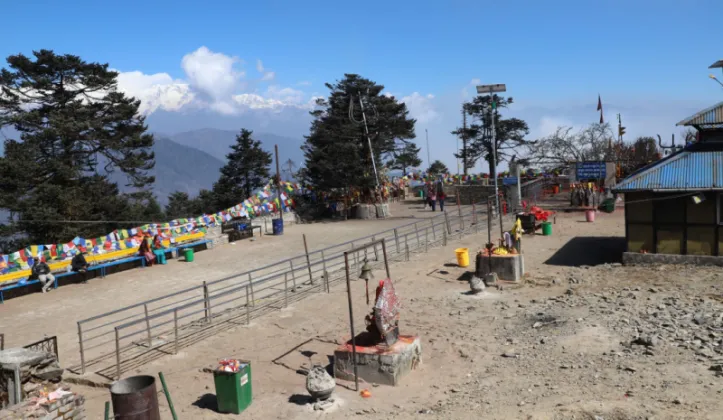
The famous religious site of Pathibhara in Taplejung district wore a deserted look during this year's Dashain festival, as the usual flood of pilgrims failed to arrive at one of the country's most visited hill shrines. In previous years, crowds of devotees would begin swelling at the temple from the very start of Navaratri, making the festival period the busiest stretch of the season. This time, however, the number of visitors dropped noticeably, and the nearly empty temple area has taken a direct toll on the livelihoods of hotel entrepreneurs, transport operators and porters who depend on the annual pilgrimage. Local businesses have expressed deep disappointment over the reduced flow of devotees during what is normally their most important time of the year.
Navaratri Without the Usual Crowds
Dashain is the biggest festival in Nepal, and Navaratri, its opening phase, has traditionally set the rhythm of activity at Pathibhara. Devotees visiting the temple of Goddess Pathibhara typically time their journeys to coincide with the nine days of Navaratri, believing the period to be especially auspicious for worship. In earlier years, the trail and the temple premises would grow crowded almost as soon as Navaratri began, with a steady stream of pilgrims continuing through the festival days.
That familiar pattern was conspicuously absent this year. According to a report by Gorkhapatra Online, the shrine remained nearly deserted during the festival, with visitor numbers falling well below the levels seen in previous years. The absence of the customary Dashain rush at such a famous religious site has left the local community not only surprised but also worried about what the quiet season means for the months ahead.
The Pilgrim Economy Under Pressure
The drop in footfall is not merely a matter of ritual significance. Life in the Pathibhara area is closely tied to the flow of pilgrims, and the festival season is when that flow normally peaks. The decline this Dashain has affected incomes across several groups that serve visitors along the route and around the temple:
- Hotel entrepreneurs, who count on Dashain pilgrims for food and lodging, have seen business dry up during the very days they expect the strongest demand.
- Transport operators, who ferry devotees as far as the temple area, have been left running with far fewer passengers than in previous festivals.
- Porters, who earn their living carrying the luggage and supplies of visiting pilgrims, have found little work with so few trekkers on the trail.
As reported by Pradesh Khabar, the impact has rippled through the local economy, since each pilgrim who arrives at Pathibhara typically supports a chain of services along the way, from transportation to meals and accommodation to porterage. When the pilgrims stop coming, the effect is felt simultaneously by everyone involved in that chain, leaving little buffer for households that depend on seasonal earnings.
For many families in the area, the Dashain pilgrimage is the point of the year around which the rest of their business planning revolves. Hotels and transport services prepare in advance for the Navaratri rush, and porters time their availability to the festival calendar. A season in which the crowds simply do not appear therefore represents not a minor shortfall but the loss of the principal earning opportunity that the community has been counting on.
Disappointment and an Uncertain Season Ahead
The mood among local businesses, as the festival progressed, was one of clear disappointment. Entrepreneurs in the Pathibhara area had looked forward to the busy days of Dashain, only to watch the temple grounds remain quiet while the festival passed. The reduced flow of devotees has been described by local businesses as a setback that few of them had anticipated after years in which the Navaratri period reliably brought swelling crowds to the shrine.
The concern is compounded by the fact that Pathibhara holds a special place among Nepal's religious destinations, drawing devotees not only from the surrounding districts but from across the country. A festival season this lean stands in sharp contrast to the temple's usual reputation as a magnet for pilgrims, and the experience has underlined how vulnerable the local economy is to any decline in visitor numbers.
For now, the people who make their living from the pilgrimage, the hotelkeepers, the transport operators and the porters, are left to absorb the losses of a Dashain that never delivered. Whether the crowds that stayed away this year will return in the coming seasons remains the question weighing most heavily on the Pathibhara area, where the difference between a busy Navaratri and a deserted one is, quite literally, the difference between a good year and a hard one for the entire community.