The tradition of receiving Dashain tika and jamara continued across Nepal on Saturday, with devotees visiting temples and the homes of elders in large numbers to receive blessings as the country's biggest festival remained in full swing. The ceremonies, under way since Vijaya Dashami, are being held in accordance with traditional rituals, and the practice is expected to continue for a few more days. From family courtyards to temple premises, the familiar sight of red tika and fresh green jamara has kept homes and public spaces across the country immersed in the festive spirit.
Tika and Jamara: Ritual at the Heart of Dashain
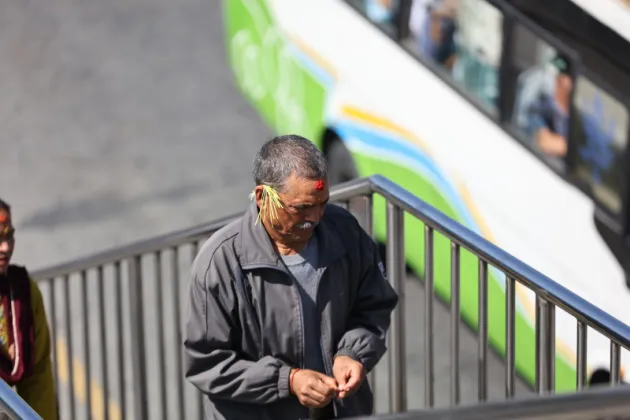
At the centre of the ongoing ceremonies is the ritual that gives Dashain its most recognisable image. Elders apply tika to the foreheads of younger family members and relatives as a mark of blessing, while a handful of jamara is placed on the head or given to be worn as an auspicious adornment. The exchange is accompanied by warm wishes for long life, good health and prosperity, making the moment one of the most treasured of the festival year.
Elements of the Ceremony
- Tika: a ceremonial mark applied to the forehead by elders, traditionally prepared from rice, vermilion and yogurt
- Jamara: freshly grown shoots, regarded as auspicious, offered together with the tika
- Blessings: heartfelt words of good wishes from elders for the well-being and success of the younger generation
- Greetings: the exchange of festival greetings as relatives gather under one roof
Jamara, the yellow-green shoots offered alongside the tika, hold their own significance in the ritual. Fresh and fragrant, they are treated as a symbol of prosperity and vitality, and recipients commonly keep them safely for days after receiving them, often wearing them while they last.
Since Vijaya Dashami, households across the country have observed this ritual with devotion, with younger members lining up before their elders to receive the tika and jamara in turn. The ceremonies are being carried out much as they have been for generations, preserving the traditional form in which the blessings are given and received.
Importantly, the ritual is not confined to the day of Vijaya Dashami itself. Those who could not make it to the homes of their elders on the day of Dashami continue to do so in the days that follow, which is why the tika and jamara ceremonies stretch across several days of the festival and remained under way on Saturday as well.
Devotees Throng Temples Since Dashami
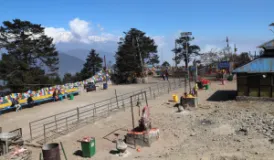
Alongside the family visits, devotees have been flocking to temples to receive tika and jamara. Religious sites across the country have seen a steady flow of visitors since Vijaya Dashami, as people offer their prayers, receive the ceremonial mark and exchange festival greetings before moving on to their next rounds of visits. Temple premises have taken on a lively, festive look, with the coming and going of devotees continuing through the day.
For devotees, the temple visits form a natural complement to the ceremonies at home. Many begin their day with prayers at a temple before proceeding to the homes of elders, weaving worship and family tradition into a single round of Dashain observance.
The ceremonies at temples, like those at home, are being performed in keeping with traditional rituals. The continuity of the practice, from the day of Vijaya Dashami through the days that follow, has kept the festive atmosphere alive in religious sites and neighbourhoods alike.
Elders' Homes at the Centre of the Festivities
The days surrounding Dashain tika are among the busiest of the year for family visits, and this period has been no exception. People have been making their way to the homes of elders to receive tika and jamara, a practice that reinforces bonds across generations and brings together relatives who may otherwise see one another only rarely. For many families, the continuation of the ceremonies over several days means the celebration does not end with Dashami itself but unfolds as a series of gatherings, blessings and greetings.
The emphasis on visiting elders' homes highlights the place the ritual holds in family life. Receiving tika from the eldest members of the household, and from respected elders beyond it, remains a cherished duty for the younger generation and a proud occasion for the elders themselves. The steady stream of visitors to elders' homes since Vijaya Dashami reflects how deeply the tradition is woven into the way the festival is celebrated across the country.
Ceremonies to Continue in the Days Ahead
According to reports by Nepal Lead and Thaha Khabar, the practice of receiving tika and jamara is expected to continue for a few more days. Devotees who have yet to receive tika from their elders or at temples will do so as the festival progresses, ensuring that the festive fervour lingers well beyond Vijaya Dashami.
With the ceremonies being observed in accordance with traditional rituals and devotees continuing their visits in earnest, the celebration of Dashain across Nepal shows no sign of winding down just yet. Homes and temples are set to keep welcoming visitors in the days ahead, as the exchange of tika, jamara and blessings carries the festival's spirit forward.