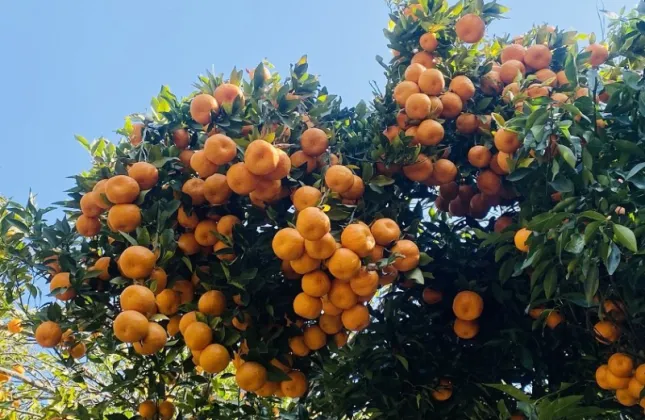
Orange farming in Salakpur, a village in Rong Rural Municipality-6 of Ilam district, is quietly reshaping the local economy, with annual incomes from orange production and sales now estimated at three to four crore rupees. What began as a traditional agricultural practice has grown into a pillar of the community's livelihood, and it is also drawing a steadily rising number of visitors who come to walk through the orchards and taste oranges straight from the tree.
Salakpur lies roughly 30 kilometres north of Kakarbhitta, the eastern border point of Nepal, making it accessible to travellers passing through the Jhapa gateway. The settlement's hillsides are covered with orange cultivation spread across approximately 90 hectares, a scale that has made the village one of the notable orange-producing areas of Ilam, a district better known nationally for its tea.
From orchards to income
The reported annual earnings of three to four crore rupees from orange production and sales represent a significant injection of cash into a rural local economy. For farming households in Rong Rural Municipality-6, the fruit has become a dependable source of revenue, supporting families in an area where opportunities for income generation are otherwise limited.
The scale of cultivation, spread over about 90 hectares, means that the benefits are widely distributed among growers rather than concentrated in a few hands. As harvests move from the orchards to markets, the trade generates work beyond the farms themselves, engaging those involved in collecting, transporting and selling the fruit.
Tourists drawn to the orchards
Alongside production and sales, tourism linked to the orange orchards is on the rise. Visitors are increasingly travelling to Salakpur to observe the orchards and to taste fresh oranges in the very place they are grown. This form of agricultural tourism adds a second stream of benefit on top of the income from fruit sales, as travellers spend on food, transport and other local services during their visits.
The village's location helps this trend. Sitting about 30 kilometres north of Kakarbhitta, Salakpur falls within reach of visitors entering Nepal from the eastern border, and its orchards offer a seasonal attraction that complements the wider draw of Ilam's hills, tea gardens and landscapes.
A model for rural agricultural tourism
Salakpur's experience illustrates how a single well-established crop can support both commerce and tourism in a rural municipality. The combination of roughly 90 hectares under orange cultivation, multi-crore annual sales and growing visitor numbers has changed the economic profile of the village, giving residents income from their orchards and a reason for outsiders to come and see them.
With orange orchards now firmly established as both an economic asset and a tourist attraction, Salakpur stands as an example of agriculture-driven local development in Ilam, where the fruit grown on the hillsides is being enjoyed twice over, once in the market and once in the orchard itself by the tourists who make the trip north from the border.