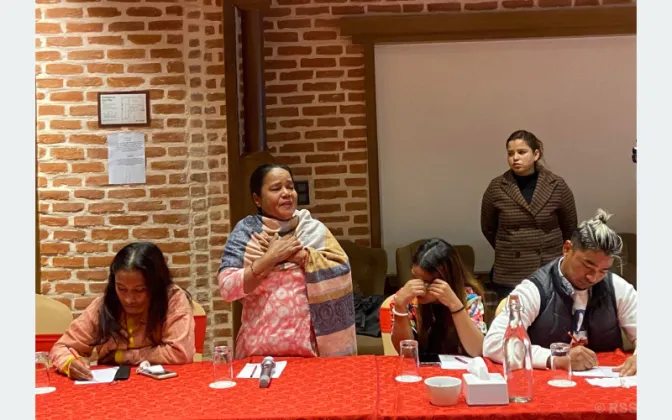
Pampha Darji, a woman born and raised in Nepal, is living the painful reality of statelessness in the very country she calls home. Despite spending her entire life on Nepali soil, she has been unable to secure citizenship, and after the death of her husband, questions about her identity and legal status have grown more pressing. Her ordeal, however, does not end with her: her children and grandchildren now face the same uncertainty, raising the prospect that three generations of one family could remain without nationality in the country of their birth.
A Marriage That Left Questions Unanswered
According to reports, Darji did not ask about her husband's place of origin when the two married, a detail that later proved consequential. In Nepal, where citizenship provisions are closely tied to descent and documentation, the lack of clarity surrounding her husband's origins has complicated her own efforts to establish her identity in the eyes of the state.
After her husband's death, the questions that had remained dormant during the marriage came to the fore. With no clear record of her husband's origins and no citizenship of her own, Darji found herself caught in a web of legal and administrative uncertainty. The experience, as she describes it, has been a source of deep personal pain, one that has shadowed her later years and left her struggling to prove what should be self-evident: that she belongs in Nepal.
Her story reflects a broader vulnerability faced by many women in similar circumstances. When marriage crosses administrative lines, or when a husband's documentation is incomplete or unavailable, women who married young or without full knowledge of their spouse's background can find themselves unable to meet the requirements of citizenship procedures, even decades after settling in a community.
The Burden Passed to Children and Grandchildren
What makes Darji's case especially alarming is that the consequences are not confined to her alone. Her children, lacking the documentation needed to establish their nationality, have also been unable to secure citizenship. Now her grandchildren, born in Nepal to parents who are themselves stateless, face the same prospect, meaning the family's status could pass unresolved across three generations.
The fear that three generations could become stateless has become a central concern in the family's ongoing struggle. Without citizenship, family members face barriers in accessing basic services and entitlements tied to legal identity, from property and inheritance matters to participation in public life. Each new generation born into the family deepens the uncertainty, as the absence of documentation in one generation compounds the difficulties faced by the next.
Advocates and observers note that cases like Darji's illustrate how statelessness in Nepal can become self-perpetuating. When parents cannot obtain citizenship, their children often cannot establish the descent-based claims needed for their own documentation, creating a cycle that can persist for decades unless administrative interventions break it.
A Wider Problem of Statelessness in Nepal
Darji's experience is not an isolated one. Nepal has long grappled with the issue of stateless residents, particularly women and members of marginalized communities whose circumstances do not fit neatly within the country's citizenship framework. The pain of being stateless in one's own country, as Darji describes it, resonates with many others who were born in Nepal but remain unable to have that birth recognized in law.
The reports of Darji's case have drawn attention to the human cost of these legal gaps. For Darji herself, the struggle is deeply personal: a lifetime lived in Nepal, yet without the papers that would confirm her as Nepali. For her children and grandchildren, the stakes are about their future, their ability to live, work and participate fully in the country they have always known as home.
Her case underscores the calls, frequently raised by rights advocates, for more accessible and humane procedures that take account of the realities of people's lives, including women who married without documentation and families whose histories span generations of residence in a single community. Until such gaps are addressed, families like the Darjis remain at risk of seeing statelessness handed down like an inheritance no one asked for.
As Pampha Darji continues her fight for recognition, her story stands as a stark reminder that the right to a nationality, often taken for granted, remains out of reach for some who have lived their whole lives in Nepal, and that the cost of that denial is now being measured in generations.