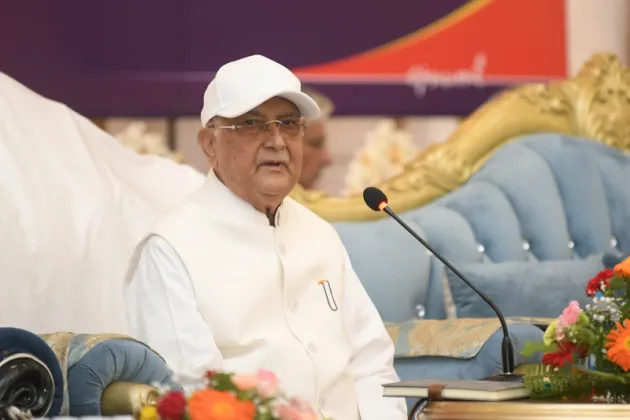
In Kathmandu, CPN (UML) Chairman KP Sharma Oli called for policy-making grounded in research and an in-depth understanding of Nepal’s conditions, saying this is necessary to achieve the goal of a “Prosperous Nepal, Happy Nepali.” His remarks were reported by Nepali news outlets on the same day, including Nepal Views and Pradesh Khabar. Oli stressed that policy choices should be informed by an in-depth study of the country’s social, economic, political, cultural and environmental realities.
Research as a foundation for policy
Oli’s central point was that national ambitions need to be supported by decisions based on evidence about Nepal itself. The “Prosperous Nepal, Happy Nepali” goal sets out a broad aspiration, while research-based policy-making offers a way to connect that ambition with the country’s actual circumstances. In his remarks, the UML chairman placed the need for deeper study across several areas of national life, rather than treating development as a question limited to a single sector.
The emphasis on research points to the importance of understanding conditions before shaping policies intended to address them. A detailed assessment can help identify the circumstances a policy is meant to respond to and provide a basis for judging whether a proposed approach is suitable. The summary of Oli’s remarks does not specify particular studies or policy proposals, but it makes clear that he sees a careful examination of the country as necessary to the wider goal of prosperity and public happiness.
The areas he identified are interconnected. Social and economic conditions can influence one another, while political and cultural factors also form part of the national context in which policies are developed. Environmental conditions add another dimension to that picture. Considering these fields together, as Oli called for, places the focus on a broad understanding of Nepal rather than on isolated questions of policy.
A broad view of Nepal’s conditions
Oli’s call covered five areas of study:
- Social conditions, which form part of the circumstances that public policy must take into account.
- Economic conditions, a key area for understanding the country’s development context.
- Political conditions, which are among the national realities he said require in-depth study.
- Cultural conditions, included in his call for a fuller picture of Nepal.
- Environmental conditions, another factor he identified as relevant to policy-making.
By naming these areas, Oli framed research as a way to build policy with a comprehensive view of the country. The list also signals that a single measure of progress would not capture all the conditions that matter to the national objective he cited. His remarks connect the aspiration for a prosperous and happy Nepal with an effort to understand the different dimensions of life in the country before decisions are made.
The statement, as reported, focused on the need for deeper study and evidence-based policy. It did not set out a timetable, name a research programme or detail specific policy changes. The emphasis was instead on the principle that an in-depth understanding of Nepal’s social, economic, political, cultural and environmental situation should inform policy-making.
That principle gives Oli’s remarks their central message: the country’s development goals should be pursued through policies shaped by knowledge of local conditions. His call places research not as a separate exercise, but as a foundation for deciding how national priorities can be addressed. The goal he invoked, “Prosperous Nepal, Happy Nepali,” therefore depends, in his view, on policy-makers studying the country in depth and using that understanding to guide their decisions.