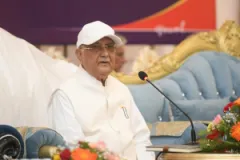
Khushbu Oli said Nepal’s Parliament has become ineffective in lawmaking, arguing that the legislature has devoted too much attention to political accusations and counter-accusations instead of drafting laws. Her remarks, reported on October 15, 2026, also highlighted what she described as weak coordination between Parliament and the government, and warned that the focus on political conflict has pushed public-interest issues and legal debate into the background.
Lawmaking sidelined by political exchanges
Oli’s central criticism was that Parliament has not given sufficient attention to its primary responsibility: making laws. She said the House has instead been dominated by political exchanges, with accusations and counter-accusations taking up space that should be used for legislative work. In her assessment, this imbalance has weakened the legislature’s effectiveness.
The distinction in her remarks is between political confrontation and the practical work of lawmaking. Parliament can become a venue for competing political claims, but Oli argued that this should not eclipse the drafting and consideration of laws. Her concern was not simply that lawmakers disagree, but that political disputes have taken priority over the work she sees as the institution’s main duty.
That concern points to the role of legislative debate in shaping laws. When discussion is focused on political allegations rather than the substance of proposed legislation, Oli argued, the quality and attention given to lawmaking suffer. Her remarks framed the issue as a matter of institutional performance: the House is not meeting its central responsibility when its proceedings are pulled away from legal work.
Public-interest issues and legal debate
Oli also linked the emphasis on political accusations to reduced attention to public-interest issues. In her view, the political back-and-forth has weakened discussion of concerns that matter to the public. The result, as she described it, is that issues requiring consideration in Parliament receive less space and attention than they should.
Her criticism also covered the debate surrounding laws. Effective lawmaking requires Parliament to engage with legal questions, but Oli said that debate has been weakened by the focus on political exchanges. Her remarks placed public-interest discussion and legal scrutiny together as areas affected by the same problem: the legislature’s attention has shifted away from its core work.
The argument is that parliamentary time and attention are limited, and the balance of discussion matters. If political accusations dominate, other subjects can be pushed aside. Oli’s comments did not identify particular laws or public-interest issues, but stressed the broader consequence she sees: less meaningful space for discussion of legislation and matters that affect the public.
Coordination with the government
Oli further pointed to a lack of effective coordination between Parliament and the government. She presented this as another weakness affecting the legislature’s ability to carry out its responsibilities. Her remarks suggest that lawmaking cannot be considered only as an internal parliamentary task; in her view, coordination between the House and the government also matters to the process.
She did not, in the account of her remarks, set out specific examples of coordination problems. However, her broader point was that weak cooperation between the two institutions compounds the difficulties she described. Alongside the dominance of political accusations and the decline in legal debate, limited coordination leaves Parliament less effective in its work.
Oli’s assessment therefore joined three concerns: Parliament’s focus on political confrontation, the resulting weakness in attention to public-interest issues and legal debate, and poor coordination with the government. Together, she argued, these problems have reduced the House’s effectiveness as a lawmaking body. Her remarks called attention to the gap between the legislature’s primary responsibility and the priorities she believes have shaped its work.