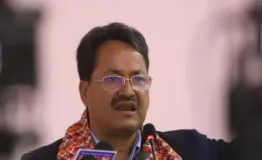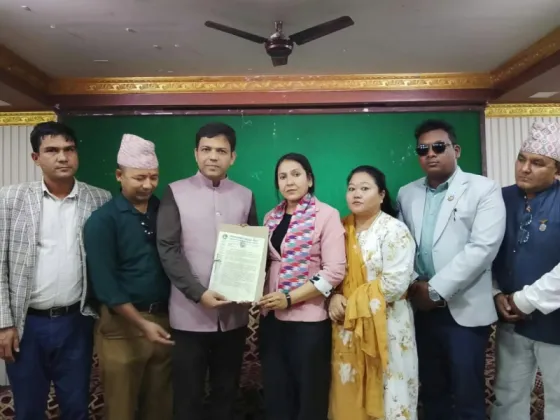
Rastriya Swatantra Party (RSP) General Secretary Bipin Acharya declared on Sunday in Biratnagar that his party will never compromise on press freedom and freedom of expression. The statement came as he received a memorandum handed over by the Nepal Journalists Federation Morang, which drew the party's attention to problems facing the fields of communication and journalism in the country.
Receiving the memorandum at the event, Acharya reiterated his party's firm stance in favour of press freedom, assuring journalists that the RSP stands firmly behind their right to write, publish and speak freely.
Memorandum handed over by Morang journalists
The Nepal Journalists Federation Morang presented Acharya with a memorandum highlighting the problems confronting the communication and journalism sectors. According to the summary of the interaction, the memorandum was handed over to the RSP General Secretary during his visit to Biratnagar, the provincial capital of Koshi Province.
While the summary does not detail each of the specific grievances listed in the document, it makes clear that the federation sought to draw the attention of the party leadership to issues affecting the working conditions and professional environment of journalists, as well as broader concerns in the communications sector.
Acharya's assurance on press and expression
Responding to the federation, Acharya made the party's position unambiguous: there is no compromise on freedom of press and freedom of expression. His remarks, as reported by Nepal Press, were delivered in Biratnagar on Sunday, underscoring that the RSP considers these freedoms non-negotiable.
Acharya's statement is consistent with the RSP's publicly projected image as a party that has positioned itself as a voice for change in Nepali politics. As General Secretary, he is one of the party's key organisational leaders, and his assurance to the journalists' federation carries the weight of the party's central leadership.
Context: press freedom in Nepal
Press freedom has long been a sensitive issue in Nepal, where journalists' organisations such as the Nepal Journalists Federation frequently lobby political parties and governments on issues ranging from workplace security to the legal environment for the media. Memorandums of this kind are a common advocacy tool used by district-level units of the federation to place journalists' concerns before national political figures during their provincial visits.
The Morang chapter's decision to approach the RSP General Secretary directly reflects the federation's practice of engaging political leaders across party lines on matters of press freedom and expression. Biratnagar, as an important political hub in the eastern Tarai, often hosts such interactions between visiting leaders and local civil society and professional organisations.
Party's stance and what lies ahead
By receiving the memorandum and publicly committing to press freedom, Acharya has signalled that the RSP intends to keep media freedom on its agenda. For the journalists of Morang, the event provided an opportunity to place their concerns before a senior leader of a party that has grown rapidly in influence in recent years.
Whether the assurances translate into concrete support for the journalists' demands will likely depend on how the party engages with the issues raised in the memorandum going forward. For now, the message from the RSP's General Secretary in Biratnagar was clear: on freedom of the press and freedom of expression, his party sees no room for compromise.