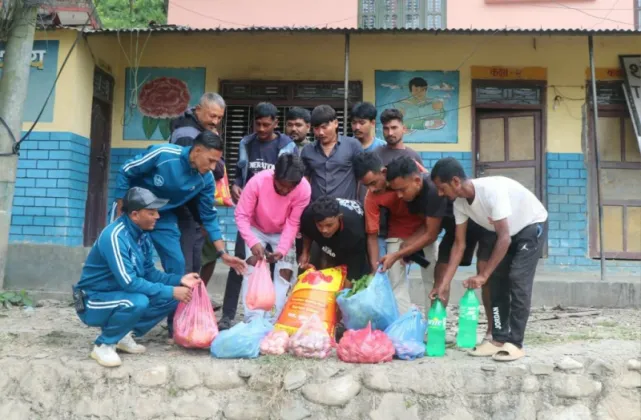
Nilkantha Municipality in Dhading district has provided food relief to 12 construction workers who were left stranded and hungry at their worksite during Dashain after their employer failed to pay their wages, according to reports published by Nepal Press and Pradeskhabar. The local government in the Dhading district of Bagmati Province handed over relief materials comprising lentils, rice, vegetables and meat after it emerged that the workers, unable to return home for the festival, were struggling to feed themselves at a time when households across Nepal were gathering to celebrate the country's biggest festival.
Workers Left Stranded Over Unpaid Wages
The 12 workers had been engaged at a construction worksite within Nilkantha Municipality. As Dashain drew near, they were still waiting to be paid for the work they had completed. With no wages in hand and no alternative means of support, they were unable to make the journey to their homes, where they would otherwise have joined their families for the celebrations.
For the group, the failure to receive payment meant more than lost income. It cut off the usual route home for the festival and left them dependent on whatever food was available at the worksite. Reports noted that the workers were left hungry during the festival period, having run short of supplies and with no money to buy more or to arrange travel. Their predicament, unfolding at the very moment the nation settles into festivities, prompted the municipality to intervene with emergency assistance.
Municipality Steps In With Food Relief
Responding to the crisis, Nilkantha Municipality prepared and delivered a package of relief materials to the stranded workers as an immediate humanitarian measure to tide them over during the festival. The food provided included:
- Lentils, a daily staple in Nepali kitchens
- Rice
- Vegetables
- Meat
The decision to include meat carried particular weight. Meat dishes are a customary highlight of Dashain for many families across the country, and their presence on the festival table is widely regarded as an essential part of the celebration. For workers who could not travel home, the municipality's provision of meat alongside staples such as rice and lentils was intended to bring a measure of festive comfort to an otherwise difficult Dashain.
The intervention also served as a reminder of the role local governments can play as first responders when workers fall through the cracks, particularly during festivals, when the ordinary support networks of family and neighbours are far away.
Dashain: A Festival Built on Homecoming
Dashain is the largest and most widely observed festival in Nepal, celebrated over several days during the Nepali months of Asoj and Kartik, which correspond to late September and October. Families gather to receive tika and jamara from elders, offer prayers, share festive meals and exchange blessings. It is also the season of the country's largest annual homecoming, as millions of people leave Kathmandu and other cities where they work and return to their ancestral villages and hometowns.
For daily wage earners and construction workers, the festival carries a double significance. It is both a rare opportunity to reunite with family and a period of heightened expense, with travel, food, gifts and ritual offerings all demanding ready cash. When wages go unpaid in the run-up to Dashain, the consequences extend beyond a delayed payment. Workers can find themselves unable to afford the journey home or to feed themselves properly where they are, which is precisely the situation the 12 workers in Nilkantha faced.
Wage Disputes and the Limits of Relief
While the municipality's intervention addressed the workers' immediate hunger, the underlying dispute over their unpaid wages remained unresolved as of the latest reports. It was not immediately clear whether the employer had been contacted, whether the workers would eventually receive the money owed to them, or what follow-up steps the municipality might take to help them return to their families.
The incident also underscores a broader vulnerability. Construction and other informal-sector workers depend on timely payment to cover food, rent and travel, and they are especially exposed when employers delay or withhold wages during the festival rush. Where private remedies fail, the burden of emergency relief often falls on local governments, as it did in Nilkantha this Dashain.
For now, the 12 stranded workers at least have food to see them through the festival. Whether they will be paid what they are owed, and whether they will still make it home before the celebrations end, remains to be seen.