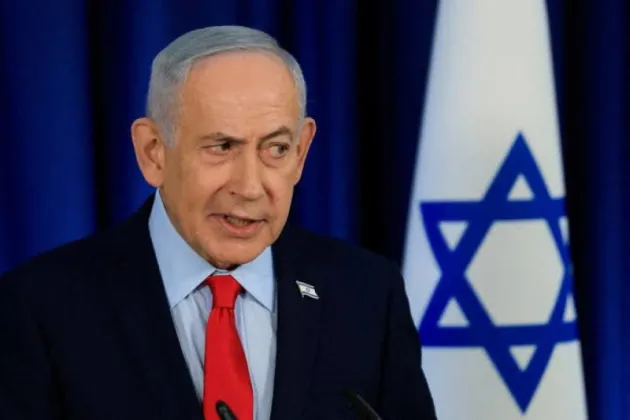
Israeli caretaker Prime Minister Benjamin Netanyahu and Yashar Party Chairman Gadi Eisenkot, his primary political rival, are scheduled to meet on Sunday morning for talks on forming a coalition government, according to a statement issued by Netanyahu's Likud party. The meeting will take place at 10:00 AM local time at a hotel in the coastal city of Herzliya, after Eisenkot extended an invitation following Netanyahu's proposal of a power-sharing agreement.
A Rivalry Turned Negotiation
The Sunday meeting marks a significant moment in Israeli politics, bringing together two figures who have positioned themselves as opponents but who may now be forced to consider cooperation. Netanyahu, the veteran leader of the Likud party, has been operating as caretaker prime minister while coalition negotiations have dragged on amid uncertainty about which parties are willing to sit in government with him.
According to Netanyahu's Likud party, the invitation for the meeting came from Eisenkot himself, after Netanyahu proposed a power-sharing arrangement. The fact that the talks are being hosted at a hotel in Herzliya rather than at official government offices underscores the delicate and informal stage of the negotiations, with both sides still feeling out whether a partnership is politically viable.
Rotating Prime Minister Deal on the Table
Israeli media has fueled speculation about the nature of the proposed deal. Citing Channel 13, Israeli outlets reported that Netanyahu was preparing to announce his willingness to enter a power-sharing arrangement with Eisenkot. Such arrangements in Israeli politics have historically involved a rotating prime ministership, in which two leaders alternate in the country's top post over the course of a government's term.
The reported willingness on Netanyahu's part represents a notable concession, given that he has long resisted sharing the premiership with rivals. The prospect of offering Eisenkot, the chairman of the Yashar Party and a former military chief, a formal role in government suggests that Netanyahu sees few other viable paths to assembling a coalition.
Divisions Within the Prime Minister's Office
While the meeting itself has been confirmed, the proposal remains far from settled. According to the reporting based on Channel 13, officials within the Prime Minister's Office remain divided over the idea of a power-sharing deal with Eisenkot. The internal split suggests that even if Netanyahu announces his willingness to share power, he may face resistance from within his own circle over the terms and political consequences of such an arrangement.
That division adds another layer of uncertainty to Sunday's talks. A meeting between the two leaders, even one that ends without a formal agreement, could still shape the trajectory of coalition negotiations, depending on how much common ground emerges on the structure and leadership of a potential government.
What Comes Next
For now, attention will focus on the outcome of the 10:00 AM meeting in Herzliya. If the two leaders find agreement in principle, it could accelerate efforts to form a governing coalition and end the caretaker status of Netanyahu's government. If the talks stall, the political uncertainty that has defined this round of coalition-building is likely to persist.
The meeting also represents a test of whether personal and political rivalry can give way to pragmatic governance. With Netanyahu weighing an unprecedented overture to a rival and his own officials split on the wisdom of the move, the Sunday session in Herzliya may prove to be a pivotal moment in determining the shape of Israel's next government. Further details are expected to emerge following the conclusion of the talks.
Source: My Republica