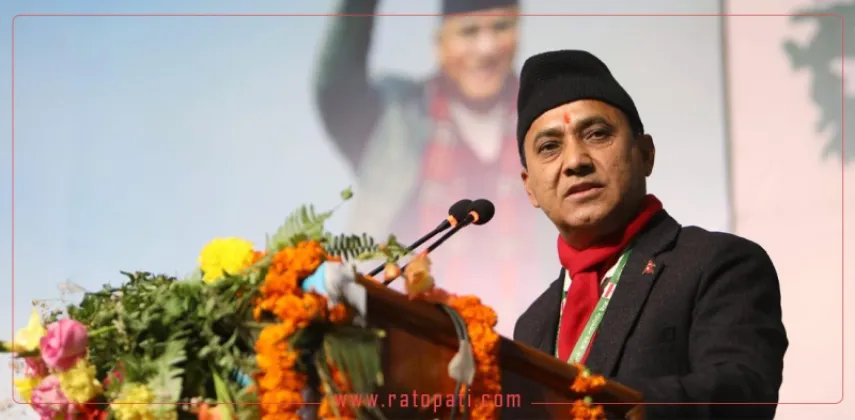
Two senior leaders of the Nepali Congress have made a fresh appeal for party unity amid a growing internal dispute within the country's largest political party. Vice President Chandra Bhandari and Senior Vice President Bishwaprakash Sharma, speaking in separate calls, urged leaders, cadres and dissident factions to set aside past differences and strengthen the party through dialogue, rather than public confrontation.
Vice President Bhandari appealed to all party leaders and cadres to unite and work towards consolidating the Nepali Congress, stressing that differences and misunderstandings that have accumulated in the past should be resolved through internal dialogue. He framed unity not merely as an organizational goal but as a responsibility shared by every member of the party, from senior leadership down to grassroots activists.
Bhandari Stresses Dialogue Over Confrontation
According to Nagarik News, Bhandari urged everyone to join hands with the Congress in order to unite the party. His remarks come at a time when internal rifts have created visible friction among senior leaders, raising concerns within the party about organizational cohesion. Rather than assigning blame, Bhandari's message focused on the need to bring all leaders and cadres back onto a common platform.
He emphasized that misunderstandings between rival camps within the party should not be allowed to fester. Instead, he argued, they must be addressed through honest conversations inside the party's own mechanisms. By calling for differences to be resolved through dialogue, Bhandari signalled that the leadership wants to avoid escalation and keep disputes contained within organizational channels.
Sharma Urges Deuba Faction to Return
Senior Vice President Bishwaprakash Sharma directed his appeal more pointedly at the faction aligned with Sher Bahadur Deuba, urging the Deuba side to return to the party. As reported by Ratopati, Sharma said that the problems facing the party cannot be solved by reacting alone, implying that unilateral posturing by any faction would not resolve the ongoing dispute.
Sharma's statement marks one of the more direct attempts at reconciliation outreach, as it explicitly addresses the faction that has distanced itself from the party's main structure. By calling on the Deuba group to come back, he positioned reintegration as the path forward, while also cautioning that reactions from either side would only deepen the divide rather than bridge it.
A Common Message of Unity
While the two leaders spoke separately, their interventions carried a strikingly similar message: the future of the Nepali Congress depends on its ability to resolve disputes internally. Both Bhandari and Sharma stressed that party unity can only be achieved through internal dialogue, a point highlighted by Global Aawaj in its coverage of the statements.
The twin appeals suggest that a section of the party leadership is actively working to cool tensions before they harden into a lasting split. By urging both general cadres and factional leaders to return to the fold, the Vice President and Senior Vice President have sought to frame unity as a collective project rather than the agenda of one camp.
Context of the Internal Dispute
The Nepali Congress has been grappling with internal disputes involving its senior leadership, with a faction associated with Sher Bahadur Deuba standing apart from the party's current organizational line. Such rifts are not new to the party, which has a long history of factions coexisting within its democratic structure, but the latest round of differences has prompted visible concern among senior figures.
Against that backdrop, the appeals from Bhandari and Sharma are significant. Both leaders hold senior positions in the party's current hierarchy, and their decision to publicly call for dialogue and reintegration reflects an attempt to prevent the dispute from escalating further. Bhandari's emphasis on resolving past misunderstandings and Sharma's direct invitation to the Deuba faction together signal that the leadership's preferred resolution remains negotiation within the party rather than confrontation outside it.
Whether the appeals succeed in bringing the estranged faction back to the negotiating table remains to be seen. For now, however, the message from the party's senior vice presidency and vice presidency is unambiguous: the Nepali Congress must unite, and that unity must be built through dialogue inside the party, not through public reactions that deepen the rift.