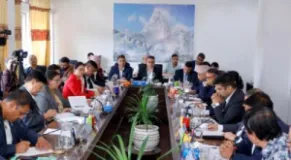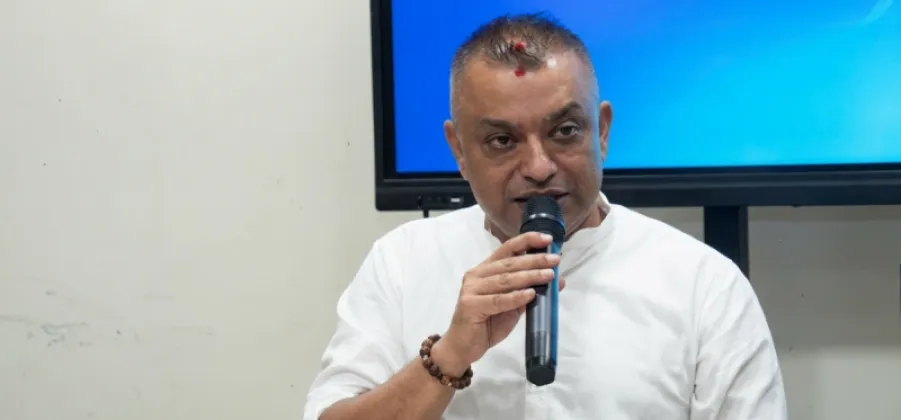
The Nepali Congress convened a meeting of its central committee at the party's central office, BP Smriti Bhawan, in Lalitpur on Tuesday, under the chairmanship of party president Gagan Kumar Thapa. The meeting, one of the party's key internal gatherings, took up a six-point agenda presented by General Secretary Pradeep Poudel, covering organisational mobilisation, post-disaster recovery, the management of displaced squatters and broader citizen-related issues including matters connected to the government.
Opening the session, President Thapa delivered a special address focused on contemporary political issues, setting the tone for the day's discussions before the committee moved on to the items placed before it.
'Hami Tayar Chhaun' Campaign at the Centre of Organisational Plans
Among the six agenda items presented by General Secretary Pradeep Poudel, a prominent proposal is the plan to launch a campaign titled "Hami Tayar Chhaun" (We Are Ready). The campaign is envisioned as part of the party's upcoming organisational work, signalling the Congress's intent to energise its structures and reach out to the public through a coordinated mobilisation effort.
While the summary presented to the committee did not detail the full mechanics of the campaign, its inclusion as a formal agenda item indicates that the party leadership is seeking the central committee's endorsement and input before it is rolled out across the party's organisational network. The campaign name itself, meaning "We Are Ready," suggests an emphasis on preparedness, a theme that party leaders have increasingly highlighted as the organisation looks to strengthen its presence at the grassroots level.
The presentation of the agenda by the general secretary also underscores the role of the party's senior office-bearers in shaping its organisational direction, with the central committee serving as the forum where such proposals are tabled, debated and refined before implementation.
Disaster Recovery After Bhotekoshi and Budhigandaki Incidents
Another major item on the agenda was disaster recovery and reconstruction in the aftermath of the Bhotekoshi and Budhigandaki incidents. The committee's discussion of this point reflects the party's concern with the situation facing communities affected by those events and the pace of relief and rebuilding efforts.
By placing disaster recovery formally on the central committee's agenda, the party has signalled that it intends to engage with the reconstruction question both as a governance issue and as a matter of party mobilisation on the ground. The item was presented as part of the six-point agenda drawn up by General Secretary Poudel for the meeting's deliberations.
Squatter Management and Citizen-Related Issues
The management of displaced squatters also featured among the six agenda items discussed at the meeting. This is a matter that has remained on the national agenda, and its inclusion indicates that the party's central leadership chose to address it directly at the level of the central committee.
The final broad item covered citizen-related issues, including matters pertaining to the government. This catch-all agenda point allowed the committee to take up a range of contemporary concerns affecting citizens and to discuss the party's position on issues connected to the functioning of the government.
President Thapa's Special Address
The meeting began with a special address by party president Gagan Kumar Thapa on contemporary political issues. The address preceded the presentation of the formal agenda and framed the discussions that followed. As chairman of the session, Thapa's opening remarks formed part of the party's effort to align its central leadership on the political questions of the day before turning to organisational business.
A Structured Approach to Internal Deliberation
The Tuesday meeting illustrates the structured manner in which the Nepali Congress approaches its internal deliberations. Rather than relying on informal consultations, the party's central committee formalised its business through a six-point agenda presented by the general secretary, with each point tied to either organisational work or pressing public issues.
The blend of agenda items is notable: alongside the proposed "Hami Tayar Chhaun" campaign, which is squarely about party organisation, the committee also took up disaster recovery from the Bhotekoshi and Budhigandaki incidents, squatter management, and citizen and government-related issues. This range suggests the party sought to pair its internal mobilisation plans with engagement on the substantive challenges currently facing the country.
The meeting was held at BP Smriti Bhawan, the party's central office in Lalitpur, which serves as the hub of the Congress's organisational activities. Sources covering the meeting included Nagarik News and Ratopati, both of which reported on the six-point agenda tabled at the session.
What the Meeting Signals
For observers of the party, the meeting offers a window into the Nepali Congress's current priorities. The proposed launch of the "Hami Tayar Chhaun" campaign points to an upcoming phase of organisational activity, while the attention given to disaster recovery and squatter management shows the leadership directing the central committee's focus toward issues with direct consequences for affected communities.
With President Thapa's special address on contemporary political issues opening the session and General Secretary Pradeep Poudel's six-point agenda guiding the discussion, the central committee meeting at BP Smriti Bhawan in Lalitpur set out a broad frame for the party's work in the period ahead, spanning both its internal campaign plans and its response to some of the most pressing public concerns before the country.
Further details on the outcomes of the meeting, including any decisions reached on the "Hami Tayar Chhaun" campaign or the other agenda items, were not available in the reports at the time of writing.