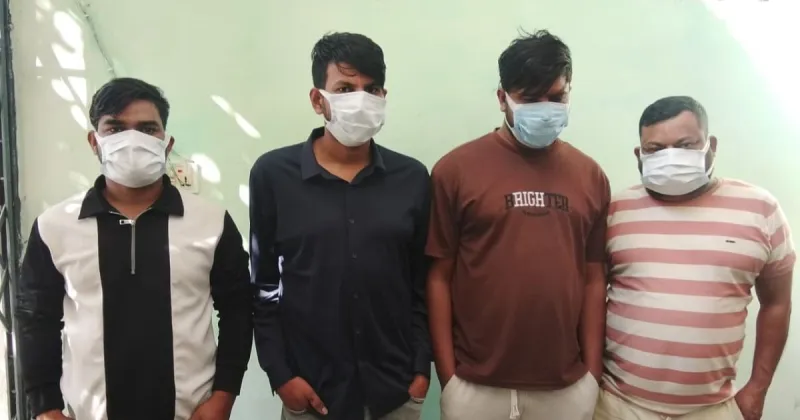
Police in Morang have arrested four members of an organised online fraud gang from Biratnagar, five days after the operation that led to their capture. The gang is accused of defrauding Nepali citizens of more than Rs 1.5 million by tricking them into sharing their bank account details and digital wallet information.
According to a report published by Nagarik News, the arrestees were taken into custody after police investigated complaints of online fraud in which victims were befriended and persuaded to hand over account numbers. The money obtained through the fraud was found to have been transferred to India and from there onward to other countries.
Who was arrested
Among the four arrested, two are Indian nationals. The identity of the other two members has not been disclosed in the reports available so far. The arrests were carried out in Biratnagar, the metropolitan city in Morang district that shares close proximity with the Indian border.
Details of the charges and specific sections under which the four have been booked were not provided in the initial reports. Police in Morang are expected to continue their investigation into the gang's network, given the cross-border movement of the defrauded funds.
How the gang operated
The gang's method, as described by police, was based on building trust with Nepali citizens. Members of the gang would befriend people online and gradually collect their bank account numbers and digital wallet details. Once the accounts were compromised, the gang siphoned off money from victims.
According to the report by Pradesh Khabar, the gang used as many as 40 bank accounts and digital wallets belonging to Nepali citizens to route the defrauded money. The use of a large number of accounts appears to have been designed to obscure the trail of the money and make it harder for victims and investigators to track the transactions.
Money moved across the border
The most significant element of the case, according to the reports, is the cross-border movement of the funds. Money taken from Nepali victims was sent to India, and from India the funds were moved onward to other countries. This indicates that the gang was not operating alone but was part of a wider network through which fraud money could be laundered abroad.
The transfer of funds through a large number of accounts also suggests that ordinary Nepali citizens' accounts were being used as conduits for the money. The investigation into how these accounts were opened or obtained, and who was responsible for moving the money across the border, is likely to be a key part of the case.
Investigation under way
Morang police have not yet announced whether further arrests are expected in connection with the case, or whether links to other similar fraud complaints have been established. The five-day gap between the arrests and the public disclosure of the operation suggests that police were conducting preliminary verification of the evidence and the identities of the gang members before making the information public.
Online fraud targeting Nepali citizens has become a growing concern in recent years, with police in various districts reporting an increase in complaints. The Biratnagar case, given the amount involved and the cross-border movement of the funds, is expected to attract further attention as the investigation progresses.
The total amount defrauded in this case stands at more than Rs 1.5 million, according to the reports. The exact number of victims and the breakdown of the losses across the 40 accounts used by the gang have not been disclosed.
What happens next
The four arrested in Biratnagar are expected to be produced before the relevant authorities as the investigation continues. Prosecution in cases of online fraud and the misuse of bank accounts typically falls under the laws governing electronic transactions and banking offences in Nepal.
Given that two of the arrested are Indian nationals, the case may also involve coordination between Nepali and Indian authorities, particularly if the investigation requires tracking the movement of money to India and beyond. No official statement from higher police offices or government agencies had been issued at the time of these reports.
Police in Morang have urged caution among the public regarding the sharing of bank account and digital wallet information, particularly with individuals who make contact online. Further details about the case are expected as the investigation moves forward.