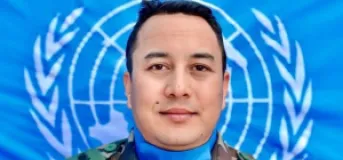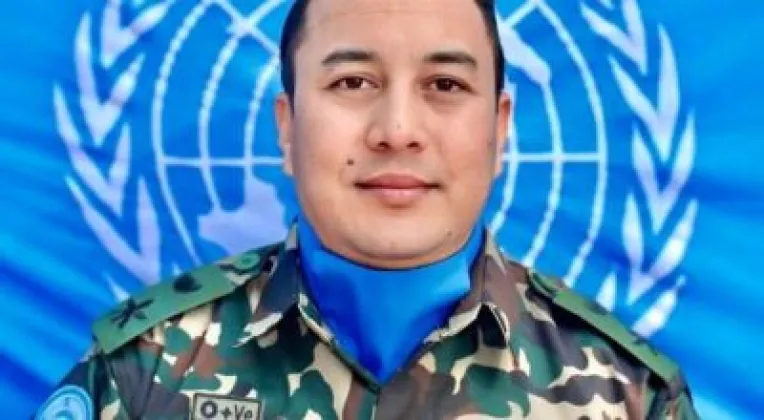
Lieutenant Colonel Rabin Thapa of the Nepali Army has called for women peacekeepers to take active roles in patrols, armed escorts and civilian protection missions while serving as a contingent commander with the United Nations Organization Stabilization Mission in the Democratic Republic of the Congo (MONUSCO). He said advancing the Women, Peace and Security agenda must be part of how peacekeepers plan and conduct operations, rather than a separate objective. In remarks reported by Khabarhub, Thapa framed inclusion as a practical requirement for effective peacekeeping.
Inclusion as part of operational practice
Thapa’s message focused on the difference between endorsing women’s participation in principle and making it part of the work carried out on the ground. In his view, women peacekeepers should be involved in the core activities of a mission, including patrols, armed escorts and efforts to protect civilians. Their contribution, he emphasized, should not be confined to a separate initiative or treated as an additional task alongside the mission’s operational priorities.
That approach places participation within the planning and conduct of peacekeeping itself. If the Women, Peace and Security agenda is integral to operations, it must inform how missions organize and carry out their work. Thapa’s emphasis was therefore not only on the presence of women in a peacekeeping contingent, but also on their active involvement in the responsibilities through which that contingent serves.
The distinction matters to the argument he advanced: inclusion is not simply a statement of intent. It has to be reflected in operational practice. By identifying patrols, armed escorts and civilian protection as areas for women’s active participation, Thapa connected the broader agenda to specific kinds of mission activity without treating women’s role as separate from the mission’s work.
Women, Peace and Security in the mission
Thapa described the Women, Peace and Security agenda as integral to the way peacekeepers plan and conduct operations. That framing makes the agenda relevant throughout the operational process, rather than an objective considered apart from day-to-day mission responsibilities. It also sets a practical standard: participation should be visible in the activities peacekeepers undertake, not limited to general support for the principle of inclusion.
His remarks linked women’s participation with the effectiveness of peacekeeping. As summarized in the report, Thapa said peacekeeping is more effective when women help shape it. The point is that women peacekeepers should have an active part in the work and in shaping how that work is done. This presents inclusion as connected to the quality of the mission, not only to representation within it.
The emphasis on civilian protection also places women’s participation within one of the responsibilities named in Thapa’s remarks. He called for women peacekeepers to take part in missions aimed at protecting civilians, alongside patrols and armed escorts. The message, as reported, was that these activities belong within the operational scope of women’s service and should be considered as part of the mission’s planning and execution.
A practical case for participation
Thapa’s position, delivered in his role as a contingent commander with MONUSCO in the Democratic Republic of the Congo, centers on integrating women into the mission’s operational activities. It does not describe the Women, Peace and Security agenda as a parallel programme. Instead, it treats women’s participation as part of how peacekeepers carry out their responsibilities and as a factor in making peacekeeping more effective.
The remarks highlight a practical standard for inclusion: women should not only be acknowledged as part of a peacekeeping mission, but should participate in the patrols, escorts and civilian protection work that the mission undertakes. For Thapa, advancing Women, Peace and Security means embedding that participation in the planning and conduct of operations. His central message was that peacekeeping benefits when women are able to help shape the work as well as take part in it.